Clematis, Genus, patens, Species,
- Genus & species
spreading clematis
East Asia: Japan, eastern China, Korea
Overview
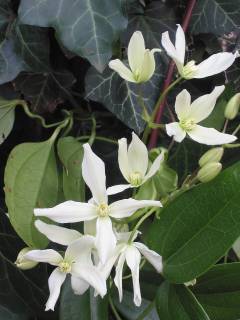
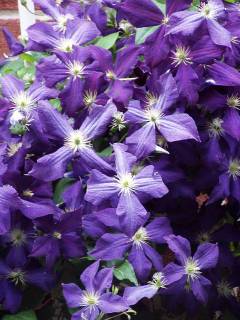
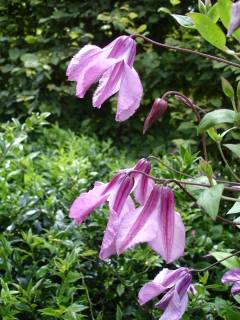
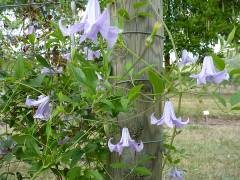
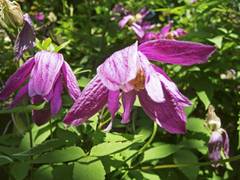
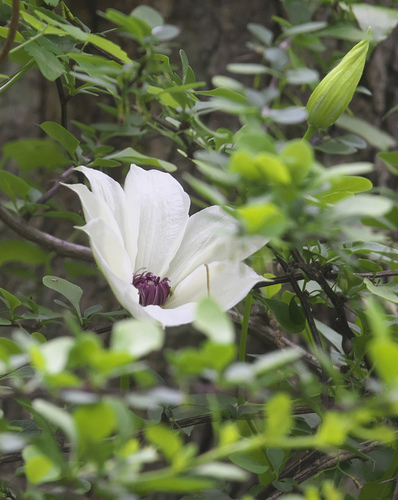
Clematis patens is a deciduous woody climbing vine in the family Ranunculaceae growing 6-10 feet (1.8-3 m) tall by twining leaf petioles around supports. The species is a major parent of the large-flowered clematis hybrids; many widely grown cultivars including 'Nelly Moser', 'The President', and 'Lasurstern' derive significant parentage from C. patens. Leaves are pinnately compound with 3-5 ovate leaflets 2-4 inches (5-10 cm) long. Flowers are large, flat to slightly cupped, 4-6 inches (10-15 cm) across with 6-8 broad overlapping tepals (sepals) in white, blue, lavender, or violet. A central boss of cream to yellow stamens contrasts against the tepal color. Flowers are borne singly on short peduncles from the previous year's wood (old wood); pruning at the wrong time removes the flowering wood and is a primary cultivation consideration. The species occurs in mountain scrub and forest margins in Japan, China, and Korea. Bloom occurs in late spring (May through June) on stems produced the previous year, with occasional rebloom in late summer on current-year growth. The species is the genetic source of large flower size and early bloom timing in Group 2 (light-prune) clematis hybrids. Susceptible to clematis wilt (Phoma clematidina) and powdery mildew.
Native Range
Clematis patens is native to Japan (Honshu, Shikoku, Kyushu), eastern China (Hubei, Sichuan, Zhejiang), and Korea. The species occurs in mountain forests, forest margins, and scrubland at elevations of 300-6,500 feet (100-2,000 m).Suggested Uses
Trained on trellises, fences, pergolas, and obelisks, or grown through established shrubs and small trees. The large flowers display at eye level when grown on a 6-foot (1.8 m) trellis. Combined with a Group 3 (hard-prune) clematis on the same support for successive bloom from spring through autumn. Suitable for large containers (minimum 10 gallons / 38 L) with a support structure. Toxic to pets and humans if ingested.How to Identify
Appearance
Size & Dimensions
Height6' - 10'
Width/Spread3' - 5'
Bloom Information
Primary bloom occurs in May through June on the previous year's stems. Flowers open over a 3-4 week period. A lighter secondary bloom may occur in August through September on current-season growth. Individual flowers last 7-10 days. Pollinated by bees and other insects.
Detailed Descriptions
Flower Description
White, blue, lavender, or violet; 4-6 inches (10-15 cm) across; 6-8 broad overlapping tepals; cream to yellow stamen boss; borne singly on previous year's woodFoliage Description
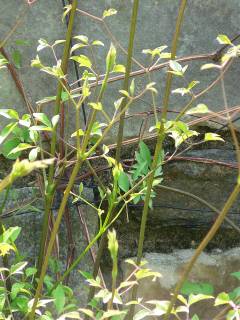
Medium green; pinnately compound with 3-5 ovate leaflets 2-4 inches (5-10 cm) long; deciduous; turning yellow in autumnGrowing Conditions
Sun Requirements
Requires 4-8 hours of direct sunlight daily
• Full Sun: 6+ hours of direct sunlight
• Partial Shade: 3-6 hours of direct sunlight
• Full Shade: Less than 3 hours of direct sunlight
Care & Maintenance
Care Guide
Sited in full sun to partial shade with the root zone shaded or mulched. Fertile moist but well-drained soil at pH 6.5-7.5. Planted with the top of the rootball 2-3 inches (5-8 cm) below soil level to encourage basal bud regeneration in case of wilt. Spaced 4-6 feet (1.2-1.8 m) from other climbers. A sturdy support is required: trellis, obelisk, or established shrub. Watered regularly at 1 inch (2.5 cm) per week during the growing season. Fed with a balanced fertilizer in spring as buds break and again after the first flush of bloom. Mulched with 2-3 inches (5-8 cm) of organic material to keep roots cool.Pruning
Pruning Group 2 (light prune). In late winter (February), dead and weak stems are removed only. Hard pruning is avoided since the primary spring bloom occurs on the previous year's wood. After the first flush of flowers in June, flowered shoots are lightly trimmed back to a strong pair of buds to encourage a second flush on new growth. If clematis wilt strikes, all affected stems are cut to ground level; the plant may regenerate from the deeply planted base.Pruning Schedule
Prune: February
late winter
Container Growing
Suitable for container growing
Minimum container size: 10 gallons