Image 1 of 5
1 / 5
© Andy / Andrew Fogg from near Cambridge, UK, some rights reserved (CC-BY) · Wikimedia Commons
Clematis, Genus, ×, Hybrid, 'Asao', Cultivar,
- Genus
- Hybrid
- Cultivar
Asao clematis
Garden hybrid of Japanese origin; complex {Clematis} parentage
Overview
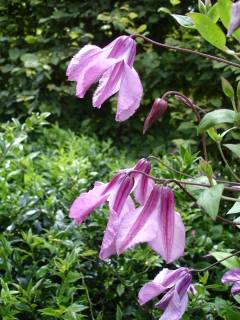
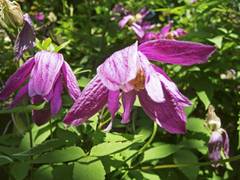
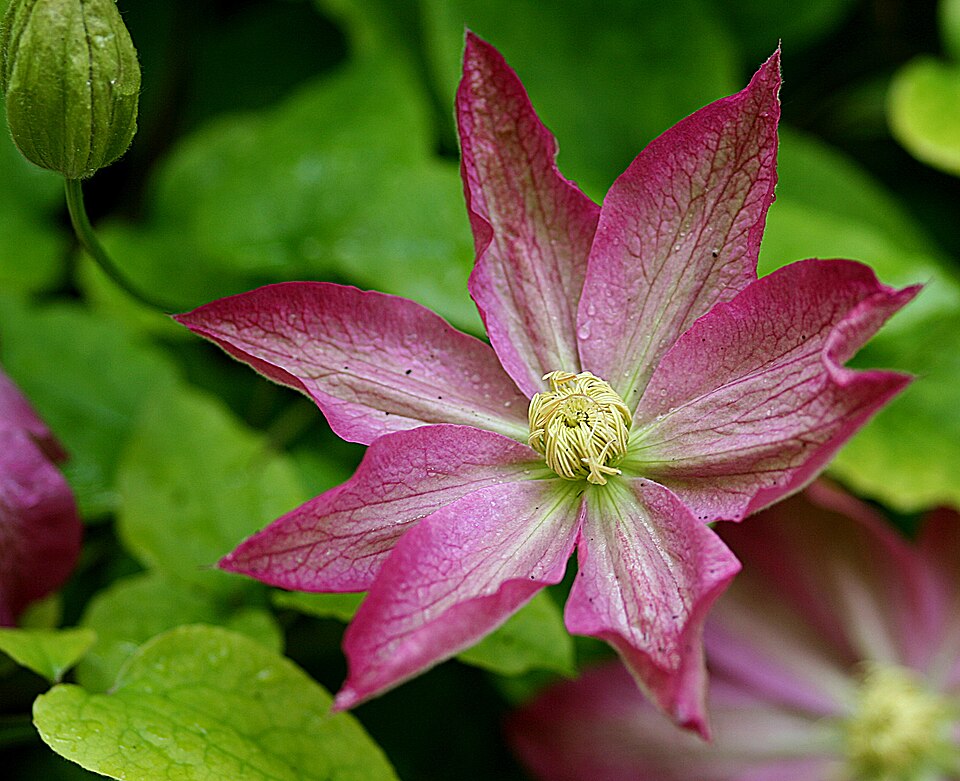
Clematis × 'Asao' is a Japanese large-flowered clematis hybrid that climbs 72–96 inches (180–240 cm) tall. Flat, open flowers 5–7 inches (13–18 cm) across feature 6–8 tepals in deep rose-pink with a broad white to pale pink central bar running the length of each tepal, creating a bicolor pinwheel effect. The contrasting central bars become more prominent as the flowers mature. Deep rose-pink stamens with cream filaments occupy the center. The first bloom in May–June on old wood produces the largest flowers; the lighter second flush in August–September on new growth has slightly smaller blooms. The bicolor pattern is most vibrant in partial shade; in full hot sun, the pink fades and the contrast diminishes. This is a Group 2 (light prune) clematis: in late winter, remove dead and weak stems and cut remaining shoots to the highest strong buds. Avoid hard pruning that removes old wood needed for the spring flush. Clematis wilt can cause sudden stem collapse; affected stems should be cut to the base, with regrowth expected from the crown. All parts contain protoanemonin, toxic if ingested.
Native Range
Clematis × 'Asao' is a garden hybrid of Japanese origin, bred by Kazushige Ozawa and introduced in 1971.Suggested Uses
Trained on trellises, arbors, and fences where the bicolor flowers are viewed at close range. The pink-and-white contrast is most visible against dark backgrounds. Container culture works in pots of 10 gallons (38 liters) or more with support. Pairs with blue and purple clematis on shared structures for a multi-color display.How to Identify
Appearance
Size & Dimensions
Height6' - 8'
Width/Spread2' - 3'
Colors
Bloom Information
First flush in May–June on old wood produces the largest, most vividly bicolored flowers. Second lighter flush in August–September on new growth. Total display approximately 10 weeks across both flushes. Deadheading after the first flush strengthens the rebloom.
Detailed Descriptions
Flower Description
Deep rose-pink with a white central bar on each tepalFoliage Description
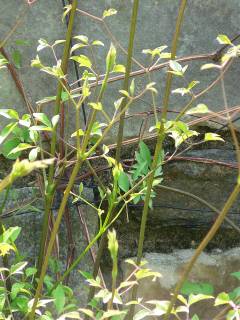
Dark green, compound, with twining petiolesGrowing Conditions
Sun Requirements
Requires 4-8 hours of direct sunlight daily
• Full Sun: 6+ hours of direct sunlight
• Partial Shade: 3-6 hours of direct sunlight
• Full Shade: Less than 3 hours of direct sunlight
Care & Maintenance
Care Guide
Plant in partial shade to full sun with 4–8 hours of light; partial shade preserves the strongest bicolor contrast. Shade the root zone. Well-drained, humus-rich soil. Group 2 pruning: remove dead and weak stems in late winter, cut remaining to the highest strong buds. Do not hard-prune. Provide trellis, arbor, or other support for twining petioles. Water regularly. Fertilize lightly in spring.Pruning
Group 2 (light prune): In late February–March, remove dead and weak stems. Cut remaining stems to the highest pair of strong, swelling buds. Preserve old wood for the spring bloom flush.Pruning Schedule
Prune: February–March
early spring
Container Growing
Suitable for container growing
Minimum container size: 10 gallons