Clematis, Genus, 'Alionushka', Cultivar,
- Genus
- Cultivar
Alionushka clematis
Hybrid of garden origin; bred at Nikita Botanical Garden, Yalta, Crimea, 1961
Overview
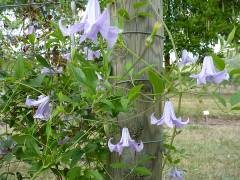
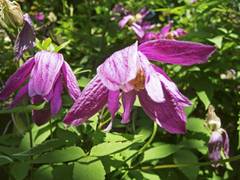
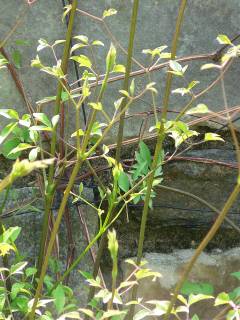
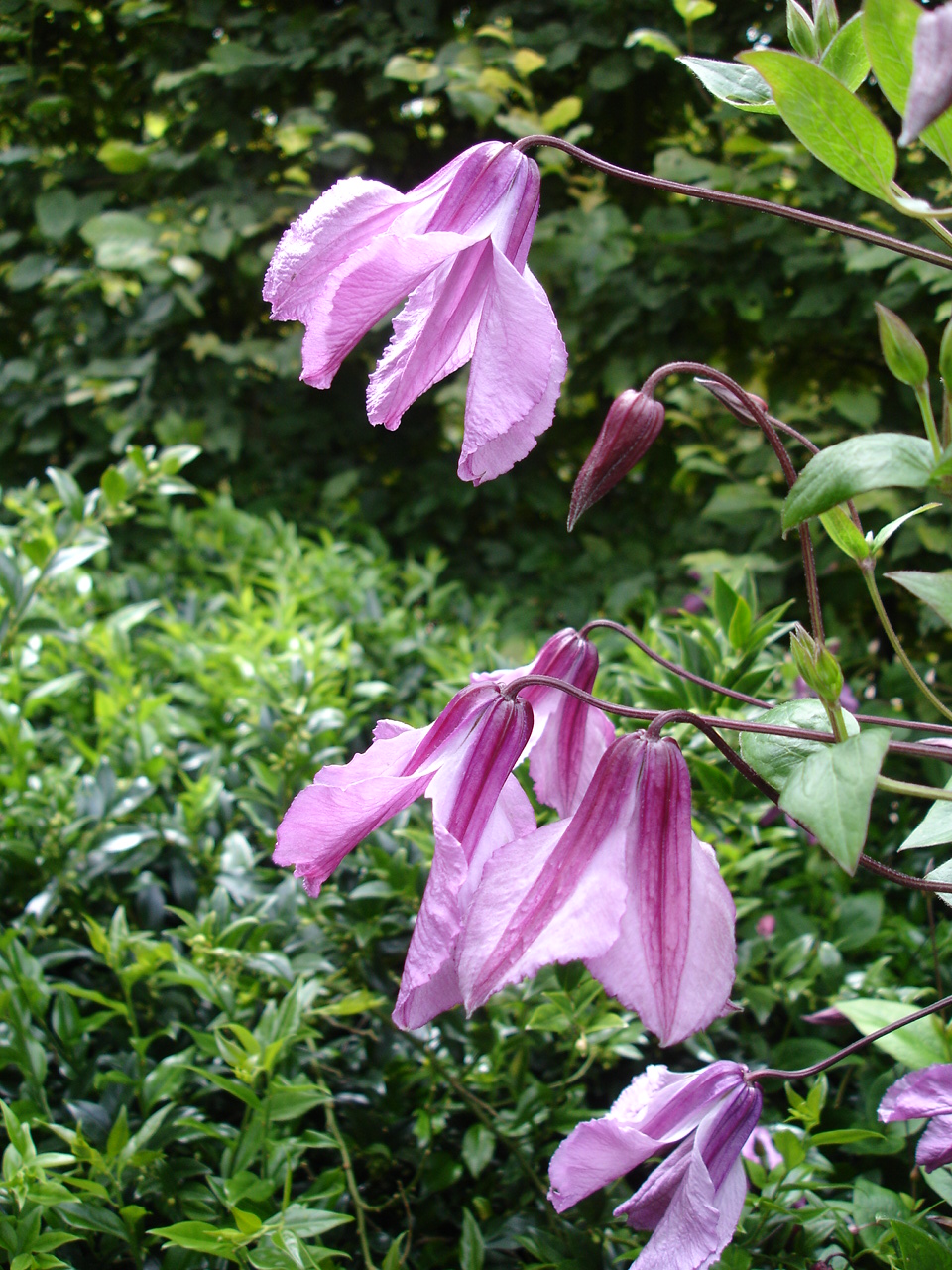
Clematis 'Alionushka' is a non-climbing herbaceous scrambling perennial vine in the buttercup family (Ranunculaceae) reaching 4–6 feet (1.2–1.8 m) tall with a spread of 2–3 feet (0.6–0.9 m). Unlike most large-flowered clematis, this cultivar does not climb by twining leaf petioles; instead, stems scramble over and through neighboring plants or support structures and require external support to hold the plant upright. Nodding bell-shaped to tulip-shaped flowers 2.5–3 inches (6–8 cm) long carry four thick fleshy recurved tepals in rich rose-pink to mauve-pink, darker at the central rib and paler at the margins. Flowers open from June through September on current-season growth across a 10–14 week bloom window. Leaves are simple (not compound), ovate 3–5 inches (8–13 cm) long, medium green — reflecting the C. integrifolia parentage in this integrifolia-type hybrid. The non-climbing habit means the plant flops without support; a framework of adjacent shrubs, an obelisk, or a low fence is required. All top growth dies to the ground in winter. Growth rate is vigorous once established. Hardy to zone 4. The cultivar was bred by M.A. Beskaravainaya at the Nikita Botanical Garden in Yalta, Crimea, in 1961. Pruning Group 3: all stems are cut to 6–12 inches (15–30 cm) in late winter. Clematis species and hybrids contain protoanemonin in sap, causing contact dermatitis and gastrointestinal distress if plant parts are ingested.
Native Range
Clematis 'Alionushka' is a hybrid of garden origin, with C. integrifolia as the primary parent. The cultivar was bred at the Nikita Botanical Garden in Yalta, Crimea, in 1961 by M.A. Beskaravainaya.Suggested Uses
Grown scrambling through shrubs, over obelisks, along low fences, and through perennial borders at 2–3 foot (0.6–0.9 m) spacing from the support plant. The non-climbing habit suits mixed borders where the stems weave through roses, medium shrubs, and tall perennials without the vigorous climbing that overwhelms companions. Ground cover use on slopes works when the plant is left unsupported. Container culture works in 7 gallon (26 L) or larger pots with an obelisk framework. The 10–14 week bloom window carries continuous color from June through September across a season when many perennials have finished their primary display. Pairing with silver-leaved plants such as Artemisia and white-flowered perennials such as Phlox paniculata 'David' produces a pink-silver-white planting palette.How to Identify
Appearance
Size & Dimensions
Height4' - 6'
Width/Spread2' - 3'
Bloom Information
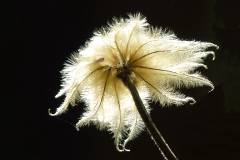
Nodding bell-shaped to tulip-shaped rich rose-pink flowers 2.5–3 inches (6–8 cm) long open from June through September on current-season growth. Bloom duration is 10–14 weeks with continuous new flowers across the summer. Silky seed heads develop after flowering and persist into fall, carrying an ornamental second-season feature.
Detailed Descriptions
Flower Description
Rich rose-pink to mauve-pink, darker at central rib and paler at margins; nodding bell-shaped to tulip-shaped 2.5-3 inches with four thick fleshy recurved tepalsFoliage Description
Medium green, simple ovate leaves 3-5 inches (not compound, reflecting C. integrifolia parentage)Growing Conditions
Sun Requirements
Requires 4-10 hours of direct sunlight daily
• Full Sun: 6+ hours of direct sunlight
• Partial Shade: 3-6 hours of direct sunlight
• Full Shade: Less than 3 hours of direct sunlight
Care & Maintenance
Care Guide
Grows in full sun to partial shade in moist well-drained neutral to slightly alkaline soil at pH 6.5–7.5, tolerating loam. Hardy to zone 4. Planting sets the crown 2–3 inches (5–8 cm) below the soil surface, which encourages basal bud development. Shade the root zone with low companion plants or mulch while keeping the top growth in sun. The non-climbing habit requires support: the plant grows through adjacent shrubs, over obelisks, or along low fences. Consistent moisture is needed during active growth. All stems are cut to 6–12 inches (15–30 cm) in late winter (Pruning Group 3). Clematis wilt is less common in integrifolia-type hybrids than in large-flowered types. Slugs may damage emerging stems in spring. Clematis sap contains protoanemonin and can cause contact dermatitis; ingestion causes gastrointestinal distress.Pruning
Pruning Group 3: Cut all stems to 6–12 inches (15–30 cm) above ground in late February through March, cutting just above a pair of strong buds. All growth is removed annually, as flowers appear on new wood produced in the current season. No other pruning is needed during the growing season beyond removing broken or damaged stems.Pruning Schedule
Prune: February–March
winterearly spring
Container Growing
Suitable for container growing
Minimum container size: 7 gallons