Clematis, Genus, durandii, Species,
- Genus & species
Durand's clematis
Hybrid of garden origin; raised Durand Frères, Lyon, France, circa 1870
Overview
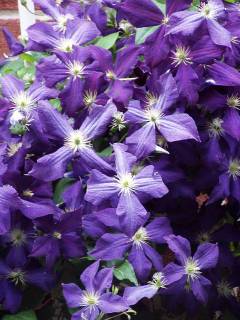
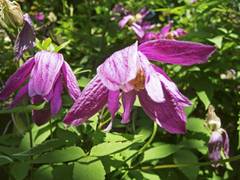
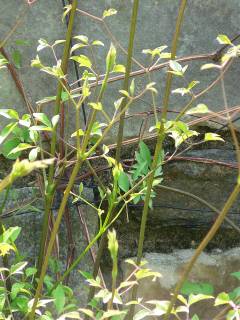
Clematis durandii is a non-climbing, herbaceous, scrambling perennial reaching 4–6 feet (1.2–1.8 m) tall with a spread of 2–3 feet (0.6–0.9 m). This hybrid (C. integrifolia × C. lanuginosa) produces large, flat to slightly cupped, four-tepaled flowers 3–4 inches (8–10 cm) across in deep indigo-blue to violet-blue with a central boss of creamy-white stamens, from June through September on current-season growth. The flowers are the deepest, richest blue of any commonly grown clematis—darker than most large-flowered blue hybrids. Like 'Alionushka,' this cultivar does not climb by leaf petioles; it scrambles and flops without support. Leaves are simple, elliptic, 3–5 inches (8–13 cm) long, dark green, strongly ribbed—reflecting the C. integrifolia parentage. All top growth dies to the ground in winter. Growth rate is vigorous once established. Raised by Durand Frères nursery, Lyon, France, around 1870. Pruning Group 3. Clematis wilt is rare in integrifolia hybrids. The non-climbing habit requires support from adjacent plants or structures.
Native Range
Clematis × durandii is a hybrid of garden origin (C. integrifolia × C. lanuginosa). Raised by Durand Frères nursery, Lyon, France, circa 1870.Suggested Uses
Planted scrambling through shrubs, over obelisks, through perennial borders, and as a ground cover at 2–3 foot (0.6–0.9 m) spacing. The deep blue color is one of the truest blues available among clematis. Functions in cut flower arrangements—the stems are non-twining and easy to arrange. Grows in containers of at least 7 gallons (26 L) with an obelisk. The non-climbing habit integrates into mixed borders more naturally than true climbing clematis. Pair with yellow- and white-flowered perennials for color contrast.How to Identify
Appearance
Size & Dimensions
Height4' - 6'
Width/Spread2' - 3'
Bloom Information
Flat to slightly cupped, four-tepaled, deep indigo-blue to violet-blue flowers 3–4 inches (8–10 cm) across with creamy-white stamens appear from June through September on current-season growth. Bloom duration is 10–14 weeks with continuous new flowers.
Detailed Descriptions
Flower Description
Deep indigo-blue to violet-blue with creamy-white stamensFoliage Description
Dark green, simple, elliptic, strongly ribbedGrowing Conditions
Sun Requirements
Requires 4-10 hours of direct sunlight daily
• Full Sun: 6+ hours of direct sunlight
• Partial Shade: 3-6 hours of direct sunlight
• Full Shade: Less than 3 hours of direct sunlight
Care & Maintenance
Care Guide
Plant with the crown 2–3 inches (5–8 cm) below soil surface in moist, well-drained soil. Full sun to partial shade; shade the root zone. The non-climbing habit requires support: grow through shrubs, over obelisks, or allow to scramble as a ground cover. Consistent moisture during active growth. Cut all stems to 6–12 inches (15–30 cm) in late winter (Pruning Group 3). Clematis wilt is rare. No serious pest or disease problems. Slugs may damage emerging stems in spring.Pruning
Pruning Group 3: Cut all stems to 6–12 inches (15–30 cm) above ground in late February to March. All growth is removed annually; flowers appear on new wood.Pruning Schedule
Prune: February–March
winterearly spring
Container Growing
Suitable for container growing
Minimum container size: 7 gallons