Image 1 of 5
1 / 5
© No machine-readable author provided. Ryanl~commonswiki assumed (based on copyright claims)., some rights reserved (CC-BY-SA) · Wikimedia Commons
Clematis, Genus, 'Etoile Violette', Cultivar,
- Genus
- Cultivar
Etoile violette clematis
Hybrid of garden origin; viticella type, raised Morel, Lyon, France, 1885
Overview
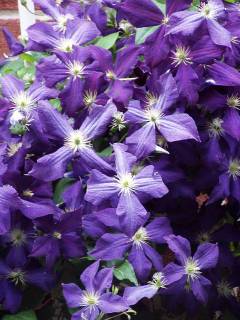
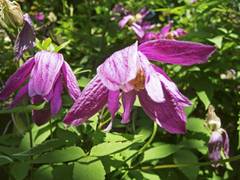
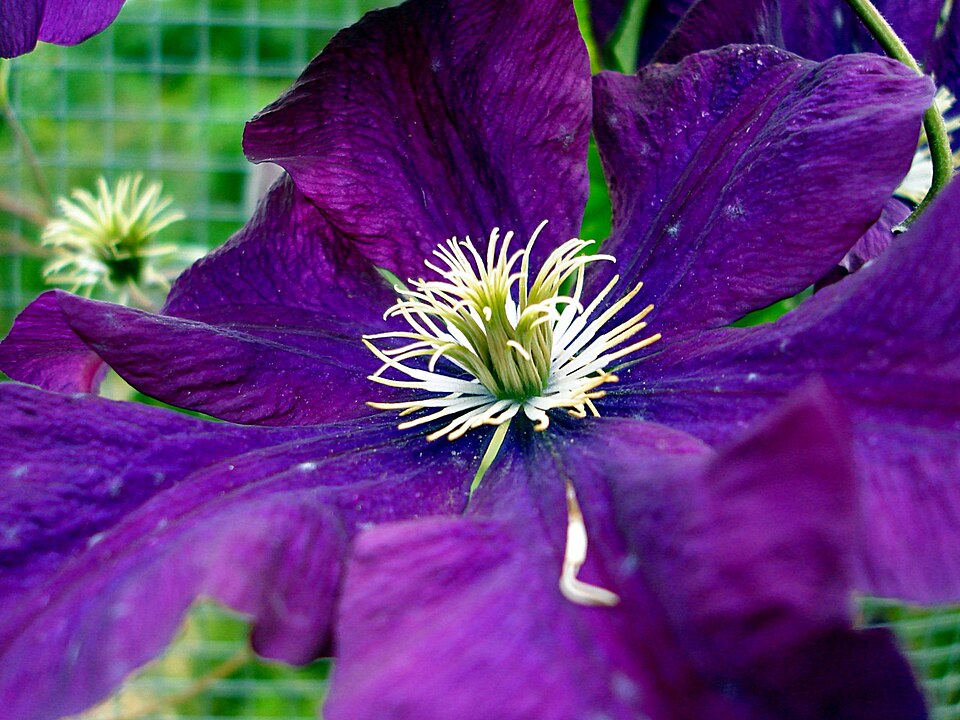
Clematis 'Etoile Violette' is a vigorous, deciduous, climbing vine in the Viticella Group reaching 10–15 feet (3–4.5 m) per season with a spread of 4–6 feet (1.2–1.8 m). The cultivar carries masses of nodding to outward-facing, four- to six-tepaled flowers 3–4 inches (8–10 cm) across in deep violet-purple with creamy-yellow anthers, from June through September on current-season growth. The tepals are slightly recurved and well-separated, producing a star-like form—'étoile' means 'star' in French. The deep violet-purple holds without fading through the flowering period, a pigmentation trait that sets the cultivar apart from lighter viticella hybrids. Leaves are compound and pinnate with 3–5 dark green leaflets. The plant climbs by twining leaf petioles. Growth rate is vigorous, covering 10–15 feet (3–4.5 m) from the base each season. Pruning Group 3. The C. viticella parentage confers strong resistance to clematis wilt (Calophoma clematidina). Raised by Francisque Morel in Lyon, France, in 1885—a widely grown viticella selection with documented 140-year cultivation history. All parts contain protoanemonin, an irritant that causes skin and mucous membrane contact dermatitis; sap contact during pruning should be rinsed off promptly and ingestion causes mouth burning and GI upset.
Native Range
Clematis 'Etoile Violette' is a viticella hybrid of garden origin. C. viticella is native to southern Europe (Italy, Spain, Turkey, the Balkans), occurring in sunny woodland edges and scrubland. Raised by Francisque Morel in Lyon, France, 1885.Suggested Uses
Planted on large trellises, arbors, pergolas, fences, and scrambling through large trees at 4–6 foot (1.2–1.8 m) spacing. The vigorous annual growth covers large structures within a single season. Functions paired with climbing roses, where the clematis threads through the rose canes to combine purple stars with the rose color. The 15-foot reach suits large walls and pergola curtains where smaller clematis would look undersized. The deep purple contrasts with yellow, white, and pale pink climbing companions in a combined trellis planting. Grows in large containers of at least 10 gallons (38 L) with a sturdy support. The wilt resistance from the viticella parentage supports reliable performance in gardens where large-flowered hybrids have failed.How to Identify
Appearance
Size & Dimensions
Height10' - 15'
Width/Spread4' - 6'
Bloom Information
Nodding to outward-facing, star-shaped, deep violet-purple flowers 3–4 inches (8–10 cm) across with creamy-yellow anthers open from June through September on current-season growth. Bloom duration is 12–14 weeks. Silky seed heads develop after flowering and persist into fall.
Detailed Descriptions
Flower Description
Deep violet-purple with creamy-yellow anthersFoliage Description
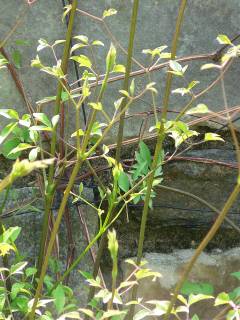
Dark green, compound pinnate with 3-5 leafletsGrowing Conditions
Sun Requirements
Requires 4-10 hours of direct sunlight daily
• Full Sun: 6+ hours of direct sunlight
• Partial Shade: 3-6 hours of direct sunlight
• Full Shade: Less than 3 hours of direct sunlight
Care & Maintenance
Care Guide
Plant with the crown 2–3 inches (5–8 cm) below soil surface in moist, well-drained soil. Full sun to partial shade; shading the root zone with mulch or low companions reduces summer stress. A sturdy trellis, fence, arbor, or mature tree supplies support for the vigorous growth that can reach 15 feet (4.5 m) in a single season. Consistent moisture through the growing season supports sustained bloom. The C. viticella parentage confers strong resistance to clematis wilt. Cutting all stems to 6–12 inches (15–30 cm) in late winter (Pruning Group 3) renews the flowering framework. All parts contain protoanemonin, an irritant; gloves during pruning reduce skin contact.Pruning
Pruning Group 3: all stems are cut to 6–12 inches (15–30 cm) above ground in late February to March, just above a pair of strong buds. Flowers form on new wood. The vigorous annual regrowth covers large structures by mid-summer.Pruning Schedule
Prune: February–March
winterearly spring
Container Growing
Suitable for container growing
Minimum container size: 10 gallons