Clematis, Genus, montana, Species,
- Genus & species
Himalayan clematis
Himalaya and central to western China
Overview
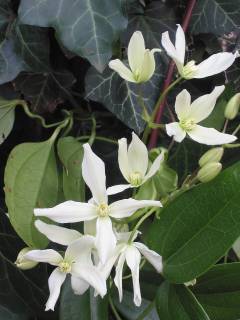
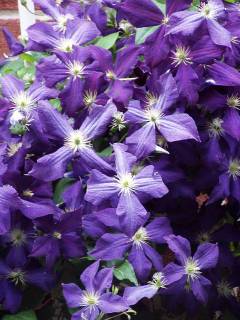
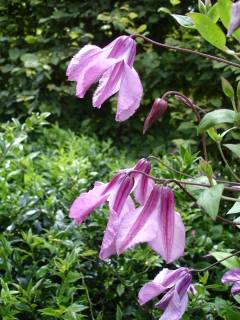
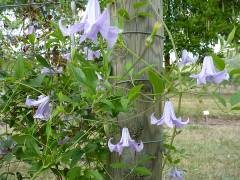
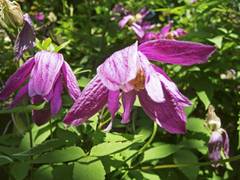
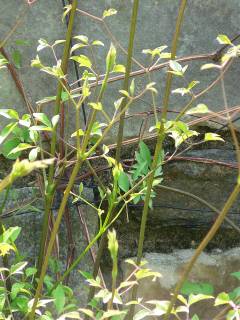
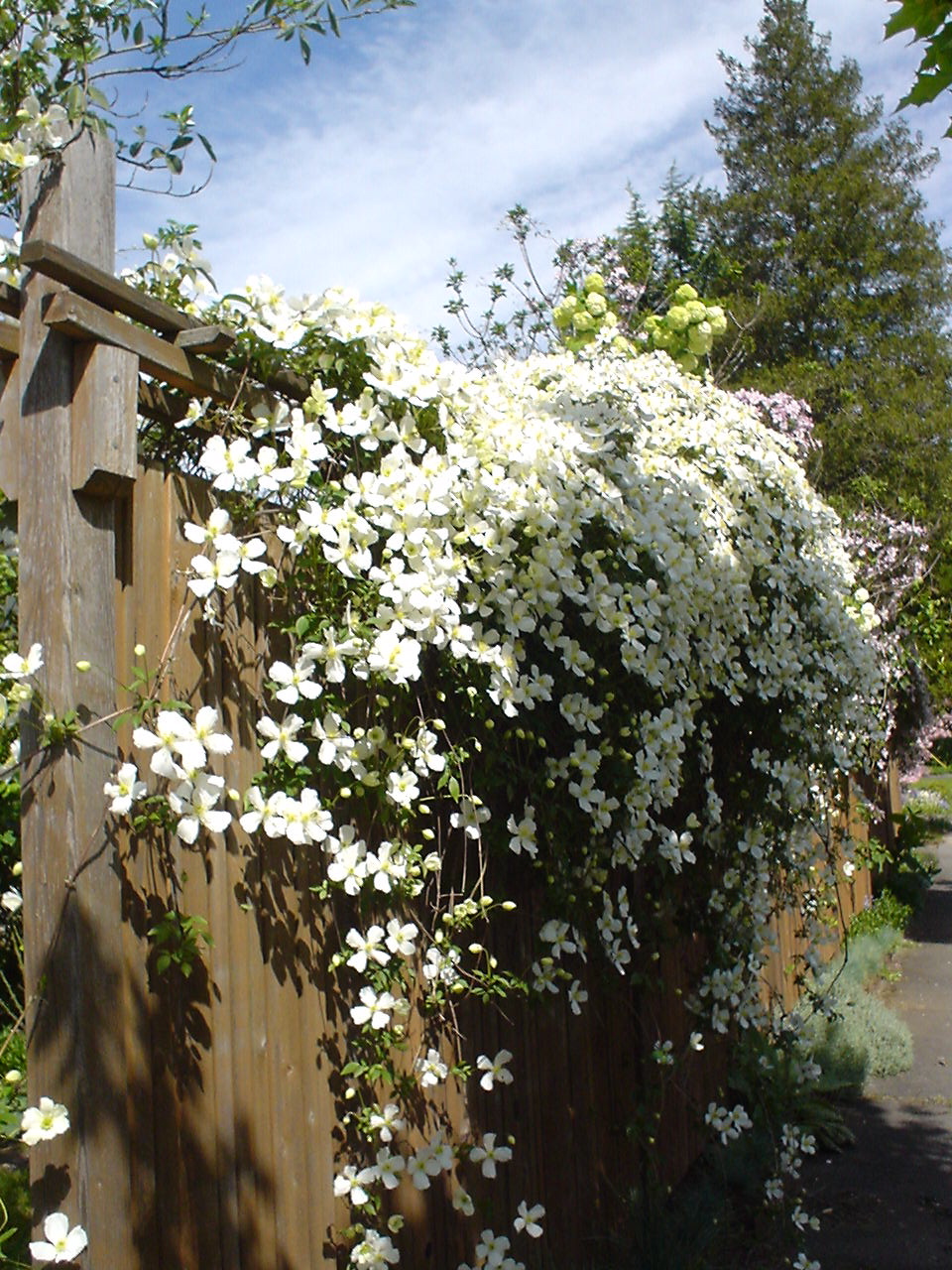
Clematis montana is a deciduous climber that twines by coiling leaf stalks and reaches 20-40 feet (6-12 m) tall and 10-15 feet (3-4.5 m) wide, extending 6-10 feet (1.8-3 m) per year once established. Leaves are ternate, the three leaflets ovate to lanceolate, 1.5-4 inches (4-10 cm) long, coarsely toothed, and bronze-tinted on emergence before hardening to mid-green; C. montana var. rubens holds purple-bronze foliage through summer. Flowers open flat, 2-3 inches (5-7.5 cm) across, with four petal-like sepals in white or pink surrounding a boss of yellow stamens 0.3-0.4 inch (8-10 mm) wide. Bloom covers the previous season's wood in late spring, a mature plant carrying several thousand flowers over 3-5 weeks. Scent ranges from vanilla-like in selections such as 'Elizabeth' to absent in others. Seed heads are clusters of achenes with silky plumose styles 1-2 inches (2.5-5 cm) long that persist into autumn. Mature stems build a woody mass exceeding 200 pounds (90 kg), which collapses trellis and lightweight supports. Foliage is shed from the lower 3-6 feet (0.9-1.8 m) of stem as plants age, leaving bare woody growth at the base. All parts contain protoanemonin, and sap contact causes skin blistering in some individuals.
Native Range
Native to the Himalaya from Afghanistan through Nepal and Bhutan into central and western China, including Yunnan, Sichuan, and Hubei. Grows in forest margins, scrub, and river gorges at 3,900-13,100 feet (1,200-4,000 m). Naturalized in parts of temperate Europe and New Zealand.Suggested Uses
Grown on house walls, sheds, pergolas, and mature trees where 20-40 feet (6-12 m) of growth can be carried, and along boundary fences at 8-12 foot (2.4-3.7 m) spacing. Dense stem growth is used as nesting cover by small birds. Container culture is short-lived, as restricted root volume limits extension to 6-8 feet (1.8-2.4 m) and plants decline after 3-4 years.How to Identify
Appearance
Size & Dimensions
Height20' - 40'
Width/Spread10' - 15'
Bloom Information
Flowers late April through early June in zones 6-9, peaking in May across much of its cultivated range and in late May to early June in cooler maritime climates. Total bloom lasts 3-5 weeks, with individual flowers holding 7-10 days. Flowering occurs only on stems formed during the previous season, so stems cut back in winter or early spring carry no bloom that year. Frost below 28F (-2C) during bud swell removes that season's flowers.
Detailed Descriptions
Flower Description
White to pink with yellow stamensFoliage Description
Mid-green, bronze-tinted when youngGrowing Conditions
Sun Requirements
Requires 5-8 hours of direct sunlight daily
• Full Sun: 6+ hours of direct sunlight
• Partial Shade: 3-6 hours of direct sunlight
• Full Shade: Less than 3 hours of direct sunlight
Care & Maintenance
Care Guide
Plants are set with the crown 2-3 inches (5-8 cm) below soil level, which allows regrowth from basal buds if top growth is damaged. Roots take 1 inch (25 mm) of water per week through the first two growing seasons under a 2-3 inch (5-8 cm) mulch held clear of the stems, keeping the root zone below 70F (21C). Established plants tolerate 2-3 weeks without rain, though flower size drops in prolonged drought. A balanced granular feed in early spring and again after flowering supports the 6-10 foot (1.8-3 m) annual extension. Clematis wilt, caused by Calophoma clematidina, affects this species far less than large-flowered hybrids, while earwigs and slugs graze young shoots in spring. Supports must carry 200 pounds (90 kg) or more of mature growth, as arches and thin trellis fail under the accumulated weight.Pruning
Pruning falls in Group 1: stems are cut back within 4-6 weeks of flowering ending, since buds for the following spring form on growth made in mid to late summer. Unpruned plants continue flowering but build bare woody stems at the base while adding 6-10 feet (1.8-3 m) of growth per year. Stems cut hard into old wood regrow from basal buds within 1-2 seasons and resume flowering in the second year after cutting.Pruning Schedule
Prune: June–July
summer