Image 1 of 5
1 / 5
© Mike Gifford from Ottawa, Canada, some rights reserved (CC-BY-SA) · Wikimedia Commons
Clematis, Genus, 'Jackmanii', Cultivar,
- Genus
- Cultivar
jackman clematis
Hybrid of garden origin; raised by George Jackman and Son, Woking, Surrey, England in 1858
Overview
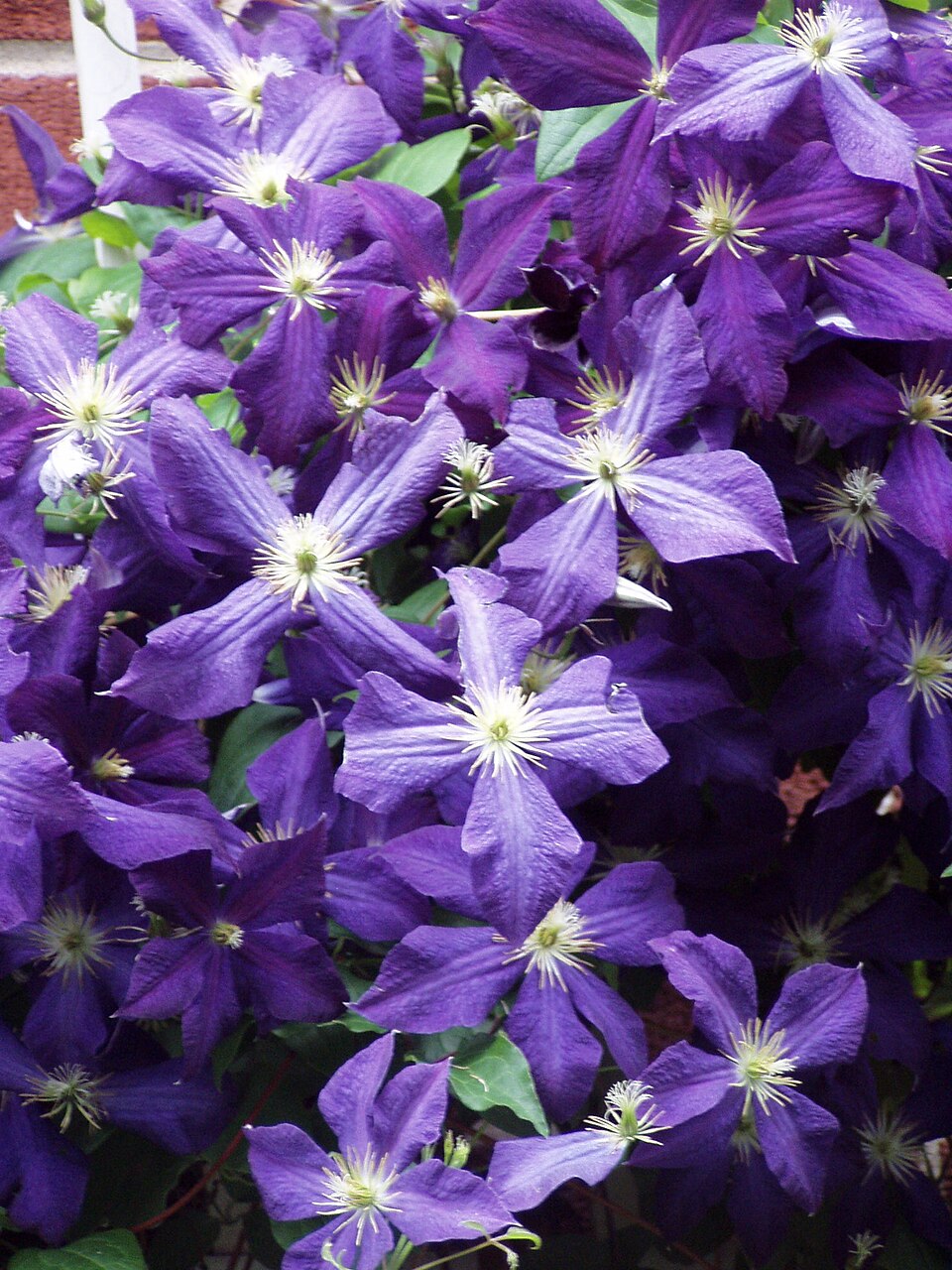
Clematis 'Jackmanii' is a climbing deciduous vine that grows 8-12 feet (2.4-3.7 m) tall and 3-5 feet (90-150 cm) wide. Raised by George Jackman and Son in Surrey, England in 1858, it was among the earliest large-flowered clematis hybrids and remains widely planted more than 165 years later. From June through September, roughly 14 weeks, it carries flat open flowers 4-6 inches (10-15 cm) across in deep purple to violet-purple, each with four to six velvety tepals; clematis flowers have no true petals, so the colored parts are sepals. The vine climbs by twisting its leaf stalks around a support and has no tendrils, so it needs a trellis, wires, or a host shrub. Leaves are pinnately compound with three to five leaflets. It belongs to pruning group 3 and flowers only on new wood, so stems are cut hard to 6-12 inches (15-30 cm) in late winter. Clematis wilt can collapse individual stems; cutting them to the ground usually brings fresh growth. The roots want shade while the top climbs into sun. All parts contain protoanemonin and are toxic to pets and humans if eaten. Hardy in zones 4-9, it grows quickly in part to full sun.
Native Range
A hybrid of garden origin, raised by George Jackman and Son of Woking, Surrey, England in 1858. It was among the first large-flowered clematis hybrids.Suggested Uses
Grown on trellises, arbors, pergolas, and fences, through shrubs and small trees, and in containers of at least 15 gallons (57 L), spaced 3-5 feet (90-150 cm) apart. The long bloom covers most of summer. All parts are toxic if eaten, and it is hardy in zones 4-9.How to Identify
Appearance
Size & Dimensions
Height8' - 12'
Width/Spread3' - 5'
Bloom Information
Detailed Descriptions
Flower Description
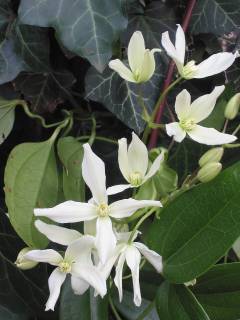
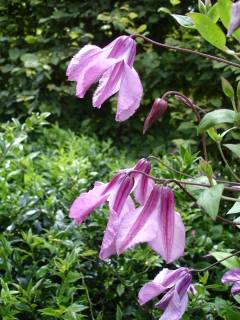
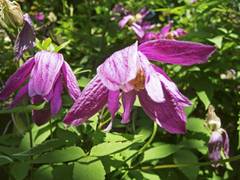
Deep purple to violet-purple, flat and open, 4-6 inches (10-15 cm) across, with four to six velvety tepals; clematis flowers lack true petals, so the colored parts are sepals; June to SeptemberFoliage Description
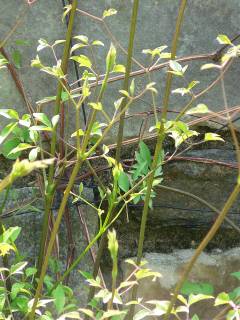
Medium green, pinnately compound with three to five leaflets, each leaflet 2-4 inches (5-10 cm) long and ovate; the vine climbs by twisting its leaf stalks around supports rather than by tendrilsGrowing Conditions
Sun Requirements
Requires 4-8 hours of direct sunlight daily
• Full Sun: 6+ hours of direct sunlight
• Partial Shade: 3-6 hours of direct sunlight
• Full Shade: Less than 3 hours of direct sunlight
Care & Maintenance
Care Guide
Grow in part to full sun with 4-8 hours of light in moist, well-drained loam at pH 6.0-7.0. Shade the root zone with mulch or low plants while the top climbs into sun. As a pruning group 3 vine, cut all stems hard to 6-12 inches (15-30 cm) in late winter, February or March, since bloom comes on new wood. Clematis wilt may collapse a stem; cut affected stems to the ground and new shoots usually return. The vine needs a support in place at planting. All parts are toxic if eaten, and it is hardy in zones 4-9.Pruning
As a pruning group 3 clematis, cut all stems hard to 6-12 inches (15-30 cm) above the ground in late winter, February or March. Because bloom forms on new wood, this yearly hard cut keeps flowering heavy. A climbing support belongs in place from planting.Pruning Schedule
Prune: February–March
early spring
Container Growing
Suitable for container growing
Minimum container size: 15 gallons