Clematis, Genus, cirrhosa, Species,
- Genus & species
early clematis
Mediterranean basin from Portugal and Morocco east through southern France, Corsica, Sardinia, the Balearic Islands, Italy, Greece, Crete, Turkey, and the Levant; native habitats include maquis scrubland, rocky hillsides, and woodland margins to approximately 3,300 feet elevation
Overview
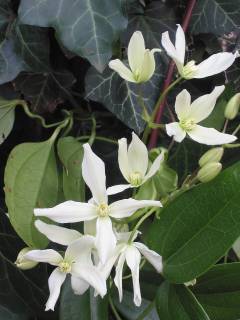
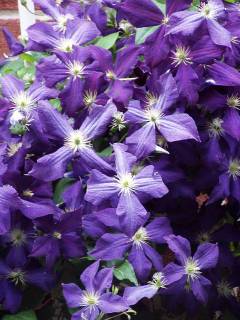
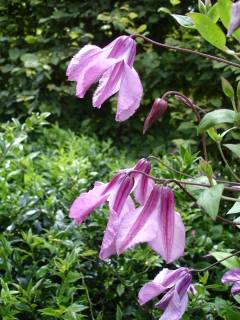
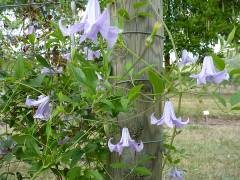
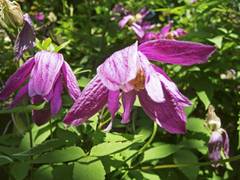
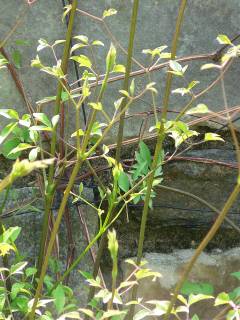
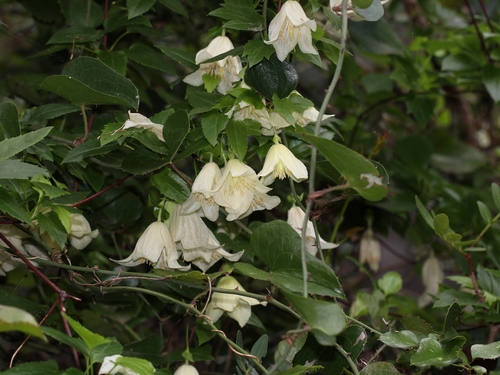
Clematis cirrhosa is an evergreen climbing vine in the buttercup family (Ranunculaceae) reaching 10–15 feet (3–4.5 m) tall and 4–6 feet (1.2–1.8 m) wide, climbing through twining leaf petioles around support structures (the standard climbing mechanism for Clematis). Leaves are variable across individual plants — simple to ternate, dark glossy green, 1–3 inches (2.5–8 cm) long, often developing bronze to purple tints in cold winter weather. The variety balearica (sometimes sold as 'Freckles') carries leaves deeply divided into fern-like segments and heavy reddish-purple speckling on the inner tepals. Flowers are bell-shaped to nodding, 1.5–2.5 inches (4–6 cm) across, with four tepals, cream to pale yellow-green, often speckled or flushed reddish-purple on the interior surface. The cultivar flowers from November through February in the Pacific Northwest — a winter-flowering window when few other climbers bloom. Flowers carry a mild lemon-like fragrance, most noticeable on warm winter days when air temperatures rise above 50°F (10°C). Silky feathery seed heads (achenes with persistent styles) develop after flowering and persist into spring. The species is native to the Mediterranean basin and tolerates mild winter conditions but suffers foliage damage below 15°F (-9°C) and stem dieback below 5°F (-15°C). In the Pacific Northwest, the species performs better in sheltered south- or west-facing positions west of the Cascades than in colder positions east of the Cascades. Plants enter semi-dormancy in summer heat, sometimes dropping older leaves. Susceptible to clematis wilt (Phoma clematidina) but less severely affected than the large-flowered hybrid Clematis cultivars. Toxic to humans and pets through protoanemonin in fresh stem and leaf sap.
Native Range
Clematis cirrhosa is native to the Mediterranean basin, occurring from Portugal and Morocco eastward through southern France, Corsica, Sardinia, the Balearic Islands, mainland Italy, Greece, Crete, Turkey, and into the Levant. The species grows in maquis scrubland, rocky hillsides, and woodland margins from near sea level to approximately 3,300 feet (1,000 m).Suggested Uses
Trained on south- or west-facing walls, fences, pergolas, and through established evergreen shrubs and trees in positions where the winter flowers are visible from indoor windows or main entryways. Suits sheltered porch and arbor positions near entrances where the winter blooms and lemon scent reach human scale. In the Pacific Northwest, combines with a summer-flowering Clematis (Pruning Group 3) on the same support structure for year-round flower interest across both seasons. The feathery seed heads extend ornamental value into spring after the flower window closes. The species is unsuitable for colder continental climates where winter air temperatures regularly drop below 5°F (-15°C); foliage damage at 15°F (-9°C) and stem dieback at 5°F (-15°C) restrict the cultivar to USDA zones 7–10 in temperate North America.How to Identify
Appearance
Size & Dimensions
Height10' - 15'
Width/Spread4' - 6'
Bloom Information
Bloom period runs November through February in the Pacific Northwest, with peak bloom in December–January during mild spells. Individual flowers last 2–3 weeks. Bloom may pause during hard frost periods and resume when air temperatures rise above 40°F (4°C). Feathery seed heads develop from February through April. Pollination occurs by early-season bumblebees and honeybees foraging during warm winter spells when air temperatures rise above 50°F (10°C); fruit set runs lower than in summer-flowering Clematis due to reduced pollinator activity in the winter window.
Detailed Descriptions
Flower Description
Cream to pale yellow-green; often speckled or flushed reddish-purple on interior; bell-shaped to nodding 1.5-2.5 inches across with four tepalsFoliage Description
Dark glossy green; bronze-purple in cold winter weather; simple to ternate 1-3 inches longGrowing Conditions
Sun Requirements
Requires 4-8 hours of direct sunlight daily
• Full Sun: 6+ hours of direct sunlight
• Partial Shade: 3-6 hours of direct sunlight
• Full Shade: Less than 3 hours of direct sunlight
Care & Maintenance
Care Guide
Plant in a sheltered position in full sun to partial shade against a south- or west-facing wall, fence, or pergola. Soil should be fertile well-drained neutral to slightly alkaline at pH 6.5–7.5, with the root zone shaded or mulched to keep it cool — Clematis foliage and flowers run most reliably in sun with the root system in shade. Space 6–8 feet (1.8–2.4 m) from other climbers to prevent canopy competition. Plant with the top of the rootball 2–3 inches (5–8 cm) below the soil surface to encourage basal bud regeneration if the upper stem is damaged by frost or pest activity. Water regularly during the first two growing seasons for root establishment; once established, the species tolerates moderate summer drought consistent with its Mediterranean origin. Feed with a balanced fertilizer in spring after flowering. Provide a sturdy support — trellis, wires, or an established tree or shrub to climb through. Stem dieback to ground level can occur after winter temperatures below 5°F (-15°C); plants typically regrow from the buried crown but may not flower the following winter due to loss of the previous year's flowering wood.Pruning
Pruning Group 1 — flowers form on the previous year's growth. Prune lightly immediately after flowering finishes in late February or March, removing only dead damaged or congested stems. Hard pruning in spring removes the flowering wood for the following winter and is avoided. If renovation pruning is needed, cut back hard immediately after flowering — the plant regrows from the base but typically skips the following winter's flower production while it rebuilds the wood framework.Pruning Schedule
Prune: February–March
winterspring
Container Growing
Minimum container size: 10 gallons