Clematis, Genus, ×, Hybrid, 'Rebecca', Cultivar,
- Genus
- Hybrid
- Cultivar
rebecca clematis
Garden hybrid bred by Raymond Evison, Guernsey
Overview
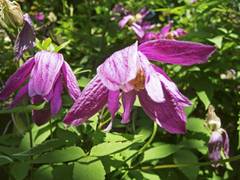
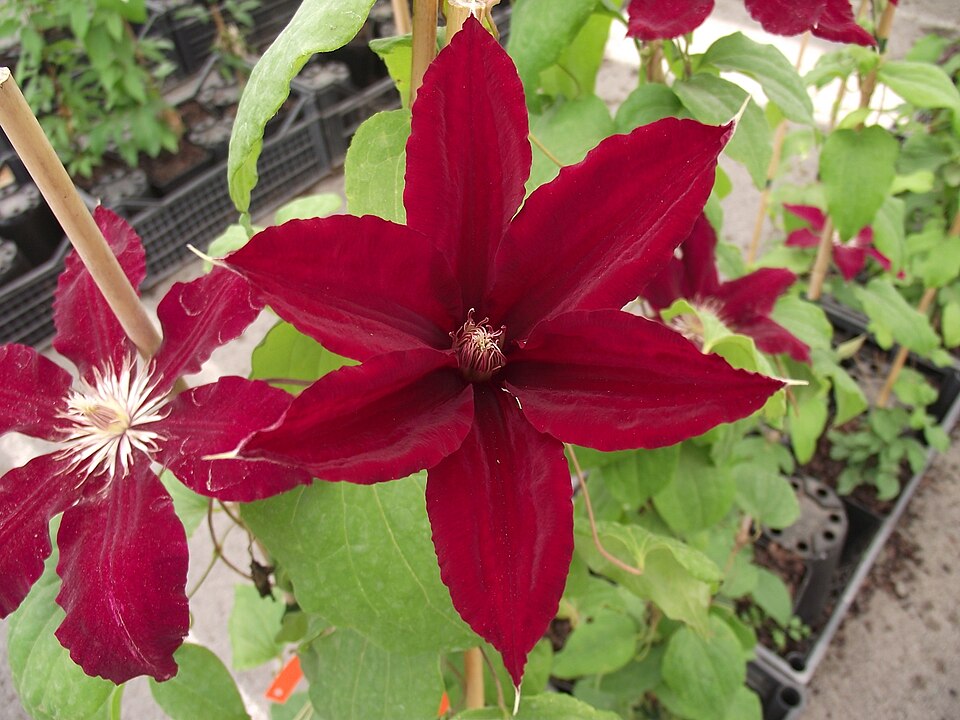
Clematis × 'Rebecca' is a large-flowered hybrid clematis bred by Raymond Evison that climbs 72-96 inches (180-240 cm) tall and 24-36 inches (60-90 cm) wide. Flat, open flowers 5-6 inches (13-15 cm) across carry six vivid red to velvet-red tepals around dark red stamens, opening from May through September on both old and new wood. The red is saturated and true, brighter and less purple than 'Niobe' and less magenta than 'Ernest Markham'. The color holds without much fading in partial shade, though aging flowers may lighten toward rose-red in full hot sun. Bloom runs near-continuously for 14 weeks or more, longer than most Group 2 clematis because the plant flowers on both wood types. Dark green compound leaves clothe the vine on twining leaf stalks. This is a Group 2, light-prune clematis: dead and weak stems are removed in late winter and the rest cut back to strong buds. Wilt resistance is moderate. It was introduced by Evison in the early 2000s and named for the wife of a clematis grower. All parts contain protoanemonin and are toxic if eaten.
Native Range
Clematis × 'Rebecca' is a garden hybrid bred by Raymond Evison in Guernsey, Channel Islands.Suggested Uses
Trained on trellises, arbors, and fences, where the vivid red draws the eye, and grown in containers of 10 gallons (38 L) or more. The true red suits red-themed plantings and pairs with white or blue clematis on a shared structure for a tricolor effect. All parts are toxic if eaten.How to Identify
Appearance
Size & Dimensions
Height6' - 8'
Width/Spread2' - 3'
Bloom Information
Detailed Descriptions
Flower Description
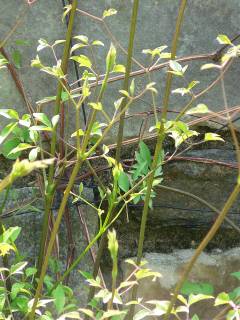
Vivid red to velvet-red, flat, 5-6 inches (13-15 cm) across, with six tepals and dark red stamensFoliage Description
Dark green, compound, with twining leaf stalksGrowing Conditions
Sun Requirements
Requires 5-8 hours of direct sunlight daily
• Full Sun: 6+ hours of direct sunlight
• Partial Shade: 3-6 hours of direct sunlight
• Full Shade: Less than 3 hours of direct sunlight
Care & Maintenance
Care Guide
Grow in full sun to partial shade with at least 5 hours of light. Mulch or shade the root zone. Set in well-drained, humus-rich soil. As a Group 2 clematis, remove dead and weak stems in late winter and cut the rest to strong buds; a hard cut delays the start of bloom. The twining leaf stalks need a trellis or support. Water regularly and feed lightly in spring.Pruning
Group 2, light prune: in late February and March, remove dead and weak stems and cut the rest to strong buds, keeping the old wood for the spring bloom. A Group 3 hard cut is tolerated but pushes the start of bloom later.Pruning Schedule
Prune: February–March
early spring
Container Growing
Suitable for container growing
Minimum container size: 10 gallons