Clematis, Genus, ×, Hybrid, 'Niobe', Cultivar,
- Genus
- Hybrid
- Cultivar
niobe clematis
Overview
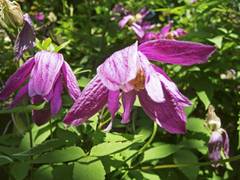
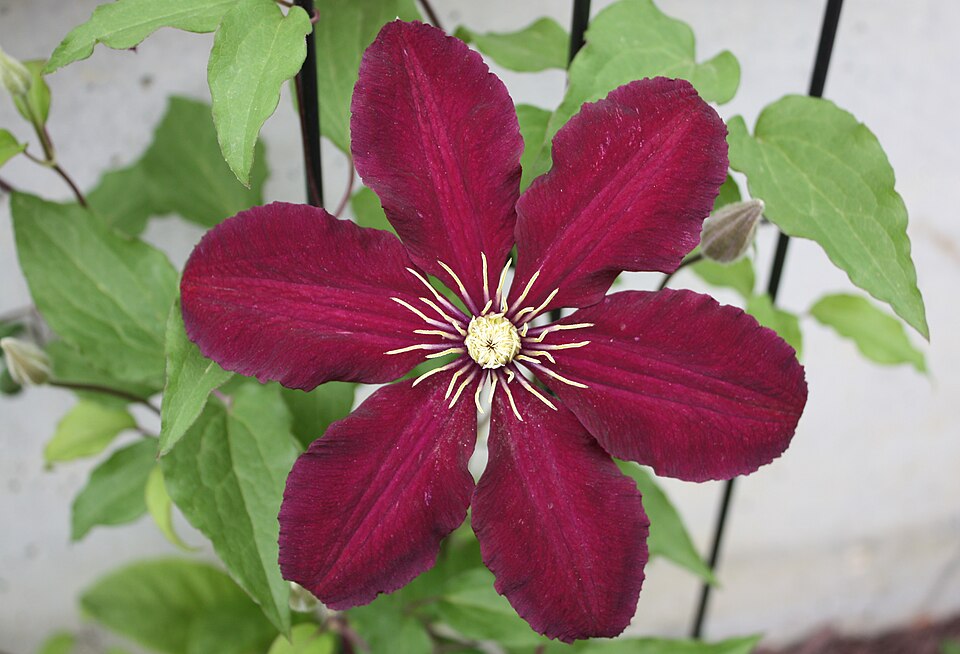
Clematis × 'Niobe' is widely regarded as the closest-to-true-red among commonly available large-flowered clematis. Plants climb 72–96 inches (180–240 cm) tall. Flat, open flowers 4–6 inches (10–15 cm) across with 6 deep ruby-red to wine-red tepals and contrasting golden-yellow stamens appear from May through September on both old and new wood. The first flowers of the season open nearly black-red, aging to ruby-red as the tepals expand — this color transition means newly opened and mature flowers on the same plant differ in shade. The golden-yellow stamens against the dark red tepals create a warm, high-contrast center. 'Niobe' blooms on both old and new wood, placing it in Group 2 for pruning, though it responds to Group 3 hard pruning with only a short delay before flowering begins on new growth. The moderate height makes it manageable on smaller supports. Named for Niobe of Greek mythology, the cultivar was raised by Wladyslaw Noll in Poland and introduced in 1975. Clematis wilt resistance is moderate. All parts contain protoanemonin, toxic if ingested.
Native Range
Clematis × 'Niobe' is a garden hybrid raised by Wladyslaw Noll in Warsaw, Poland, and introduced in 1975.Suggested Uses
Trained on trellises, arbors, and fences where the deep red color is visible against lighter backgrounds. The closest-to-true-red clematis for gardeners seeking warm color on a vine. Container culture works in pots of 10 gallons (38 liters) or more. Pairs with white clematis ('Henryi') and golden-leaved plants for contrast.How to Identify
Appearance
Size & Dimensions
Height6' - 8'
Width/Spread2' - 3'
Colors
Bloom Information
Flowering begins in May on old wood and continues through September on new growth, approximately 12 weeks total. First flowers of the season are the darkest, nearly black-red. The extended bloom is longer than most Group 2 clematis due to flowering on both growth types.
Detailed Descriptions
Flower Description
Deep ruby-red to wine-redFoliage Description
Dark green, compound, with twining petiolesGrowing Conditions
Sun Requirements
Requires 5-10 hours of direct sunlight daily
• Full Sun: 6+ hours of direct sunlight
• Partial Shade: 3-6 hours of direct sunlight
• Full Shade: Less than 3 hours of direct sunlight
Care & Maintenance
Care Guide
Plant in full sun to partial shade with at least 5 hours of direct light. Shade the root zone. Well-drained, humus-rich soil. Group 2 pruning: remove dead and weak stems in late winter, cut to strong buds. Tolerates Group 3 hard pruning with a short delay before new-growth bloom. Provide support. Water regularly. Fertilize lightly in spring.Pruning
Group 2 (light prune): In late February–March, remove dead and weak stems, cut remaining to strong buds. Alternatively, Group 3 hard pruning to 6–12 inches (15–30 cm) is tolerated — flowering begins a few weeks later on new growth.Pruning Schedule
Prune: February–March
early spring
Container Growing
Suitable for container growing
Minimum container size: 10 gallons