Clematis, Genus, 'Polish Spirit', Cultivar,
- Genus
- Cultivar
Polish spirit clematis
Hybrid of garden origin; viticella parent species native to southern Europe; cultivar raised by Stefan Franczak, Warsaw, Poland
Overview
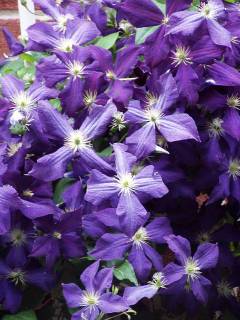
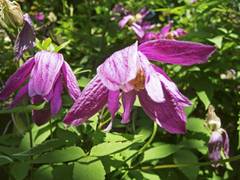
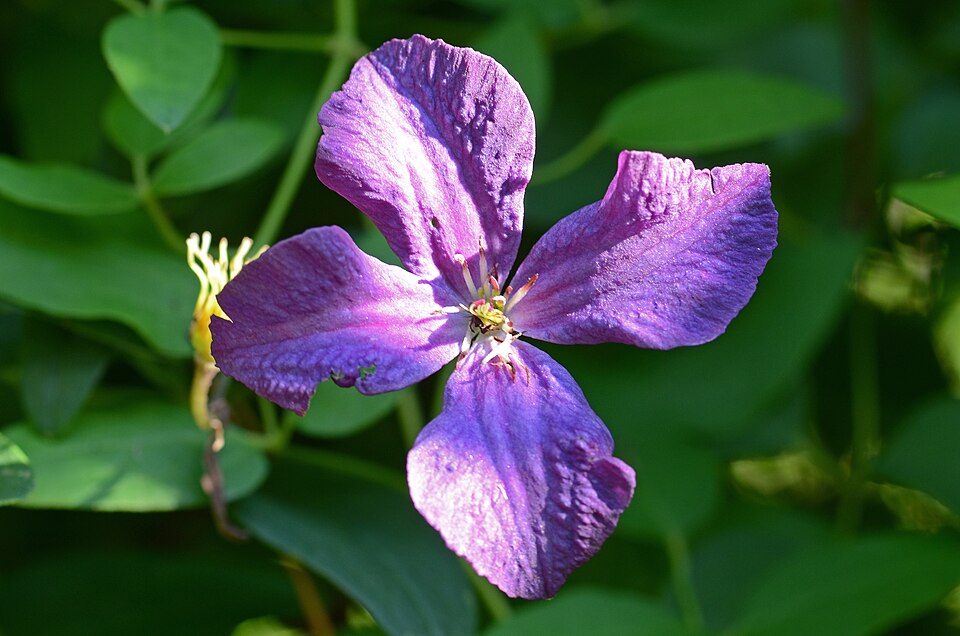
Clematis 'Polish Spirit' is a vigorous deciduous climbing vine in the Viticella Group, in the buttercup family (Ranunculaceae), reaching 10–15 feet (3–4.5 m) per season with a spread of 4–6 feet (1.2–1.8 m). The cultivar carries masses of outward-facing four- to six-tepaled flowers 3–4 inches (8–10 cm) across in rich violet-purple with dark reddish-purple anthers, from June through September on current-season growth. Tepals are slightly overlapping and gently recurved. Flower color is a saturated violet-purple that holds without fading or bluing in full sun — the tone sits slightly more red than the blue-toned violet of 'Etoile Violette'. Leaves are compound pinnate with 3–5 dark green leaflets, and the vine climbs by twining leaf petioles. Growth rate is vigorous, producing 10–15 feet of new growth per season from a hard-pruned base. Hardy to zone 4. Pruning Group 3 — all top growth is cut back each late winter, and flowering follows on new wood. Viticella parentage carries strong resistance to clematis wilt, which eliminates the primary concern for this group. 'Polish Spirit' was raised by Brother Stefan Franczak, a Jesuit monk and clematis breeder in Warsaw, Poland. Growth rate, flower count per square foot of canopy, and bloom duration place this cultivar at the higher end of the viticella group on all three metrics.
Native Range
Clematis 'Polish Spirit' is a viticella hybrid of garden origin. The parent species C. viticella is native to southern Europe. The cultivar was raised by Stefan Franczak in Warsaw, Poland.Suggested Uses
Grown on large trellises, arbors, pergolas, fences, and through trees at 4–6 foot (1.2–1.8 m) spacing. Pairing with climbing roses produces a rose-and-clematis combination on the same support structure. Dark reddish-purple anthers separate this cultivar from 'Etoile Violette' at close range in mixed viticella collections. Container culture works in 10 gallon (38 L) or larger pots with a sturdy obelisk or trellis. Wilt resistance combined with the vigorous growth rate makes this a reliable viticella choice for garden positions where other large-flowered clematis groups might fail. Combining with 'Madame Julia Correvon' produces a red-and-purple viticella pairing across the June–September bloom window.How to Identify
Appearance
Size & Dimensions
Height10' - 15'
Width/Spread4' - 6'
Bloom Information
Outward-facing four- to six-tepaled rich violet-purple flowers 3–4 inches (8–10 cm) across with dark reddish-purple anthers open from June through September on current-season growth. Bloom duration is 12–14 weeks. Silky seed heads follow flowering and persist into fall.
Detailed Descriptions
Flower Description
Rich violet-purple with dark reddish-purple anthers; four- to six-tepaled 3-4 inches acrossFoliage Description
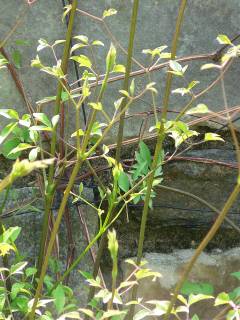
Dark green; compound pinnate with 3-5 leafletsGrowing Conditions
Sun Requirements
Requires 4-10 hours of direct sunlight daily
• Full Sun: 6+ hours of direct sunlight
• Partial Shade: 3-6 hours of direct sunlight
• Full Shade: Less than 3 hours of direct sunlight
Care & Maintenance
Care Guide
Grows in full sun to partial shade in moist well-drained soil at pH 6.5–7.5, tolerating loam. Hardy to zone 4. The crown is planted 2–3 inches (5–8 cm) below the soil surface at installation, which supports recovery from stem damage. The root zone is shaded by a low companion plant or stone mulch while the upper vine reaches full sun. A sturdy trellis, fence, arbor, or tree is required to support the vigorous growth and the weight of mass flowering. Consistent moisture supports active summer growth through the long bloom period. Strong viticella-parentage resistance to clematis wilt removes the main disease concern for the group. Pruning Group 3: all stems are cut to 6–12 inches (15–30 cm) in late winter. No serious pest problems.Pruning
Pruning Group 3. Cut all stems to 6–12 inches (15–30 cm) above ground in late February to March. Flowers form on new wood. The vigorous regrowth covers large structures by mid-summer and reaches full bloom mass by late June.Pruning Schedule
Prune: February–March
winterearly spring
Container Growing
Suitable for container growing
Minimum container size: 10 gallons