Daphne, Genus, odora, Species,
- Genus & species
winter daphne
Overview
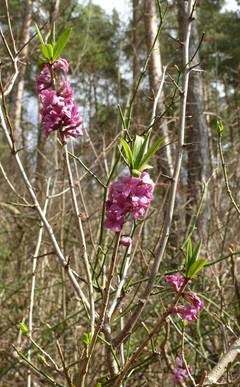
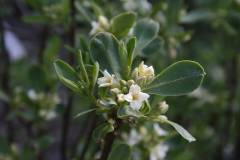
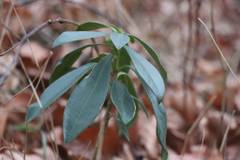
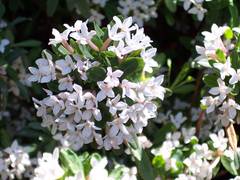
Daphne odora is a compact, rounded to dome-shaped, evergreen shrub reaching 3–5 feet (0.9–1.5 m) tall with a spread of 3–5 feet (0.9–1.5 m). The species is the winter-blooming daphne, opening in January through March when few other shrubs flower. Dense terminal clusters of small, tubular, intensely fragrant flowers appear at branch tips; the species type carries reddish-purple buds opening to pale pink-to-white corollas with deeper purple throats visible through the flower tube. The fragrance sits at the top tier of flowering-shrub fragrance intensity—detectable on still air from 10–15 feet (3–4.5 m) of the plant, and at close range it scents an entire room when cut stems are brought indoors. Leaves are oblanceolate, 2–3.5 inches (5–9 cm) long, glossy, dark green, leathery, and held on a tight dome-shaped canopy. Growth rate is slow to moderate. All parts contain daphnin (a coumarin glycoside) and mezerein (a diterpene ester); ingestion causes severe gastrointestinal symptoms with bloody diarrhea, and sap contact with skin causes blistering irritation in sensitive people. Established Daphne plants sometimes die suddenly without visible cause after years of vigorous growth—a documented genus trait often associated with root disturbance, subclinical Phytophthora infection, or suspected viral pathogens. The species is less cold-hardy than D. × burkwoodii or D. cneorum; reliable cold hardiness extends to USDA zone 7 (5°F / −15°C), with marginal survival in zone 6b when sheltered. The winter bloom timing and scent intensity are the primary cultivation reasons.
Native Range
Daphne odora is native to China, Japan, and Korea, growing in woodland margins and shaded slopes in the subtropical and warm-temperate zones of the three countries. The species has been cultivated in Japanese gardens for centuries and reached European cultivation in the 18th century.Suggested Uses
Planted near entries, along pathways, beside windows, and next to outdoor seating areas at 3–4 foot (0.9–1.2 m) spacing, where the intense winter fragrance carries into the use zone from the nearest open window or seating spot. The January–March bloom timing places the species among the handful of shrubs contributing fragrance when most of the garden is dormant. Functions in sheltered courtyard gardens, foundation plantings on the sheltered side of the house, and in containers of at least 5 gallons (19 L) with a free-draining mix—container planting gives mobility for cold-climate gardens where the plant can be moved to an unheated greenhouse or protected porch through winter. Gardens used by unsupervised children or grazing pets are a poor fit because accidental ingestion of plant material causes severe gastrointestinal symptoms. Exposed, cold, windy sites are also a poor fit—winter wind strips buds and browns foliage.How to Identify
Appearance
Size & Dimensions
Height3' - 5'
Width/Spread3' - 5'
Bloom Information
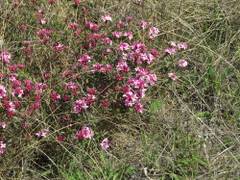
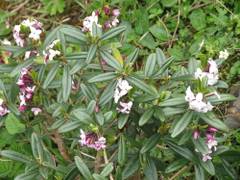
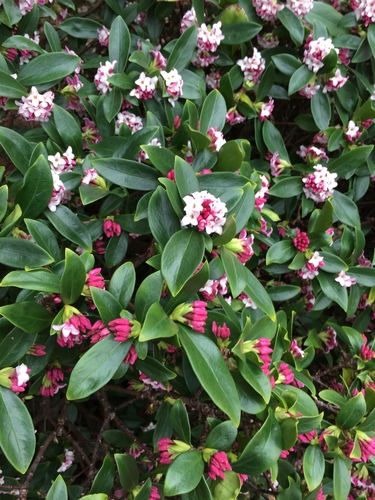
Dense terminal clusters of small, tubular, intensely fragrant flowers open in January–March. Buds are reddish-purple; opened corollas are pale pink to white with deeper purple visible at the throat. Bloom duration is 4–6 weeks. The winter timing sits among the earliest-flowering woody shrubs in temperate gardens, opening on warmer mid-winter days and pausing through hard freezes.
Detailed Descriptions
Flower Description
Reddish-purple buds opening pale pink to white, intensely fragrantFoliage Description
Glossy dark green, oblanceolate, leatheryGrowing Conditions
Sun Requirements
Requires 3-6 hours of direct sunlight daily
• Full Sun: 6+ hours of direct sunlight
• Partial Shade: 3-6 hours of direct sunlight
• Full Shade: Less than 3 hours of direct sunlight
Care & Maintenance
Care Guide
Plant in partial shade in moist, humus-rich, slightly acidic soil at pH 5.5–6.5. Afternoon shade on the south and west sides is the practical match in zones 8–9 where summer afternoon sun causes foliage scorch. Drainage is the decisive cultural factor: soils holding standing water after rain develop root rot within a single growing season and kill the plant, so a planting hole amended with 30–50% coarse grit or a raised mound 6–10 inches (15–25 cm) above grade handles heavy sites. Cold, drying winter winds cause foliage desiccation and bud damage, so sheltered sites on the lee side of buildings or evergreen windbreaks reduce winter damage. A 1-inch mulch of pine needles or shredded bark keeps the root zone cool without holding moisture at the crown. Root disturbance causes decline, so cultivation within the drip line is avoided once the plant is established. All plant parts contain daphnin and mezerein and are toxic; sap contact with skin causes blistering in sensitive individuals. Cold hardiness extends reliably through USDA zone 7 (0°F / −18°C); zone 6b is marginal with heavy winter protection. Sudden death of apparently healthy established plants is a documented genus pattern with no reliable prevention.Pruning
Minimal pruning. Light shaping immediately after flowering is the only intervention the plant tolerates well. Hard pruning causes extensive dieback that often extends into adjacent healthy wood and sometimes kills the plant outright. Dead branches are removed as they appear, cutting back to the nearest point of healthy tissue.Pruning Schedule
Prune: April
early spring
Container Growing
Suitable for container growing
Minimum container size: 5 gallons