Daphne, Genus, burkwoodii, Species,
- Genus & species
burkwood daphne
Hybrid of garden origin; bred England 1930s
Overview
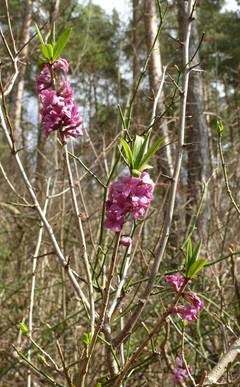
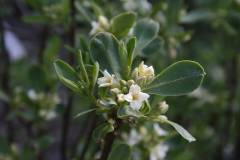
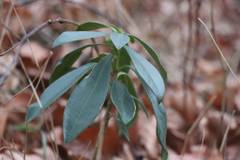
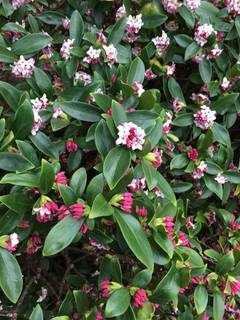
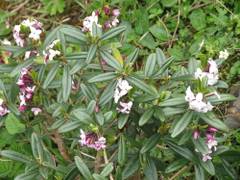
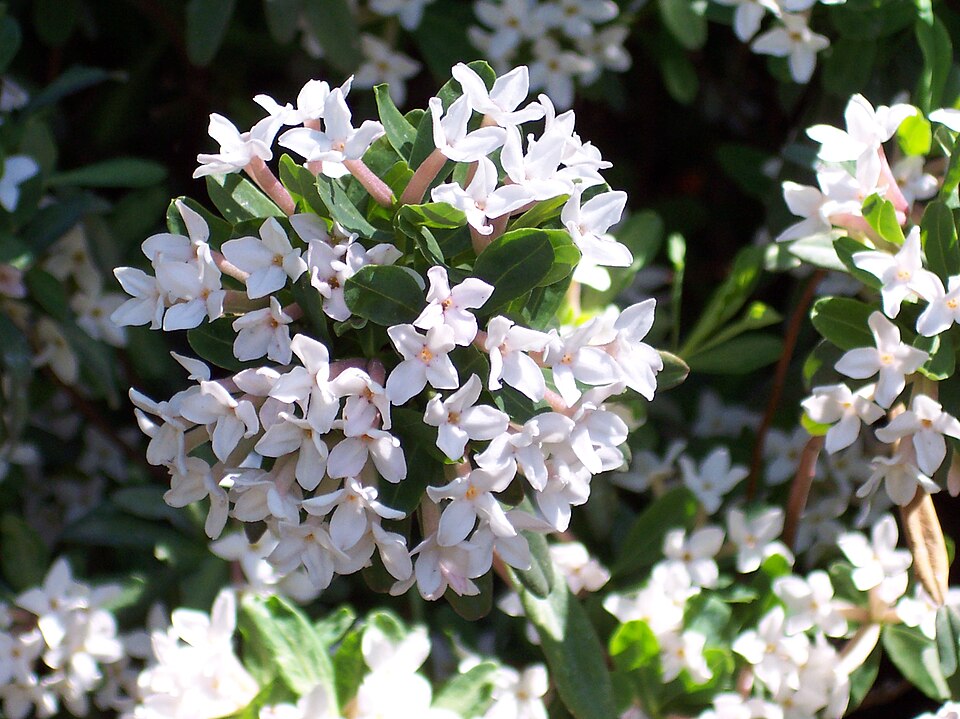
Daphne × burkwoodii is a compact, mounding to rounded, semi-evergreen shrub reaching 3–4 feet (0.9–1.2 m) tall with a spread of 3–5 feet (0.9–1.5 m). The plant is a hybrid between D. cneorum and D. caucasica, bred by Albert Burkwood and his brother Arthur in England in the 1930s; selections 'Somerset' and 'Carol Mackie' (the latter a variegated sport) are the commercial forms in widest circulation. Dense terminal clusters of small, tubular, intensely fragrant flowers open in late April–May, emerging pink from deeper pink buds and fading to near-white as each flower ages—within a single cluster, newly opened and older flowers produce a bicolor effect across three to four days. A lighter rebloom often follows in August–September on plants in good health. Leaves are narrowly oblong, 1–2 inches (2.5–5 cm) long, gray-green, persisting as semi-evergreen in zones 6–8 and fully evergreen in zone 8. Growth rate is slow to moderate. All parts contain daphnin (a coumarin glycoside) and mezerein (a diterpene ester); the combination causes severe gastrointestinal distress with bloody diarrhea if plant material is swallowed, and skin contact with sap causes blistering irritation in sensitive people. Established Daphne plants sometimes die suddenly without obvious cause after years of vigorous growth—a genus-wide pattern commonly associated with root disturbance, subclinical Phytophthora infection, or suspected viral pathogens; the phenomenon is well enough documented in horticultural literature that it is accepted as an inherent risk of the genus. The fragrance at peak bloom carries on still air 15–25 feet (4.5–7.5 m) from the plant.
Native Range
Daphne × burkwoodii is a hybrid of garden origin (D. cneorum × D. caucasica). D. cneorum is native to southern and central Europe; D. caucasica is native to the Caucasus region and northeastern Turkey. The hybrid was bred by Albert and Arthur Burkwood in Surrey, England, in the 1930s.Suggested Uses
Planted as a specimen near entries, along pathways, beside patios, and next to seating areas at 3–4 foot (0.9–1.2 m) spacing, where the intense spring fragrance carries into the use zone. The compact size suits foundation plantings and small courtyard gardens. Grows in containers of at least 5 gallons (19 L) filled with a free-draining mix (50% coarse grit or perlite) and raised off the ground for drainage. The semi-evergreen foliage carries winter structure in zones 7–8. Gardens used by unsupervised children or grazing pets are a poor fit because accidental ingestion of leaves, stems, or the rare fruits causes severe gastrointestinal symptoms; the berries, when produced, are the most concentrated source of mezerein in the plant. Dense mass plantings are avoided because the sudden-death risk means losing any one plant leaves a conspicuous gap.How to Identify
Appearance
Size & Dimensions
Height3' - 4'
Width/Spread3' - 5'
Bloom Information
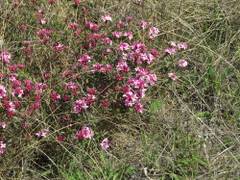
Dense terminal clusters of small, tubular, intensely fragrant flowers open in late April–May. Flowers emerge pink from deeper pink buds and fade to near-white with age, creating a bicolor effect within each cluster across three to four days. A lighter rebloom often follows in August–September on healthy plants. Bloom duration is 3–4 weeks for the main flush.
Detailed Descriptions
Flower Description
Pink fading to white, bicolor clusters, intensely fragrantFoliage Description
Gray-green, narrowly oblong, semi-evergreenGrowing Conditions
Sun Requirements
Requires 4-8 hours of direct sunlight daily
• Full Sun: 6+ hours of direct sunlight
• Partial Shade: 3-6 hours of direct sunlight
• Full Shade: Less than 3 hours of direct sunlight
Care & Maintenance
Care Guide
Plant in partial shade to full sun in moist, well-drained soil at pH 5.5–7.0. Drainage is the critical factor: soils holding standing water after rain develop root rot within a single growing season and kill the plant, so lean mineral soils with 30–50% coarse grit or raised mounds 8–12 inches (20–30 cm) above grade are the functional match for heavy sites. Root disturbance causes decline, so companion planting and cultivation within the drip line are avoided once the plant is established. A 1-inch mulch of pea gravel or pine needles keeps the root zone cool without holding moisture at the crown. Heavy pruning causes extensive dieback and sometimes whole-plant death; light shaping immediately after flowering is the ceiling for intervention. All plant parts contain daphnin and mezerein and are toxic; sap contact with skin causes blistering in sensitive individuals, so handling cut stems or cleanup after pruning is done with gloves as a practical precaution. Sudden death of apparently healthy established plants is a documented genus trait with no reliable prevention.Pruning
Minimal pruning. Light shaping immediately after flowering is the only intervention the plant tolerates well. Hard pruning causes extensive dieback that often extends into adjacent healthy wood and sometimes kills the plant outright. Dead branches are removed as they appear, cutting back to healthy tissue.Pruning Schedule
Prune: June
summer
Container Growing
Suitable for container growing
Minimum container size: 5 gallons