Daphne, Genus, cneorum, Species,
- Genus & species
rose daphne
Southern and central Europe (Spain to the Balkans), on alpine meadows and limestone slopes
Overview
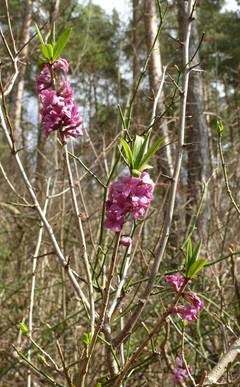
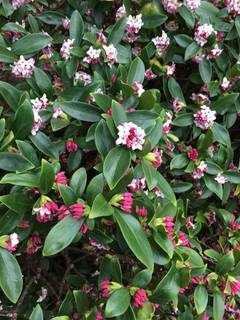
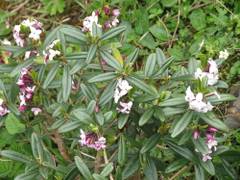
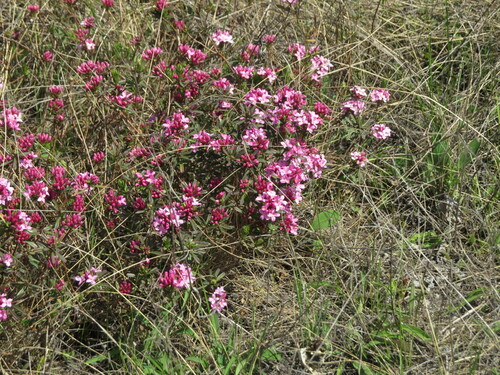
Daphne cneorum, the rose daphne or garland flower, is a low, prostrate, evergreen shrub growing 6–12 inches (15–30 cm) tall and 24–36 inches (60–90 cm) wide. Dense terminal clusters of 6–10 deep rose-pink tubular flowers 0.4 inch (10 mm) long open in late spring (April–May), producing an intense sweet fragrance that carries on still air 10–15 feet (3–4.5 m) from the plant—the fragrance sits at the top tier of the spring-blooming flowering shrubs, matched by few other genera. Dark green, narrow, leathery evergreen leaves 0.5–1 inch (12–25 mm) long are densely packed along trailing stems that root where they touch moist soil. A sporadic second bloom sometimes occurs in late summer on established plants. The species belongs to Thymelaeaceae. All parts contain daphnin (a coumarin glycoside) and mezerein (a diterpene ester), and the plant carries full toxicity across leaves, bark, sap, and the rare red berries; berries carry the highest mezerein concentration. Sudden death of established plants without visible cause is a documented genus trait, often associated with root disturbance, subclinical Phytophthora infection, or suspected viral pathogens. The species is native to alpine meadows and limestone slopes across southern and central Europe, from Spain through the Alps to the Balkans, at elevations of 3,000–7,500 feet (900–2,300 m). Growth rate is slow; a 2-year-old nursery plant reaches mature spread in 5–7 years on suitable sites.
Native Range
Daphne cneorum is native to southern and central Europe—Spain, the Pyrenees, the Alps, the Apennines, and the Balkan Peninsula—occurring on alpine meadows and limestone slopes at elevations of 3,000–7,500 feet (900–2,300 m).Suggested Uses
Planted in rock gardens, raised alpine beds, at the edges of stone paths, and in retaining-wall crevices at 18–24 inch (45–60 cm) spacing. The prostrate habit drapes over wall edges and boulders in the manner of its native limestone-slope habitat. The intense spring fragrance carries into use zones when the plant is sited within 10–15 feet (3–4.5 m) of seating areas or paths. Grows in containers of at least 3 gallons (11 L) filled with a gritty, free-draining mix (50% coarse grit or perlite) and raised off the ground for drainage. Gardens used by unsupervised children or grazing pets are a poor fit because accidental ingestion of plant material causes severe gastrointestinal symptoms; berries (when produced) carry the highest mezerein concentration and are the most hazardous component.How to Identify
Appearance
Size & Dimensions
Height6" - 1'
Width/Spread2' - 3'
Bloom Information
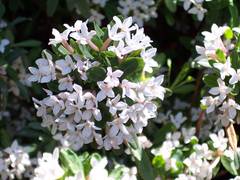
Dense terminal clusters of 6–10 deep rose-pink tubular flowers 0.4 inch (10 mm) long open in late spring (April–May). Bloom duration is 3–4 weeks. Intense sweet fragrance carries 10–15 feet (3–4.5 m) from the plant on still air. A sporadic second bloom sometimes occurs in late summer on established plants.
Detailed Descriptions
Flower Description
Deep rose-pink, tubular, 0.4 inch, in dense terminal clusters of 6-10; intensely fragrantFoliage Description
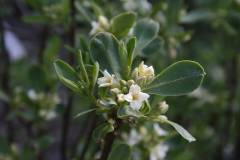
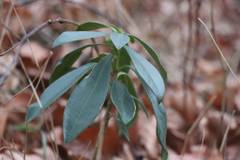
Dark green, narrow, leathery, 0.5-1 inch, densely packed along trailing stemsGrowing Conditions
Sun Requirements
Requires 4-10 hours of direct sunlight daily
• Full Sun: 6+ hours of direct sunlight
• Partial Shade: 3-6 hours of direct sunlight
• Full Shade: Less than 3 hours of direct sunlight
Care & Maintenance
Care Guide
Plant in full sun to partial shade in lean, mineral-rich, sharply drained soil at pH 5.5–7.0. Drainage is the primary cultural requirement: soils holding standing water after rain develop root rot within a single growing season and kill the plant, so sandy, gritty, or rocky substrates—mimicking the native limestone-slope habitat—are the functional match. A pea-gravel top-dressing replaces organic mulch since organic mulches retain moisture at the crown and promote collar rot; a 1-inch gravel layer gives weed suppression without the moisture retention. Root disturbance causes decline, so cultivation or replanting within the drip line is avoided once the plant is established. The genus responds poorly to pruning; cutting back beyond light deadheading causes dieback that may extend into the main stems. All parts contain daphnin and mezerein; sap contact with skin causes blistering irritation in sensitive people, so handling during division or cleanup is done with gloves. Drought-tolerant once established. Deer-resistant due to the toxicity. Hardy through USDA zones 4–8. Sudden death of established plants without obvious cause is a documented genus pattern.Pruning
Pruning is avoided. The genus responds poorly to cutting, and dieback often extends from a cut point into healthy adjacent tissue. The prostrate spreading form develops naturally on its own. Only dead branches are removed, cut back to the nearest point of healthy growth.Container Growing
Suitable for container growing
Minimum container size: 3 gallons