Daphne, Genus, spp., Multiple species,
- Genus
- Multiple species
daphne
Europe, North Africa, and temperate Asia
Overview
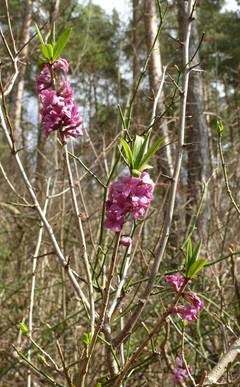
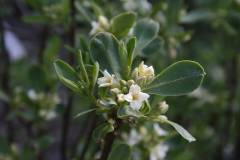
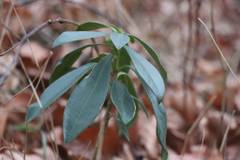
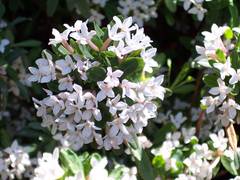
Daphne is a genus of about seventy to ninety-five evergreen and deciduous shrubs in the family Thymelaeaceae, native to Europe, North Africa, and temperate and subtropical Asia. Most species are compact, 1-5 feet (0.3-1.5 m) tall, with smooth, alternate, often leathery leaves and tough, fibrous bark and twigs. From late winter to spring, and in some species again in summer, the shrubs carry tight clusters of small four-lobed tubular flowers in white, pink, purple, or greenish-yellow, many of them strongly fragrant. The flowers are followed by fleshy berries in red, orange, yellow, or black. All parts of Daphne are toxic if eaten, containing the compounds daphnin and mezerein, and the sap can irritate skin. The genus grows in woodland, scrub, and on rocky mountain slopes, usually on moist but sharply drained, humus-rich soil. Many species are slow-growing and intolerant of root disturbance, declining if moved once established. Daphne is grown in gardens for its winter and spring fragrance and neat habit, with D. odora, D. mezereum, and D. cneorum among the species in cultivation, though plants can be short-lived and may die back without obvious cause.
Native Range
Daphne is native to Europe, North Africa, and temperate and subtropical Asia, with the greatest diversity in the Himalayas and China. The shrubs grow in woodland, scrub, and on rocky mountain slopes. Several species, such as D. mezereum and D. laureola, occur across Europe, while many others are confined to Asian mountains.Suggested Uses
Daphne is grown in shrub borders, woodland edges, rock gardens, and containers, and near paths and doorways where the winter and spring fragrance carries. Low species such as D. cneorum are used as ground cover on well-drained banks. The flowers are visited by early bees and other pollinators.How to Identify
Appearance
Size & Dimensions
Height1' - 5'
Width/Spread1'6" - 5'
Bloom Information
Daphne flowers chiefly from late winter to mid-spring, with some species blooming again in summer or autumn. The clustered flowers of many species carry a strong sweet fragrance that travels on still air. Berries ripen from late spring through summer and autumn depending on species.
Detailed Descriptions
Flower Description
white, pink, to purpleFoliage Description
greenGrowing Conditions
Sun Requirements
Requires 4-8 hours of direct sunlight daily
• Full Sun: 6+ hours of direct sunlight
• Partial Shade: 3-6 hours of direct sunlight
• Full Shade: Less than 3 hours of direct sunlight
Care & Maintenance
Care Guide
Daphne grows in full sun to part shade on moist but sharply drained, humus-rich, neutral to slightly alkaline or acidic soil, and tolerates neither drought nor waterlogging. Sharp drainage is essential, as the roots rot in heavy, wet ground, yet the soil must not dry out fully. Plants are intolerant of root disturbance and are planted young and left in place, since moving established shrubs often kills them. Many species are slow-growing and may die back suddenly without clear cause. All parts are toxic if eaten, and the sap can irritate skin in sensitive people. A cool root run under a mulch and shelter from harsh wind help maintain steady growth.Pruning
Daphne needs little or no pruning and responds poorly to hard cutting, which can trigger dieback. Light tip-trimming to shape is done immediately after flowering if needed. Pruning cuts release sap, which can irritate skin on contact.Container Growing
Suitable for container growing
Minimum container size: 3 gallons