Image 1 of 7
1 / 7
Plant Reference
Daphne, Genus, caucasica, Species,
- Genus & species
Caucasian daphne
Caucasus Mountains — Georgia, Azerbaijan, Armenia, Turkey, and southern Russia; montane forests and rocky slopes at 3,000-7,000 feet (900-2,100 m)
Overview
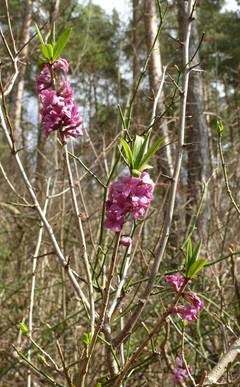
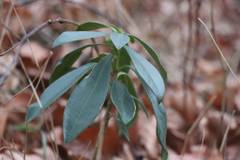
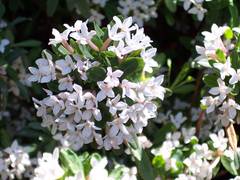
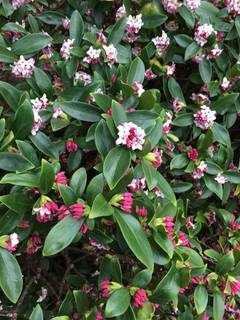
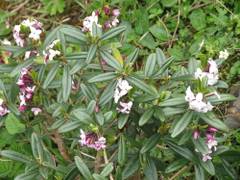
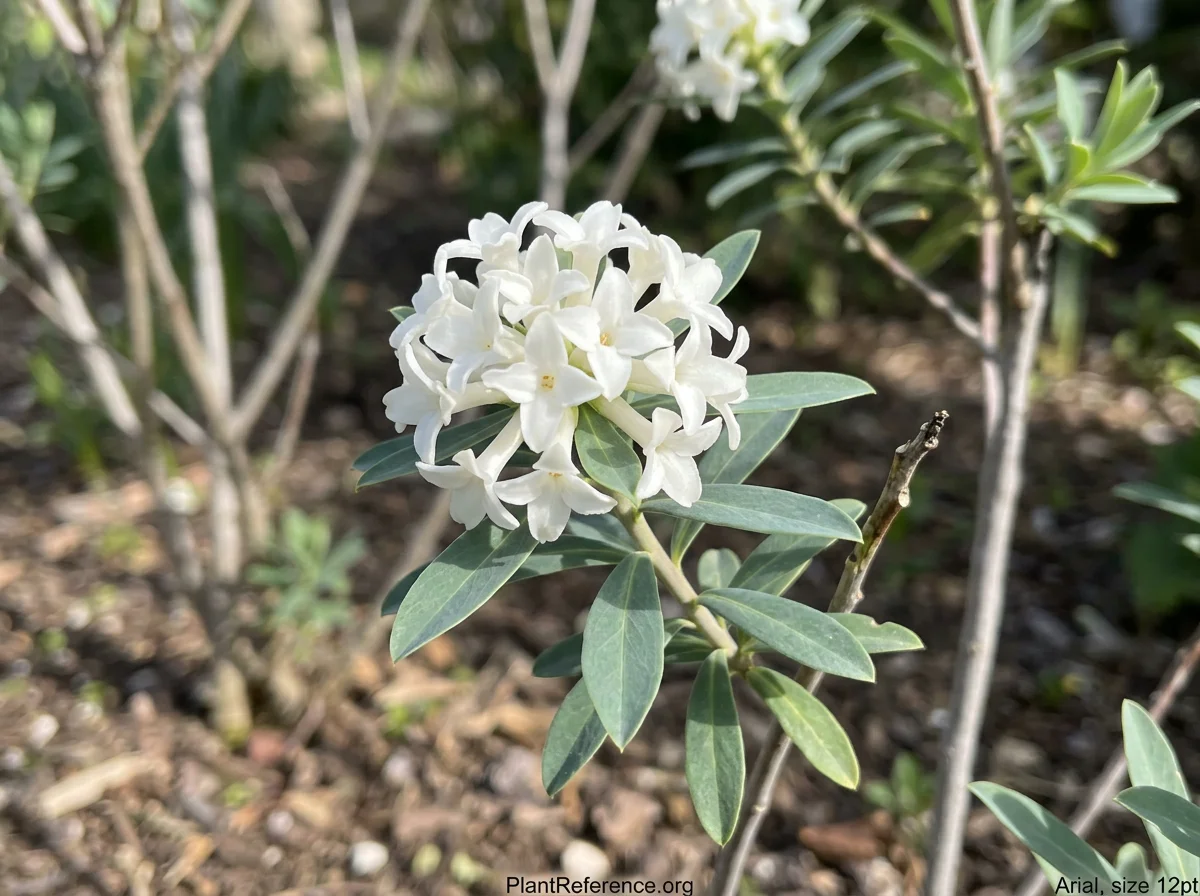
Daphne caucasica is an upright semi-evergreen shrub in the family Thymelaeaceae growing 3–5 feet (0.9–1.5 m) tall and 2–4 feet (0.6–1.2 m) wide from a woody base that produces slender upright stems. The species is native to the Caucasus Mountains region — Georgia, Azerbaijan, Armenia, Turkey, and southern Russia — where it grows in montane forests and rocky slopes at 3,000–7,000 feet (900–2,100 m) elevation, and the cold montane origin is the basis for the species' USDA zone 5 cold hardiness which is the hardiest range within the genus Daphne for a species used in garden cultivation. The species is one parent of the hybrid Daphne × transatlantica (the cross with D. collina that produced the long-blooming 'Eternal Fragrance' and the variegated 'Summer Ice'), and the long bloom window and the spring-through-summer rebloom behavior of the transatlantica hybrids were inherited from the D. caucasica parent. Leaves are blue-green to gray-green, lanceolate, 1.5–3 inches (4–7 cm) long, smooth-margined, and arranged alternately along the upright stems, and the blue-green foliage color separates D. caucasica from the dark glossy green foliage of D. odora and the variegated foliage of the transatlantica hybrid 'Summer Ice'. White tubular 4-lobed flowers 0.3–0.4 inch (8–10 mm) long open in terminal clusters of 5–15 at the branch tips across a 4–5 week main bloom flush in May and June, with an intermittent second flush in August and September that supplies a secondary late-season display. The flowers carry a strong sweet penetrating fragrance that is detectable from several feet away and that is the main reason for siting the shrub near walkways and seating areas. Limitation: the species is short-lived and prone to sudden unexplained death — many individual plants decline or die without apparent cause after 5–10 years of apparently healthy growth, and this unpredictable mortality is a trait shared across many species in the genus Daphne that has never been fully explained despite long-standing horticultural attention. Waterlogged soil, root disturbance, and transplanting of established plants all accelerate the risk of sudden death. The species is not drought-tolerant and calls for consistent moisture through the growing season, and well-drained soil is a strict cultural requirement. All parts — bark, leaves, flowers, and berries — contain daphnin (a coumarin glycoside) and mezerein (a diterpene ester), which are toxic to humans, cats, and dogs if ingested, and the sap can cause contact dermatitis on sensitive skin. Leather gloves are warranted during any pruning operation because of the sap toxicity. Deer-resistant because of the coumarin and diterpene content.
Native Range
Native to the Caucasus Mountains — Georgia, Azerbaijan, Armenia, Turkey, and southern Russia — growing in montane forests and rocky slopes at 3,000–7,000 feet (900–2,100 m) elevation. The cold montane origin is the basis for the species' USDA zone 5 cold hardiness which is the hardiest range within the genus Daphne for a species in garden cultivation, and the species has contributed its cold tolerance and extended bloom behavior to the hybrid Daphne × transatlantica (the cross with the Mediterranean D. collina) that has produced the widely cultivated 'Eternal Fragrance' and variegated 'Summer Ice' selections.Suggested Uses
Used as a fragrant specimen shrub near walkways, entry doors, patios, and seating areas where the spring and late-summer bloom fragrance is accessible, and in mixed shrub borders at 2–4 foot (0.6–1.2 m) spacing between plants in USDA zones 5 through 8. The blue-green semi-evergreen foliage, the strongly fragrant spring bloom, and the late-summer rebloom carry the species through three seasons of ornamental interest, and the zone 5 cold hardiness is the hardiest range within the genus Daphne and supports garden cultivation across colder regions than most other Daphne species will tolerate. Waterlogged positions, heavy clay soils without drainage amendment, and sites where root disturbance is likely are unsuitable because of the root rot sensitivity and the sudden-death mortality pattern. Gardens where children, cats, or dogs may access the foliage or berries should account for the daphnin and mezerein toxicity.How to Identify
Appearance
Size & Dimensions
Height3' - 5'
Width/Spread2' - 4'
Colors
Bloom Information
White tubular 4-lobed flowers 0.3–0.4 inch (8–10 mm) long open in terminal clusters of 5–15 at the branch tips across a 4–5 week main flush in May and June, with an intermittent second flush in August and September. The flowers carry a strong sweet penetrating fragrance that is detectable from several feet away. Honeybees and bumblebees work the flowers for nectar during both bloom flushes, and butterflies visit the flowers in warm summer conditions.
Detailed Descriptions
Flower Description
white tubular 4-lobed flowers 0.3-0.4 inch (8-10 mm) long carried in terminal clusters of 5-15 at the branch tips; strongly fragrant with a sweet penetrating scent that is detectable from several feet away; the main flush opens in May and June with an intermittent second flush in August and SeptemberFoliage Description
blue-green to gray-green lanceolate leaves 1.5-3 inches (4-7 cm) long with smooth entire margins; arranged alternately along the upright stems; semi-evergreen in zones 7 and 8 with the foliage retained through mild winters, and deciduous in zones 5 and 6 where the leaves drop during cold wintersGrowing Conditions
Sun Requirements
Requires 3-6 hours of direct sunlight daily
• Full Sun: 6+ hours of direct sunlight
• Partial Shade: 3-6 hours of direct sunlight
• Full Shade: Less than 3 hours of direct sunlight
Care & Maintenance
Care Guide
Site in part sun with 3–6 hours of direct sun per day, typically in morning-sun positions with afternoon shade. Well-drained loam or sandy soil with a pH of 6.0–7.5 is a strict cultural requirement because the species develops root rot in waterlogged conditions. The species is not drought-tolerant and calls for consistent moisture through the growing season, and root disturbance from cultivation around the base of the plant is avoided because the fibrous root system is sensitive to disturbance. The species is short-lived and prone to sudden unexplained death after 5–10 years of apparently healthy growth, and this unpredictable mortality is a trait shared across many Daphne species that has never been fully explained. All parts contain daphnin and mezerein and are toxic to humans, cats, and dogs if ingested, and the sap can cause contact dermatitis on sensitive skin. Leather gloves are warranted during any pruning operation. Deer-resistant. Hardy in USDA zones 5–8.Pruning
Light pruning after the spring bloom flush (June) is done to shape the plant if needed, and the natural upright form is self-maintaining and does not call for heavy pruning. Dead or damaged growth is removed at any time of year. Leather gloves are warranted during any pruning operation because the cut stems release sap containing daphnin and mezerein that can cause contact dermatitis on sensitive skin. Hard renovation pruning is poorly tolerated by the genus and is avoided because Daphne species do not reliably regenerate from old bare wood cuts.Pruning Schedule
Prune: June
late spring