Image 1 of 19
1 / 19
Plant Reference
Daphne, Genus, laureola, Species,
- Genus & species
spurge daphne
Southern and central Europe, Mediterranean, and North Africa; naturalized and invasive in Pacific Northwest
Overview
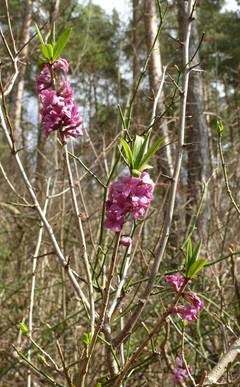
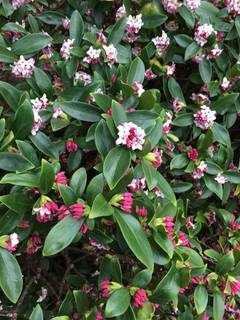
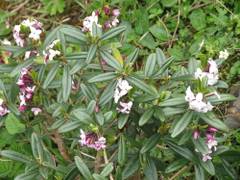
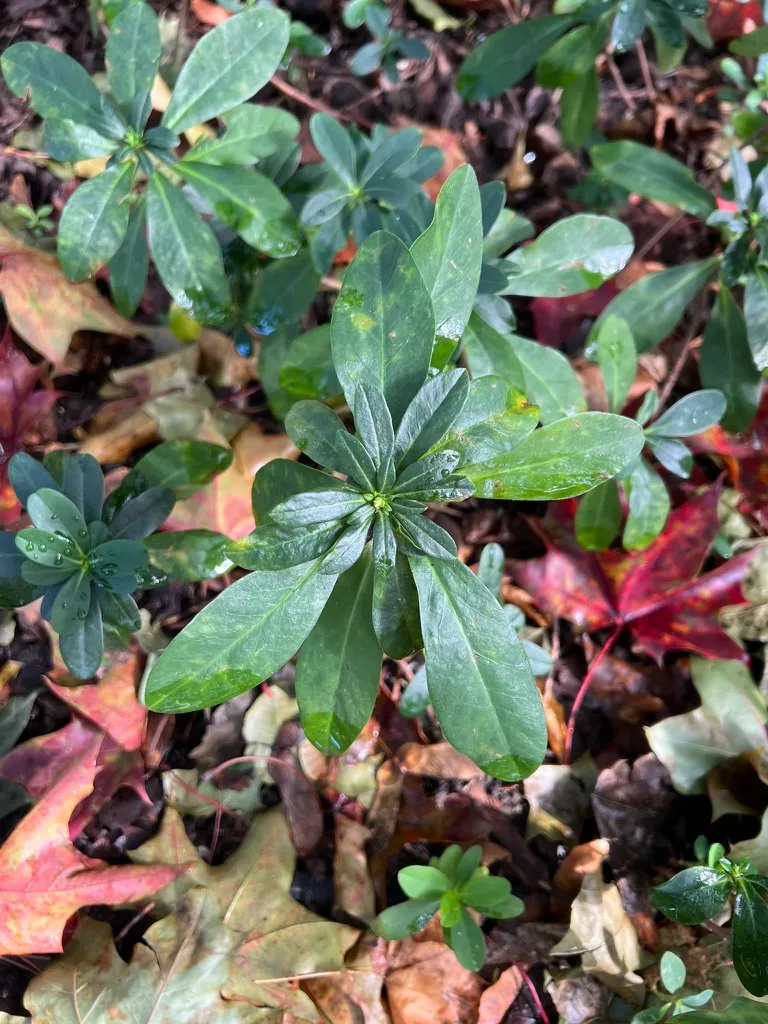
Daphne laureola is spurge daphne or daphne laurel, an upright evergreen shrub growing 3-4 feet (0.9-1.2 m) tall and 3-4 feet (0.9-1.2 m) wide. Leaves are 2-5 inches (5-13 cm) long, oblong-oblanceolate, dark green, glossy, and leathery, clustered in whorled rosettes near the stem tips. Greenish-yellow tubular flowers 0.3 inch (8 mm) long with four lobes appear in dense clusters of 5-10 at the base of the upper leaf whorls in February to March, lasting 4 weeks. Flowers are lightly fragrant, with scent strongest in the evening. Glossy black berries 0.3 inch (8 mm) develop in late spring and persist 4-6 weeks. D. laureola tolerates deep shade where many shrubs decline, and it adapts to alkaline and calcareous soils up to pH 8.0. The species is naturalized and listed as invasive in Oregon, Washington, and southwestern British Columbia, spreading by bird-dispersed berries that produce 20-40 seedlings per established plant per year in suitable Pacific Northwest forests. All parts contain daphnin and mezerein, toxic glycosides causing severe oral and gastrointestinal irritation if ingested; black berries are highly toxic. Sap causes skin irritation in sensitive individuals. Drought-tolerant once established. Deer and rabbits avoid the foliage. Growth rate is slow, with mature size reached in 6-8 years.
Native Range
Native to southern and central Europe, the Mediterranean region, and North Africa, found in deciduous and evergreen woodlands often on calcareous soils. Naturalized and listed as invasive in the Pacific Northwest, including Oregon, Washington, and southwestern British Columbia.Suggested Uses
Grown in deep shade under trees and along shaded foundation lines in zones 7 to 9 at 3-4 foot (0.9-1.2 m) spacing. Tolerates alkaline and chalk soils. D. laureola is invasive in Oregon, Washington, and southwestern British Columbia and is restricted from sale and planting under state and provincial nursery regulations. All parts highly toxic.How to Identify
Appearance
Size & Dimensions
Height3' - 4'
Width/Spread3' - 4'
Bloom Information
Late winter to early spring (February to March in zones 7 to 9). Greenish-yellow tubular flowers 0.3 inch (8 mm) long in dense clusters of 5-10 at the base of the upper leaf whorls. Bloom period lasts 4 weeks. Lightly fragrant, with scent strongest in the evening; flowers are visited by early-season bees.
Detailed Descriptions
Foliage Description
Glossy dark greenGrowing Conditions
Sun Requirements
Requires 1-4 hours of direct sunlight daily
• Full Sun: 6+ hours of direct sunlight
• Partial Shade: 3-6 hours of direct sunlight
• Full Shade: Less than 3 hours of direct sunlight
Care & Maintenance
Care Guide
Tolerates partial shade to deep shade with 1-3 hours of direct light per day. Adapts to well-drained soils across pH 6.0 to 8.0, including alkaline and chalk soils. Drought-tolerant once established. D. laureola is naturalized and listed as invasive in Oregon, Washington, and southwestern British Columbia, where bird-dispersed berries spread plants into native forests. All parts contain daphnin and mezerein; sap causes skin irritation and ingestion of berries causes severe oral and gastrointestinal symptoms. Deer and rabbits avoid the foliage. Hardy in USDA zones 7 to 9.Pruning
Prune lightly for shape in early spring (March to April) after flowering finishes; Daphne species respond poorly to hard pruning and may die back if cut into older wood. Sap is irritant on contact with skin, causing redness and itching. Volunteer seedlings emerge readily from bird-dropped berries in suitable shaded sites and are removed by hand-pulling when small.Pruning Schedule
Prune: March–April
early spring
Container Growing
Suitable for container growing
Minimum container size: 3 gallons