Image 1 of 9
1 / 9
© peganum from Henfield, England, some rights reserved (CC-BY-SA) · Wikimedia Commons
Clematis, Genus, pitcheri, Species,
- Genus & species
Pitcher's leatherflower
Overview
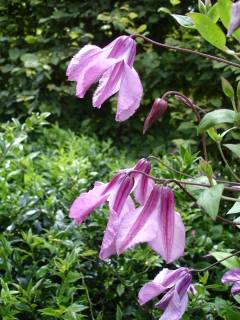
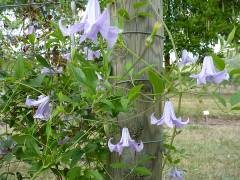
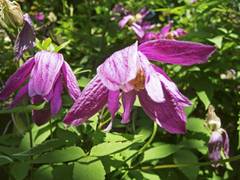
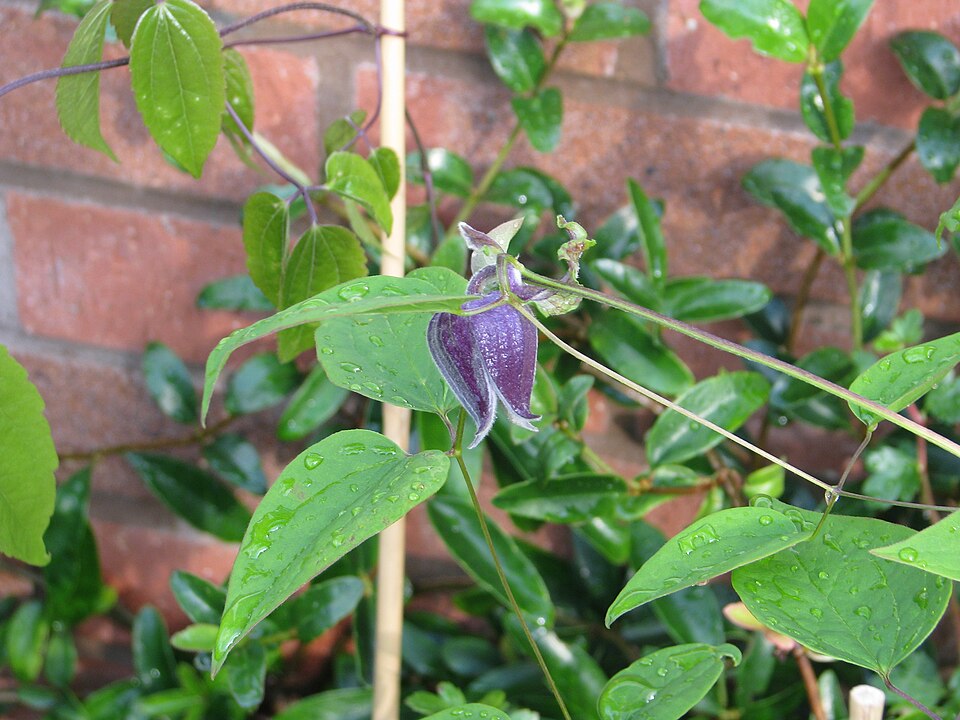
Clematis pitcheri is a climbing vine that grows 6-12 feet (1.8-3.7 m) long, dying back partly or fully to the ground in cold winters and regrowing each spring. It climbs by twisting its leaf stalks around supports rather than by tendrils. The compound leaves have several broad leaflets, sometimes lobed, with a network of conspicuous veins. From late spring through summer it produces nodding, urn-shaped flowers about 1 inch (2.5 cm) long, with thick, leathery sepals that curl back at the tips. Flower color ranges from dull purple and blue to reddish, often paler and yellowish inside. Unlike many large-flowered clematis, the seed heads lack long feathery plumes and instead form flattened, beaked clusters. The species is native to the south-central United States, where it grows in thickets, woodland edges, fence rows, and along streams. It grows in full sun to part shade in moist, well-drained soil and tolerates heat where the root zone is shaded or mulched. Foliage may show powdery mildew in humid, crowded conditions. Hardy in USDA zones 5-8.
Native Range
Clematis pitcheri is native to the south-central United States, from Indiana and Missouri south through Oklahoma and Texas. It grows along woodland edges, in thickets, fence rows, and moist bottomlands.Suggested Uses
Used on trellises, fences, arbors, and through shrubs in cottage and native plant gardens. Suited to naturalized borders and woodland edges where it can scramble over supports. Planted 24-36 inches (60-90 cm) apart along a fence or structure.How to Identify
Appearance
Size & Dimensions
Height6' - 12'
Width/Spread3' - 6'
Bloom Information
Detailed Descriptions
Flower Description
Dull purple-blue to reddishFoliage Description
GreenGrowing Conditions
Sun Requirements
Requires 4-8 hours of direct sunlight daily
• Full Sun: 6+ hours of direct sunlight
• Partial Shade: 3-6 hours of direct sunlight
• Full Shade: Less than 3 hours of direct sunlight
Care & Maintenance
Care Guide
Plant in full sun to part shade in moist, fertile, well-drained soil, with the root zone shaded by mulch or low plants in hot regions. Provide a trellis, fence, or shrub for the twining leaf stalks to climb. Water during dry spells, as the vine grows poorly in soil that fully dries out. Cut stems back hard in late winter, since flowers form on new growth produced each season. Powdery mildew may appear in humid sites with poor airflow. The species spreads modestly by seed and is not aggressive.Pruning
Cut all stems back to about 12 inches (30 cm) in late winter or early spring, as bloom occurs on current-season growth. Remove dead or frost-killed top growth at the same time. No summer pruning is needed beyond trimming stray stems.Pruning Schedule
Prune: February–March
winterearly spring
Container Growing
Suitable for container growing
Minimum container size: 5 gallons