Clematis, Genus, lasiantha, Species,
- Genus & species
pipestem clematis
Overview
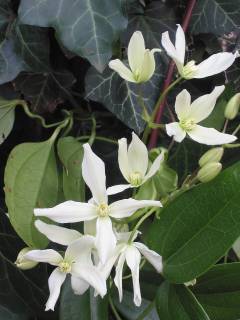
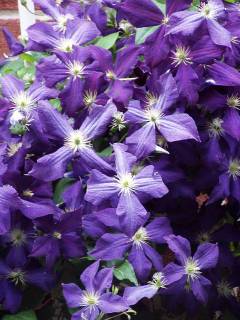
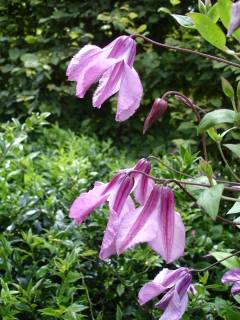
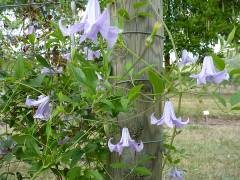
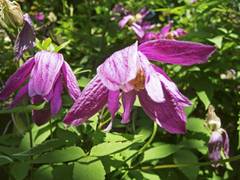
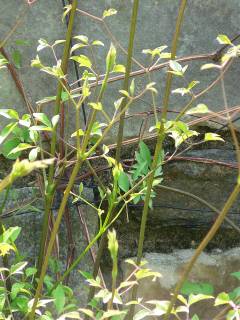
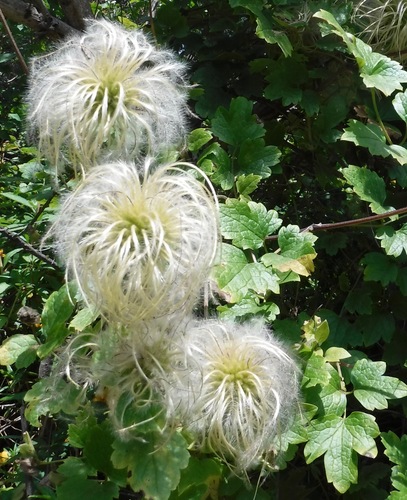
Clematis lasiantha is a deciduous woody climbing vine in the buttercup family, scrambling 6-15 ft (2-5 m) over shrubs and rocks by twisting its leaf stalks around supports. The compound leaves usually have three to five toothed, lobed leaflets on slender stalks. From March to May the vine bears creamy white flowers 1-1.5 in (2.5-4 cm) wide, each with four spreading sepals and no true petals, borne singly or in small groups. After bloom the flowers develop into rounded clusters of seeds, each seed carrying a long, silky, feathery plume that turns the seed heads into silvery puffs through summer. The vine grows in chaparral, oak woodland, and on dry slopes and canyon sides, climbing into shrubs for support. It tolerates drought and lean soils and dies back partly in cold or dry spells. All parts contain irritant compounds typical of the buttercup family, and the sap can redden or blister skin on contact. It is native to California and Baja California, and differs from the similar Clematis ligusticifolia in its solitary flowers and three-to-five-leaflet leaves.
Native Range
Clematis lasiantha is native to California and Baja California, growing in chaparral, oak woodland, foothill canyons, and on dry, rocky slopes below about 6,000 ft (1,800 m).Suggested Uses
Clematis lasiantha is used in native and wildlife gardens to climb fences, arbors, and large shrubs, and to cover dry banks. Its spring flowers and silvery seed heads add seasonal interest, and the cover shelters birds and insects. It suits naturalistic chaparral and woodland plantings.How to Identify
Appearance
Size & Dimensions
Height6' - 15'
Width/Spread3' - 6'
Bloom Information
Flowering runs from March to May, ahead of the summer dry season. The four-sepalled creamy flowers open singly or in small groups along the stems. Feathery plumed seed heads follow and persist into late summer.
Detailed Descriptions
Foliage Description
greenGrowing Conditions
Sun Requirements
Requires 5-10 hours of direct sunlight daily
• Full Sun: 6+ hours of direct sunlight
• Partial Shade: 3-6 hours of direct sunlight
• Full Shade: Less than 3 hours of direct sunlight
Care & Maintenance
Care Guide
Clematis lasiantha grows in full sun to part shade on sharply drained soils and needs little water once established, drawing on deep roots through dry summers. It suits unirrigated native and low-water gardens within USDA zones 7-10. The vine climbs by coiling leaf stalks and needs a shrub, trellis, or wire for support. Heavy, wet soils and frequent summer water shorten its life. It dies back partly in drought or cold and resprouts from the woody base. The irritant sap can cause skin reactions when stems are cut.Pruning
Pruning is done in winter or early spring before new growth, cutting back tangled or dead stems to a strong pair of buds. The vine flowers on the previous season's growth, so hard cutting reduces the next bloom. Light thinning keeps the stems open and manageable.Pruning Schedule
Prune: January–February
winterearly spring