Image 1 of 5
1 / 5
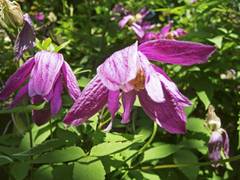
© F. D. Richards from Clinton, MI, some rights reserved (CC-BY-SA) · Wikimedia Commons
Clematis, Genus, ×, Hybrid, 'Dr. Ruppel', Cultivar,
- Genus
- Hybrid
- Cultivar
Dr. Ruppel clematis
Garden hybrid of complex Eurasian {Clematis} parentage
Overview
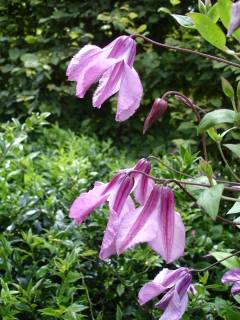
Clematis × 'Dr. Ruppel' is a large-flowered hybrid clematis that climbs 72-96 inches (180-240 cm) tall and 24-36 inches (60-90 cm) wide. Flat, open flowers 6-8 inches (15-20 cm) across, among the larger blooms of the commonly grown clematis, carry six to eight rose-pink tepals, each marked by a broad deep carmine-pink bar running its length. The bicolor effect is bolder than in 'Asao', the carmine bar set against a lighter pink ground, with cream stamens on pink-tipped filaments at the center. The first flush in May and June comes on old wood and bears the largest flowers; a second flush in August and September on new growth carries slightly smaller blooms. The tepal margins are lightly ruffled. In full hot sun the pink fades toward pale mauve, while partial shade holds the stronger contrast. This is a Group 2, light-prune clematis: in late winter, dead and weak stems are removed and the rest cut back to strong buds, since a hard cut would strip the old wood the first flush needs. Clematis wilt can collapse a stem suddenly; cutting it to the base lets the crown regrow. It was raised by Dr. Ruppel of Argentina in the mid-20th century. All parts contain protoanemonin and are toxic if eaten.
Native Range
Clematis × 'Dr. Ruppel' is a garden hybrid of complex Eurasian parentage, raised by Dr. Ruppel in Argentina.Suggested Uses
Trained on trellises, arbors, and fences where the very large bicolor flowers sit at eye level, and grown in containers of 10 gallons (38 L) or more with a support. The large flowers suit close viewing. Partial-shade sites hold the deepest color. All parts are toxic if eaten.How to Identify
Appearance
Size & Dimensions
Height6' - 8'
Width/Spread2' - 3'
Bloom Information
The first flush opens in May and June on old wood with the largest, boldest flowers. A lighter second flush follows in August and September on new growth, for a total of about 10 weeks. Deadheading after the first flush strengthens the rebloom, and bees visit the flowers.
Detailed Descriptions
Flower Description
Rose-pink with a broad deep carmine-pink central bar; flat, 6-8 inches (15-20 cm) across; lightly ruffled margins; cream stamens on pink-tipped filamentsFoliage Description
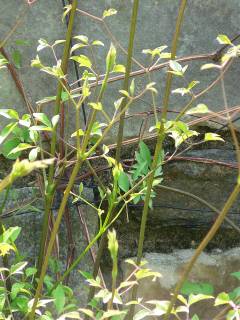
Dark green, compound, with twining leaf stalksGrowing Conditions
Sun Requirements
Requires 4-8 hours of direct sunlight daily
• Full Sun: 6+ hours of direct sunlight
• Partial Shade: 3-6 hours of direct sunlight
• Full Shade: Less than 3 hours of direct sunlight
Care & Maintenance
Care Guide
Grow in partial shade to full sun with 4-8 hours of light; partial shade holds the bicolor contrast. Shade the root zone with mulch or a low ground cover. Set in well-drained, humus-rich soil. As a Group 2 clematis, remove dead and weak stems in late winter and cut the rest to strong buds, avoiding a hard cut. The twining leaf stalks need a support in place. Water regularly and feed lightly in spring.Pruning
Group 2, light prune: in late February and March, remove dead and weak stems and cut the rest to the highest pair of strong, swelling buds. The old wood is kept for the spring bloom.Pruning Schedule
Prune: February–March
early spring
Container Growing
Suitable for container growing
Minimum container size: 10 gallons