Clematis spp., clematis
1 / 8
Vines & Groundcovers

Clematis spp.

clematis

Ranunculaceae

Worldwide temperate regions; species in cultivation from Europe, Asia, North America, and Australasia

At a Glance

TypeVine
HabitClimbing
FoliageDeciduous
Height3-30 feet (0.9-9 m)
Width3-10 feet (0.9-3 m)
Maturity4 years

Growing Zones

USDA Hardiness Zones

3 - 9
Zone 3
Zone 4
Zone 5
Zone 6
Zone 7
Zone 8
Zone 9
These zones indicate the coldest temperatures this plant can typically survive.
Frost Tolerancehardy

Key Features

Attracts Pollinators
Attracts Butterflies
Container Friendly
Native to North America
Maintenancemoderate

Overview

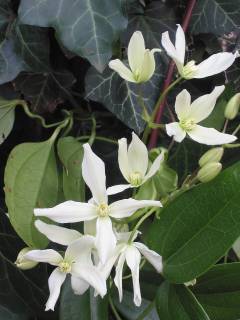
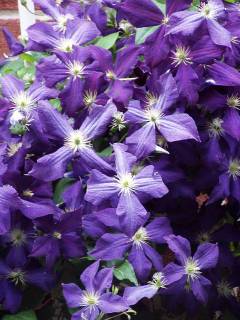
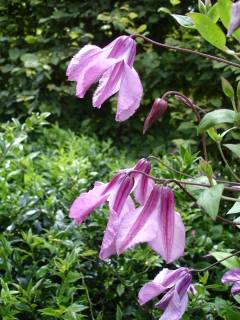
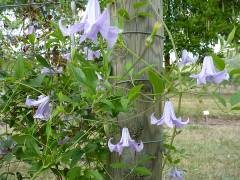
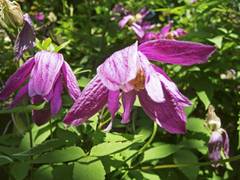
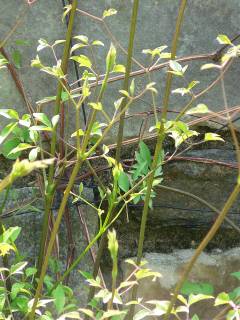
Clematis is a genus of approximately 300 species of deciduous and semi-evergreen climbing vines in the buttercup family (Ranunculaceae), with thousands of cultivars extending the ornamental range to nearly every color, flower size, and season. In Pacific Northwest gardens, clematis climbs by twisting its leaf stalks (petioles) around supports — not tendrils or aerial rootlets — and requires a trellis, fence, wire, or other structure with elements narrow enough to grip, typically 0.25–0.5 inch (6–12 mm) in diameter. Flower form ranges from the enormous dinner-plate blooms of large-flowered hybrids (up to 8–10 inches / 20–25 cm across) to nodding lanterns, small stars, and tubular bells in smaller species types. Bloom seasons span from late winter (*C. cirrhosa*) through spring (*C. montana*, *C. alpina*), early summer (large-flowered hybrids), and late summer to fall (*C. viticella*, *C. tangutica*, *C. terniflora*). Height ranges from 3–4 feet (90–120 cm) for compact cultivars to 20–30 feet (6–9 m) for vigorous species. The roots prefer cool, moist, shaded conditions — the traditional guidance 'head in the sun, feet in the shade' reflects this accurately. The Pacific Northwest's cool moist climate is excellent for clematis overall, supporting vigorous growth, rich flower color, and reduced susceptibility to clematis wilt (*Phoma clematidina*) compared to hotter, drier climates. Understanding pruning group (1, 2, or 3) is essential before purchasing or maintaining any clematis — pruning at the wrong time destroys the following season's bloom.

Native Range

The genus Clematis is distributed across temperate regions worldwide. Species commonly grown in PNW gardens include: Clematis alpina and C. macropetala (Europe, Asia), C. montana (Himalayas, China), C. viticella (southern Europe), C. tangutica (Central Asia, China), C. terniflora (Japan, China, Korea), C. integrifolia (Europe), and hundreds of large-flowered hybrids of complex parentage.

Suggested Uses

Clematis is one of the most versatile climbing plants for PNW gardens. Group 1 and 2 types are excellent on trellises, pergolas, fences, and scrambling through shrubs or small trees. Group 3 types work well over summer structures, through roses, and on obelisks in borders. Compact cultivars grow in large containers. Native and pollinator gardens benefit from the nectar value and ornamental seed heads of species types. Pairing early Group 1 species with late Group 3 cultivars extends the vertical flowering season from April through October. The feathery seed heads of many species provide winter interest.

How to Identify

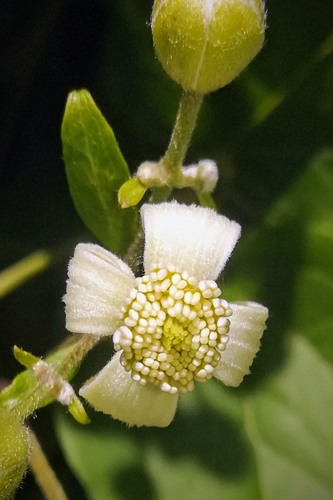
Identified by the combination of opposite (or occasionally alternate) compound or simple leaves and the climbing mechanism: stems twist leaf stalks (petioles) around supports — not tendrils or aerial rootlets. Flowers have 4–8 showy petal-like sepals (not true petals) surrounding a central boss of stamens. Seed heads on many species are ornamental — silky, feathery achene clusters that persist into winter on some species. Clematis wilt (sudden blackening and collapse of stems) can cause confusion with dead plants; cut affected stems to the base and healthy new growth typically re-emerges.

Appearance

Size & Dimensions

Height3' - 30'
Width/Spread3' - 10'

Reaches mature size in approximately 4 years

Colors

Flower Colors

white
pink
red
purple
lavender
blue
yellow

Foliage Colors

green

Fall Foliage Colors

no change

Bloom Information

Bloom Period

~8 weeks
J
F
M
A
M
J
J
A
S
O
N
D
SpringSummerFall
Bloom season varies enormously by species and cultivar: Group 1 species (C. montana, C. alpina, C. macropetala) bloom April through May on old wood; Group 2 large-flowered hybrids bloom May through June on old wood with a second flush in August through September on new growth; Group 3 types (C. viticella, C. tangutica, late-season hybrids) bloom July through October on current season's growth. Plant labels should specify pruning group.

Detailed Descriptions

Flower Description

white, pink, red, purple, lavender, blue, yellow, or bicolor depending on species or cultivar

Foliage Description

medium to dark green

Growing Conditions

Sun Requirements

Full Sun
Partial Shade
Requires 4-8 hours of direct sunlight daily
• Full Sun: 6+ hours of direct sunlight
• Partial Shade: 3-6 hours of direct sunlight
• Full Shade: Less than 3 hours of direct sunlight

Soil Requirements

pH Range6.5 - 7.5(Neutral)
357912
Soil Types
loamchalkclay
Drainage
well drained

Water & Climate

Water Needs

Medium

Frost Tolerance

hardy

Time to Maturity

3-5 years

Care & Maintenance

Care Guide

The most critical care decision for clematis is identifying the correct pruning group before pruning — incorrect pruning removes all flowers for a full season. Keep roots cool and moist: plant with 2–4 inches (5–10 cm) of mulch over the root zone or position a low groundcover or paving stone to shade the roots while the top growth reaches sunlight. Clematis prefers well-drained, slightly alkaline to neutral soil (pH 6.5–7.5); amend acidic PNW soils with lime if needed. Water consistently, especially through the first two seasons. Clematis wilt (sudden stem blackening) is most damaging on large-flowered hybrids but rarely kills the plant — cut affected stems to ground level and the plant typically resprouts from below-ground buds. Deep planting (burying the crown 2–3 inches / 5–8 cm below soil level) at installation provides insurance against wilt.

Pruning

Pruning group determines everything. Group 1 (early spring bloomers on old wood — C. montana, C. alpina, C. cirrhosa, C. armandii): do NOT prune hard; remove dead or damaged stems and lightly tidy immediately after flowering. Hard pruning removes all flower buds. Group 2 (large-flowered hybrids blooming May–June on old wood with a second flush on new wood): remove dead and weak stems in late winter (February through March) and lightly tidy after the first flush; do not cut hard below the lowest pair of healthy buds. Group 3 (late bloomers on new growth — C. viticella, C. tangutica, C. terniflora, most late-season hybrids): cut all stems back hard to 12–18 inches (30–45 cm) from the ground in late winter (February through March). If the pruning group is unknown, observe when and from where the plant blooms for one full season before pruning.

Pruning Schedule

J
F
M
A
M
J
J
A
S
O
N
D
early spring

Maintenance Level

moderate

Container Growing

✓ Suitable for container growing

Minimum container size: 10 gallons

⚠️ Toxicity Warning

Toxic to pets