Citrus, Genus, junos, Species,
- Genus & species
Yuzu
Central China; long cultivated in Japan and Korea
Overview
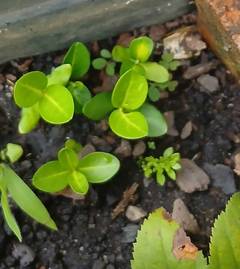
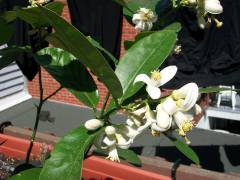
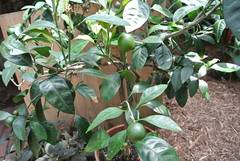
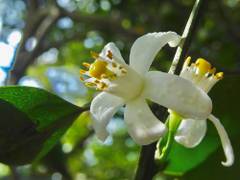
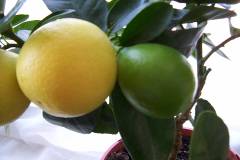
Citrus junos is an evergreen shrub or small tree reaching 8-18 feet (2.4-5.5 m) tall and 6-12 feet (1.8-3.7 m) wide, with stiff branches carrying straight thorns 1-3 inches (2.5-8 cm) long at the leaf nodes. Leaves are alternate, ovate, 2-4 inches (5-10 cm) long, glossy dark green, and held on broadly winged stalks 0.5-1 inch (1.3-2.5 cm) wide, a character carried from the parent species Citrus ichangensis. Flowers are white, 0.8-1 inch (2-2.5 cm) across, and strongly scented, opening singly or in small clusters in April and May. Fruit is 2-3 inches (5-7.5 cm) across with a thick uneven rind that colours from green to yellow between October and December, and each fruit holds 15-25 seeds in a small volume of sharply acidic juice. Rind and juice are used for zest, ponzu, and yuzu kosho in Japanese and Korean cooking. Trees come through about 10F (-12C) undamaged, a lower point than most citrus grown for fruit. Grafted plants crop in 3-4 years while seedlings take 10 years or more, and the long thorns make picking and pruning slow work.
Native Range
Citrus junos arose in central China on the upper Yangtze as a cross between Citrus ichangensis and the mandarin C. reticulata. It has been grown in Japan since about the 8th century, with production centred on Kochi, Tokushima, and Ehime prefectures, and in Korea under the name yuja. Plantings outside East Asia are concentrated in California, Australia, New Zealand, France, and Spain, and fresh fruit from Japan is not admitted to the United States under citrus quarantine rules.Suggested Uses
Grown as an orchard tree at 12-15 foot (3.7-4.5 m) spacing in Japan, Korea, and parts of California and Australia, and as a single fruit tree in home gardens across USDA zones 8-11. Container culture in pots of 20 gallons (76 L) or larger holds trees at 6-8 feet (1.8-2.4 m) and allows them to be moved under cover in zone 7. Zest, juice, and whole fruit are used in ponzu, yuzu kosho, marmalade, and the yuzu-yu bath taken at the winter solstice in Japan.How to Identify
Appearance
Size & Dimensions
Height8' - 18'
Width/Spread6' - 12'
Bloom Information
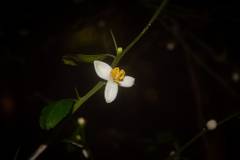
Flowering runs 2-3 weeks in April and May in the Northern Hemisphere and October to November in the Southern Hemisphere. Flowers are white, 0.8-1 inch (2-2.5 cm) across, and carry a scent noticeable at 15-20 feet (4.5-6 m). Bees handle pollination, though the flowers are self-fertile, and 7-8 months pass from bloom to ripe fruit. Frost below 28F (-2C) during bloom removes that season's crop.
Detailed Descriptions
Foliage Description
Glossy dark green on broadly winged stalksGrowing Conditions
Sun Requirements
Requires 6-12 hours of direct sunlight daily
• Full Sun: 6+ hours of direct sunlight
• Partial Shade: 3-6 hours of direct sunlight
• Full Shade: Less than 3 hours of direct sunlight
Care & Maintenance
Care Guide
Six or more hours of direct sun and free-draining soil at pH 5.5-6.5 carry the crop, with interveinal yellowing above pH 7.0 corrected by chelated iron and zinc. Water at 1-1.5 inches (25-38 mm) per week through the growing season, held even during fruit fill, since swings between wet and dry split the rind. A citrus fertilizer with nitrogen, iron, zinc, and manganese is applied in three doses between February and September, at 0.2-0.5 pound (90-225 g) of nitrogen per year for a bearing tree. Trees come through about 10F (-12C) undamaged and are injured near 5F (-15C), so container plants are moved under cover below that point. Citrus leafminer tunnels the summer flush, scale colonises shaded wood, and huanglongbing spread by the Asian citrus psyllid kills trees where the disease is present. Growth is slow at 6-12 inches (15-30 cm) per year, so trees take 8-10 years to reach full size.Pruning
Pruning is carried out in late winter, before the spring flush, taking out dead wood, crossing branches, and shoots below the graft union. Fruit forms on wood made the previous season, so heavy heading cuts reduce the following crop. Cuts made back to a branch collar rather than to a stub hold the interior clear for picking between the 1-3 inch (2.5-8 cm) thorns. Shortening the leaders every second year holds trees at 8-10 feet (2.4-3 m) and keeps fruit within reach.Pruning Schedule
Prune: February–March
early spring
Container Growing
Suitable for container growing
Minimum container size: 20 gallons