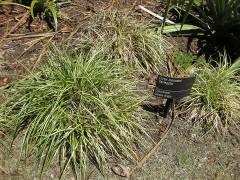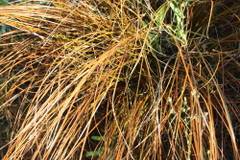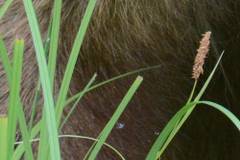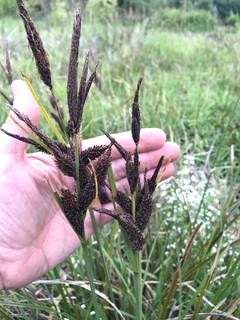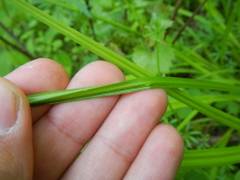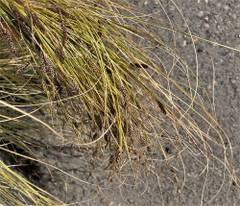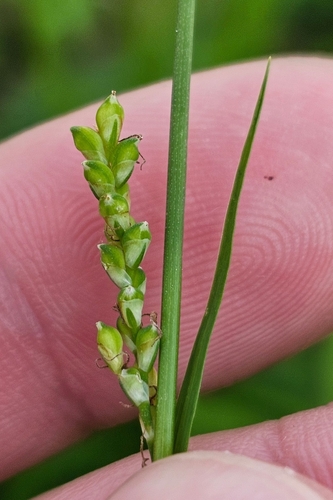
Carex, Genus, woodii, Species,
- Genus & species
Wood's sedge
Eastern North America — from New York south to Virginia and west to Minnesota, in dry upland forests
Overview
Carex woodii is Wood's sedge — a native spreading sedge for dry shade, growing 6–12 inches (15–30 cm) tall and expanding by short rhizomes to form a gradually expanding ground cover colony. Named after Alphonso Wood, the American botanist. The key separation from the similar C. albicans: Wood's sedge spreads by rhizomes to form a continuous carpet, while C. albicans is a clumper that stays in place. This spreading habit suits C. woodii for covering large dry-shade areas where a continuous ground cover is desired. Narrow-textured medium green foliage. Like C. albicans, this is a dry-shade specialist — thriving in the dry, well-drained soils of upland oak-hickory forests. Semi-evergreen. Hardy to zone 3. The combination of dry-shade tolerance and spreading habit makes this a valuable native ground cover. Deer avoid sedge foliage.
Native Range
Carex woodii is native to eastern North America — from New York south to Virginia and west to Minnesota, in dry upland forests.Suggested Uses
Used as a spreading native ground cover for large dry-shade areas under deciduous trees. The spreading dry-shade sedge — fills large areas that C. albicans (clumping) cannot cover as quickly. Woodland restoration. No-mow shade lawn.How to Identify
Appearance
Size & Dimensions
Height6" - 1'
Width/Spread1' - 2'
Colors
Bloom Information
Inconspicuous spikelets in April and May. The spreading foliage carpet is the display.
Detailed Descriptions
Flower Description
Green to tan, in small spikeletsFoliage Description
Medium green, narrowGrowing Conditions
Sun Requirements
Requires 2-5 hours of direct sunlight daily
• Full Sun: 6+ hours of direct sunlight
• Partial Shade: 3-6 hours of direct sunlight
• Full Shade: Less than 3 hours of direct sunlight
Care & Maintenance
Care Guide
Plant in partial to full shade. Dry to average, well-drained soil. Spreads by rhizomes — colonizes gradually. Hardy to zone 3.Pruning
Mow or comb in early spring if desired.Pruning Schedule
Prune: March
early spring