Carex, Genus, obnupta, Species,
- Genus & species
slough sedge
Pacific Coast of North America from British Columbia south through Washington and Oregon to California; freshwater marshes, sloughs, lake shores, stream margins, and wet forest edges
Overview
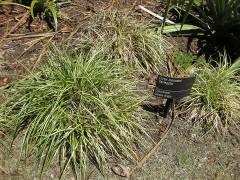
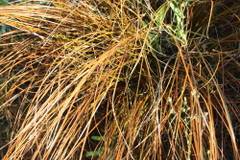
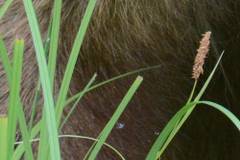
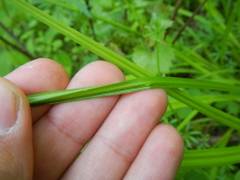
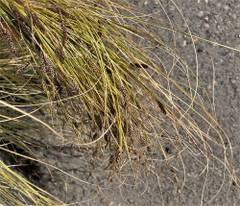
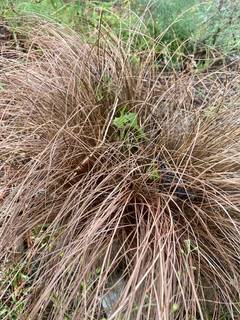
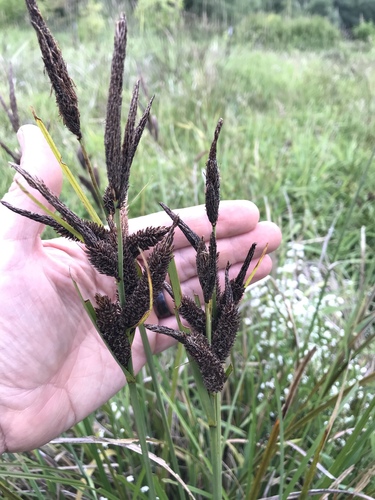
Carex obnupta is a rhizomatous sedge in the family Cyperaceae native to freshwater marshes, sloughs, lake shores, stream margins, and wet forest edges of the Pacific Coast from British Columbia south through Washington and Oregon to California. Plants form dense stands 2-4 feet (60-120 cm) tall from stout creeping rhizomes that colonize saturated ground. Leaf blades are flat to slightly channeled, 0.2-0.4 inch (5-10 mm) wide, dark green, and arch with the tips drooping toward the ground. Stems are sharply triangular in cross-section. From April through June each fertile stem bears 3-5 pistillate (female) spikes 1-4 inches (2.5-10 cm) long, dark brown to nearly black at maturity, suspended on long drooping peduncles, above 1-2 staminate (male) spikes near the stem tip. Pistillate spikes deepen toward black as seeds mature in summer, then bleach to straw-tan and persist through fall and winter. Foliage is semi-evergreen and turns tan in cold winters but remains partly green in mild ones. Vigorous rhizome spread can overrun smaller plantings within 2-3 seasons. Non-toxic.
Native Range
Carex obnupta is native to the Pacific Coast of North America from British Columbia south through Washington and Oregon to California. It grows in freshwater marshes, sloughs, lake shores, stream margins, and wet forest edges in saturated to seasonally flooded, acidic to neutral, organic-rich soils.Suggested Uses
Used in freshwater wetland restoration, rain gardens, bioswales, pond margins, and streambank stabilization throughout the Pacific Northwest at 18-24 inch (45-60 cm) spacing. Combined with Calamagrostis canadensis, Alisma plantago-aquatica, Juncus effusus, and Scirpus microcarpus in mixed wetland plantings.How to Identify
Appearance
Size & Dimensions
Height2' - 4'
Width/Spread1'6" - 2'6"
Bloom Information
Pistillate spikes emerge dark-stalked April through June and deepen to near-black as seeds mature in summer. Spike remnants bleach to straw-tan and persist on the plant through fall and winter. Bloom duration averages 8 weeks. Wind-pollinated; mature seeds feed marsh sparrows and other wetland birds in limited quantity.
Detailed Descriptions
Flower Description
dark brown to nearly black at maturity; 3-5 pistillate spikes 1-4 inches (2.5-10 cm) long on long drooping peduncles, above 1-2 staminate spikes; April-JuneFoliage Description
dark green; flat to slightly channeled blades 0.2-0.4 inch (5-10 mm) wide; tips arch and droop; triangular stemsGrowing Conditions
Sun Requirements
Requires 3-8 hours of direct sunlight daily
• Full Sun: 6+ hours of direct sunlight
• Partial Shade: 3-6 hours of direct sunlight
• Full Shade: Less than 3 hours of direct sunlight
Care & Maintenance
Care Guide
Plant in full sun to part shade in saturated to seasonally flooded soil with a pH of 5.0-7.5; tolerated soil types include clay, silt, loam, and peat. Plugs or rhizome divisions are set at 18-24 inch (45-60 cm) spacing directly into wet mud or shallow water up to 6 inches (15 cm) deep. Establishment takes 1-2 growing seasons and no fertilization is needed in saturated ground. Spreads vigorously by rhizome and forms monodominant stands within 2-3 seasons in suitable conditions. Drought during establishment causes leaf-tip dieback and stunted clumps.Pruning
Cut all foliage to 4-6 inches (10-15 cm) above ground in late winter (February-March) before new growth emerges. Rhizome sections can be divided in early spring for propagation or to limit spread. Annual cutback removes accumulated dead leaf litter and tan spike remnants from the previous season.Pruning Schedule
Prune: February–March
late winter