Carex, Genus, comans, Species,
- Genus & species
hair sedge
New Zealand (North and South Islands)
Overview
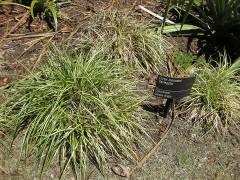
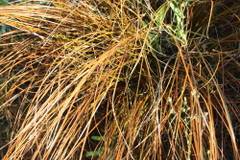
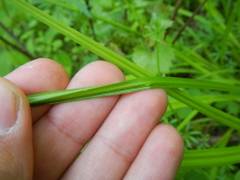
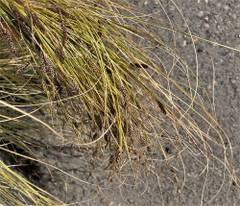
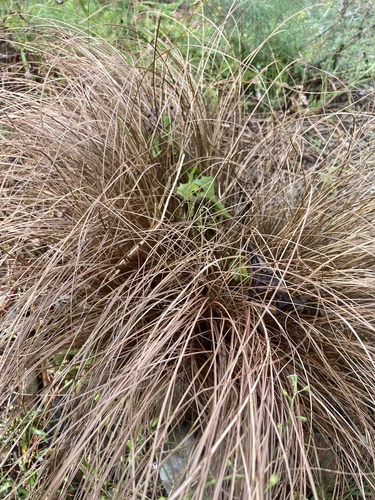
Carex comans is a low, densely tufted, evergreen sedge reaching 12–18 inches (30–45 cm) tall with a spread of 18–24 inches (45–60 cm). Leaves are threadlike, less than 0.04 inch (1 mm) wide, pale olive-green to tan-bronze, forming a dense arching to weeping mound that spills outward from the crown. Leaf tips trail on the ground and create a cascading effect — the source of the common name. Leaf texture is narrower than C. buchananii, producing a softer, more flowing form. Small brown flower spikes appear in late spring but are largely hidden among the threadlike foliage. The species is variable in color, with green-leaved and bronze-leaved forms both in cultivation; the bronze-leaved form (sometimes sold as 'Bronze Form') is more common in commerce. Growth rate is moderate. Trailing leaf tips can extend 6–12 inches (15–30 cm) beyond the main mound. Foliage is evergreen but may bleach to straw-color after cold winters. Crown rot develops in wet, poorly drained soils. In hot, humid climates the plant declines and is grown as a cool-season subject.
Native Range
Carex comans is native to New Zealand, on both the North and South Islands. It grows in open grasslands, tussock fields, coastal bluffs, and forest margins from sea level to 4,500 feet (1,400 m).Suggested Uses
Used in rock gardens, gravel gardens, border edges, and container plantings at 15–18 inch (38–45 cm) spacing. The cascading threadlike mound spills over walls, raised beds, and container edges, and functions as a groundcover in mass plantings. Grows in containers of at least 2 gallons (8 L). The narrow-textured foliage pairs with broad-leaved perennials; blue-foliaged plants and dark-leaved Heuchera supply color contrast.How to Identify
Appearance
Size & Dimensions
Height1' - 1'6"
Width/Spread1'6" - 2'
Bloom Information
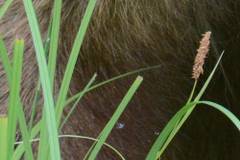
Inconspicuous brown flower spikes appear on slender stems among the foliage from May through June. Flowers are not an ornamental feature on this species. The year-round threadlike evergreen foliage carries the display.
Detailed Descriptions
Flower Description
Brown (inconspicuous)Foliage Description
Pale olive-green to tan-bronze, threadlike (less than 1 mm wide), with trailing tipsGrowing Conditions
Sun Requirements
Requires 4-8 hours of direct sunlight daily
• Full Sun: 6+ hours of direct sunlight
• Partial Shade: 3-6 hours of direct sunlight
• Full Shade: Less than 3 hours of direct sunlight
Care & Maintenance
Care Guide
Plant in moist, well-drained soil in full sun to partial shade. Consistent moisture is essential, and good drainage is critical since crown rot develops in wet winter soils. In hot climates, afternoon shade reduces bleaching. The plant is not cut to the ground; dead leaves are combed out by hand in early spring. Trailing tips collect debris and benefit from occasional grooming. Divide every 3–4 years in spring. No serious pest problems. The species performs in maritime climates with cool summers.Pruning
Shearing to the ground is not used on this species. Dead or straw-colored leaves are combed out by hand in early spring. Trailing tips may be trimmed back if they become untidy. Overcrowded clumps are divided in spring.Pruning Schedule
Prune: March
early spring
Container Growing
Suitable for container growing
Minimum container size: 2 gallons