Carex, Genus, morrowii, Species, 'Silver Sceptre', Cultivar,
- Genus & species
- Cultivar
Silver Sceptre Japanese sedge
Garden selection; species {Carex morrowii} is native to Japan
Overview
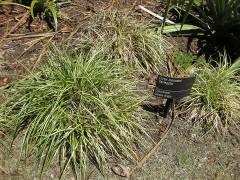
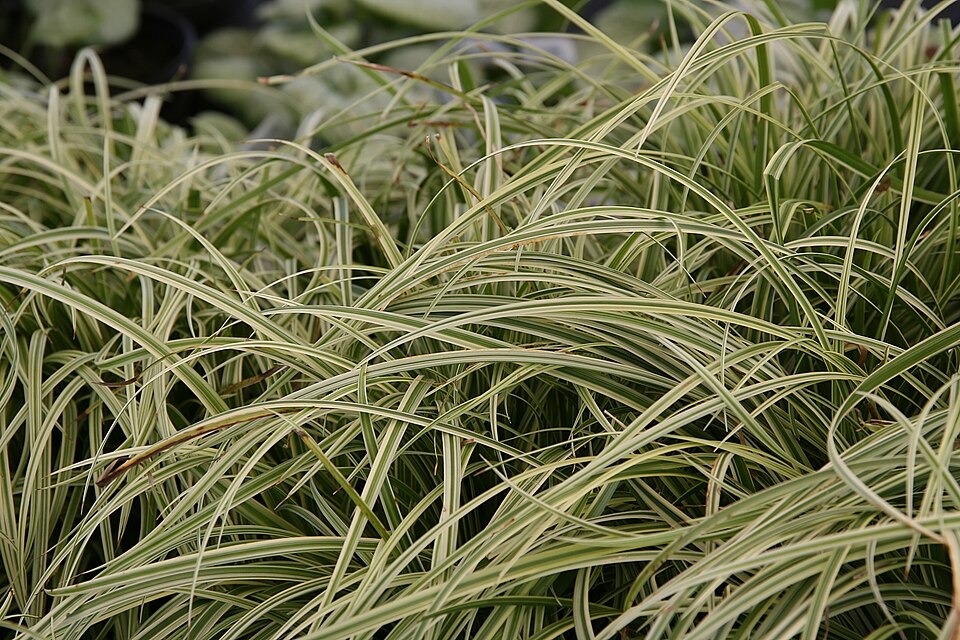
Carex morrowii 'Silver Sceptre' is a compact, clumping evergreen Japanese sedge that grows 10–14 inches (25–35 cm) tall and 12–16 inches (30–40 cm) wide. Narrow dark green leaf blades bear narrow creamy-white marginal variegation that is thinner and more delicate than the wide margins of 'Ice Dance'. The narrower variegation creates a more subtle, silvery effect overall — the plant reads lighter green from a distance rather than as clearly striped. Unlike the stoloniferous 'Ice Dance', 'Silver Sceptre' is strictly clumping and does not spread by runners, holding a tidy, contained mound year after year. This non-spreading habit suits formal edging and container use where a controlled shape is desired. The slightly smaller stature compared to 'Ice Dance' places it at a smaller scale. Inconspicuous brown flower spikes appear in spring with no ornamental value. The evergreen foliage persists through winter in zones 5–9; leaf tips may brown in exposed zone 5 sites during severe cold. In full sun, the white margins scorch; shade keeps the variegation crisp. Consistent moisture is required; dry conditions cause brown leaf tips. Deer avoid the foliage.
Native Range
The species Carex morrowii is native to Japan, growing in moist, shaded forests. 'Silver Sceptre' is a garden selection for its narrow creamy-white leaf margin variegation and strictly clumping habit.Suggested Uses
Used as a tidy, clumping accent in shade borders, along paths, and in containers of 3 gallons (11 L) or more. The non-spreading habit suits formal edging and small-space plantings where 'Ice Dance' would be too aggressive. Groups of 3–5 give a contained variegated display. Pairs with solid dark green and blue-leaved shade companions.How to Identify
Appearance
Size & Dimensions
Height10" - 1'2"
Width/Spread1' - 1'4"
Colors
Bloom Information
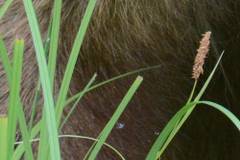
Inconspicuous brown flower spikes appear in April and May, lasting approximately 2 weeks. No ornamental value. The plant is grown for its variegated evergreen foliage.
Detailed Descriptions
Foliage Description
Dark green with narrow creamy-white marginal variegationGrowing Conditions
Sun Requirements
Requires 2-6 hours of direct sunlight daily
• Full Sun: 6+ hours of direct sunlight
• Partial Shade: 3-6 hours of direct sunlight
• Full Shade: Less than 3 hours of direct sunlight
Care & Maintenance
Care Guide
Plant in partial to full shade with 2–6 hours of filtered light. Full sun causes margin scorch. Moist, humus-rich soil suits this cultivar. Water regularly; drought causes brown leaf tips. No fertilization is needed. Winter-damaged foliage can be combed out in early spring. The clumping habit holds itself together for many years without division.Pruning
Brown or winter-damaged leaf tips can be combed out or trimmed in early spring. In mild climates, no cutback is needed. In zone 5, cut back to 3–4 inches (8–10 cm) in early spring if winter damage is extensive.Pruning Schedule
Prune: March
early spring
Container Growing
Suitable for container growing
Minimum container size: 3 gallons