Image 1 of 10
1 / 10
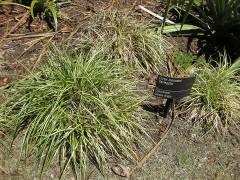
© No machine-readable author provided. Keisotyo assumed (based on copyright claims)., some rights reserved (CC-BY-SA) · Wikimedia Commons
Carex, Genus, morrowii, Species,
- Genus & species
Japanese sedge
Overview
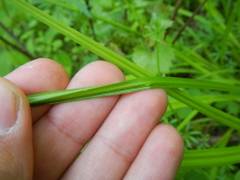
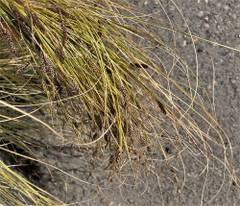
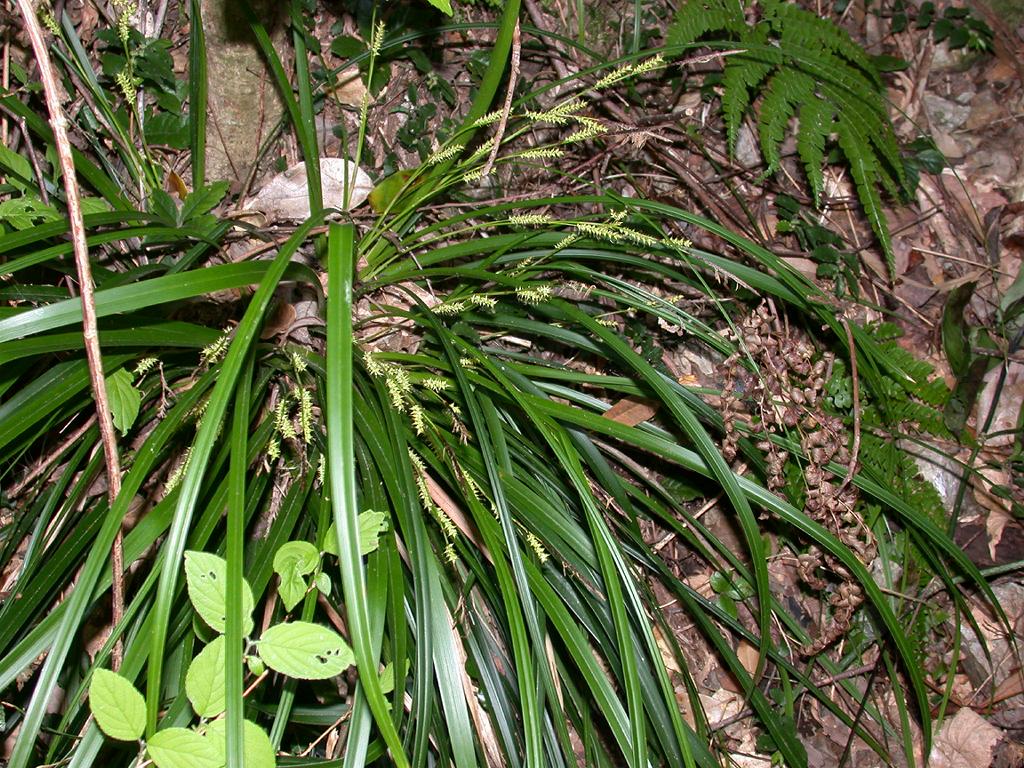
Carex morrowii is an evergreen sedge in the Cyperaceae forming dense tufted clumps 12–18 inches (30–45 cm) tall and 12–24 inches (30–60 cm) across. Leaves are stiff and arching, 8–16 inches (20–40 cm) long and 0.25–0.5 inch (6–12 mm) wide, glossy dark green above with a keeled midrib and minutely toothed margins that abrade skin drawn along them. Clumps expand slowly from short rhizomes, adding 2–4 inches (5–10 cm) in diameter a year, while selections such as C. morrowii 'Ice Dance' run more widely. Flowering culms are triangular in cross-section, rise 12–20 inches (30–50 cm), and carry a terminal male spike above 2–4 lateral female spikes, all green-brown and 0.5–1.5 inches (13–38 mm) long. Foliage holds green through winter in zones 7 and warmer, but in zones 5 and 6 the blades bleach, tatter, and shred by February and are removed before new growth. Leaf tips brown and growth slows where plants sit in full afternoon sun or in soil that dries below field capacity for more than a week.
Native Range
Carex morrowii is native to Japan, occurring on Honshu, Shikoku, and Kyushu in the understorey of broadleaf and mixed woodland and on shaded rocky slopes. It grows from near sea level to about 3,300 feet (1,000 m), often on humus-rich soil over rock. Populations also occur in coastal woodland where salt-laden wind is filtered by the canopy.Suggested Uses
Planted as evergreen edging and groundcover in shaded borders, spaced 12–18 inches (30–45 cm) apart for continuous cover within two seasons. Also grown in containers of 2 gallons (7.5 L) or larger and in shaded courtyard plantings, where the arching form persists through winter. Massed beneath deciduous trees the clumps persist under root competition, though supplementary water is needed through the first two years.How to Identify
Appearance
Size & Dimensions
Height1' - 1'6"
Width/Spread1' - 2'
Bloom Information
Flower spikes appear in April and May, standing 12–20 inches (30–50 cm) on triangular culms held just above or within the foliage. The terminal spike is male and 0.8–1.5 inches (20–38 mm) long, with 2–4 female spikes below it, all green-brown and without petals. Pollination is by wind, and the spikes persist 3–4 weeks before the culms brown and bend. Seed set is light in cultivation and self-sown seedlings are uncommon in garden conditions.
Detailed Descriptions
Foliage Description
Glossy dark greenGrowing Conditions
Sun Requirements
Requires 2-6 hours of direct sunlight daily
• Full Sun: 6+ hours of direct sunlight
• Partial Shade: 3-6 hours of direct sunlight
• Full Shade: Less than 3 hours of direct sunlight
Care & Maintenance
Care Guide
Two to six hours of direct sun daily, with shade through the afternoon, keeps the blades dark green; more than about six hours in zones 7–9 scorches the leaf tips. Evenly moist, free-draining soil with a pH of 5.5 to 7.0 supports steady growth, and clumps in dry soil thin from the centre outward. Watering to keep the root zone damp during dry spells longer than 10 days sustains the foliage. The plant is hardy in USDA zones 5–9 and survives winter lows near -20°F (-29°C), though blades above the crown are killed at around 5°F (-15°C). A single spring application of balanced fertiliser at 1 pound per 100 square feet (0.5 kg per 9 m²) covers the season. Crown rot follows planting in soil that stays saturated, and slugs graze new blades in wet springs.Pruning
Cutting the clump back to 3–4 inches (7.5–10 cm) in late February or early March removes winter-damaged blades before new leaves emerge. Where foliage stays intact through winter, running gloved hands through the clump strips dead blades without shearing living ones. Cuts made after new growth has started leave blunt brown tips on the new leaves for the rest of the season. Division every 3–4 years in early spring restores clumps that have opened at the centre.Pruning Schedule
Prune: February–March
early spring
Container Growing
Suitable for container growing
Minimum container size: 2 gallons