Carex, Genus, aquatilis, Species,
- Genus & species
sitka aquatic sedge
Circumboreal: northern North America and Eurasia; common in Pacific Northwest wetlands
Overview
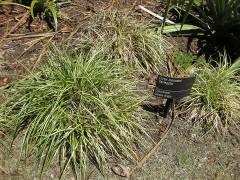
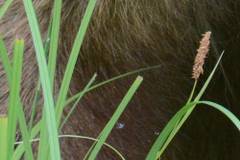
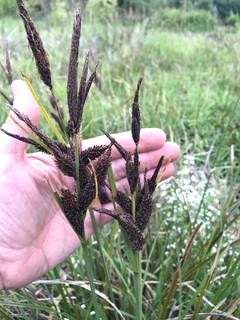
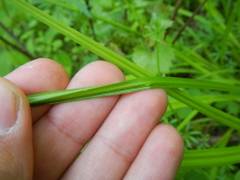
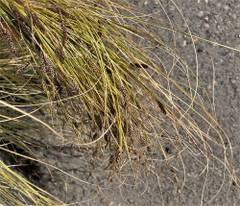
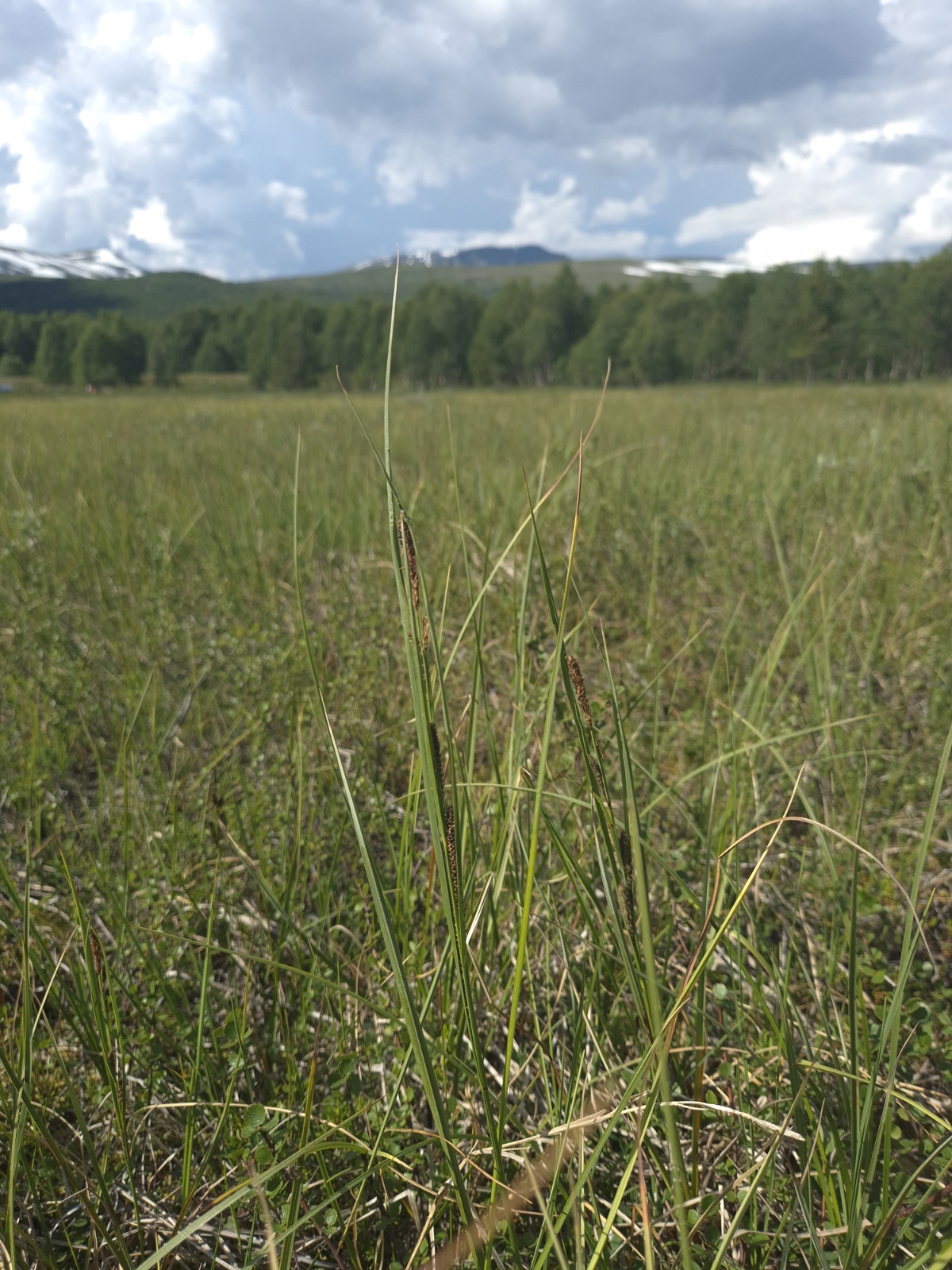
Carex aquatilis is a deciduous strongly rhizomatous wetland sedge reaching 24-48 inches (60-120 cm) tall, forming colonies of upright stems and arching foliage. Leaves are flat to slightly V-shaped, 0.15-0.3 inch (4-8 mm) wide, blue-green to gray-green, with an arching habit at maturity. Triangular flowering stems bear 2-4 dark brown to nearly black pistillate spikes 0.6-2 inches (1.5-5 cm) long below 1-3 narrow staminate spikes; perigynia are flat, 0.1 inch (2.5 mm) long, dark-margined. Bloom occurs from May through July. Rhizomes spread 6-18 inches (15-45 cm) per year in saturated soil and can colonize a 10-foot (3 m) area within 4-5 years. The species tolerates standing water 4-12 inches (10-30 cm) deep through the growing season but persists in fluctuating water tables. Foliage persists yellow-brown through winter in zones 5 and warmer; full dieback occurs in zones 2-4.
Native Range
Circumboreal native, occurring across northern North America from Alaska through Canada to the northern United States, with disjunct populations in mountainous regions south to New Mexico, and across northern Eurasia. Grows in fens, bogs, sedge meadows, stream margins, and shallow lake edges from sea level to 12,000 feet (3,600 m) elevation. Var. dives is the common Pacific Northwest variant in coastal salt-influenced wetlands.Suggested Uses
Used in rain gardens, pond margins, constructed wetlands, restoration plantings, and stream-edge erosion control, spaced 18-24 inches (45-60 cm) apart. Tolerates inundation in 4-12 inches (10-30 cm) of standing water. Plantings combine with Equisetum hyemale, Iris pseudacorus, and Eleocharis palustris in pond-edge plantings. The rhizomatous habit makes the species incompatible with small formal mixed perennial beds.How to Identify
Appearance
Size & Dimensions
Height2' - 4'
Width/Spread2' - 4'
Bloom Information
Inflorescences emerge May through July, peaking in June at mid-elevations. Pollen release occurs over 7-10 days; perigynia mature and shed from August through October. Flowering varies with water level; spring drawdown typically reduces bloom by 30-40%.
Detailed Descriptions
Flower Description
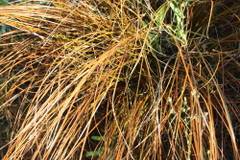
dark brown to nearly blackFoliage Description
blue-green to gray-greenGrowing Conditions
Sun Requirements
Requires 4-9 hours of direct sunlight daily
• Full Sun: 6+ hours of direct sunlight
• Partial Shade: 3-6 hours of direct sunlight
• Full Shade: Less than 3 hours of direct sunlight
Care & Maintenance
Care Guide
Plantings establish in saturated to seasonally inundated soils with pH 5.0-7.5. Established plantings in consistently wet sites require no supplemental water; fluctuating water tables are tolerated as long as soil remains moist below the surface. Few pest or disease problems occur. Spreading rhizomes can extend beyond pond margins into adjacent garden beds; root barriers buried 12 inches (30 cm) deep contain the spread. Foliage is cut to 4 inches (10 cm) above the crown in late winter to remove old growth before new shoots emerge. Fertilization is not required.Pruning
Old foliage is cut back in late February or early March before new growth begins. Mid-season grooming is not required. Rhizomes that extend beyond intended planting areas can be cut at the bed edge with a sharp spade in any season except active flowering.Pruning Schedule
Prune: February–March
winterearly spring
Container Growing
Suitable for container growing
Minimum container size: 5 gallons