Carex, Genus, buchananii, Species,
- Genus & species
leatherleaf sedge
New Zealand (North and South Islands; lowland to montane grasslands, tussock fields, open shrublands, stream margins; sea level to 3,500 feet / 1,100 m)
Overview
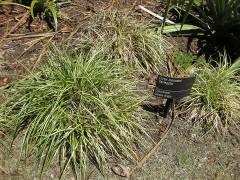
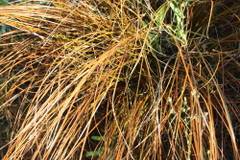
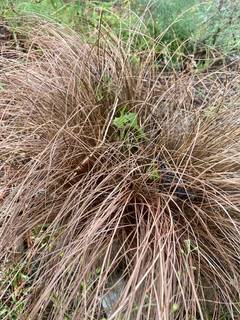
Carex buchananii is an upright densely tufted evergreen sedge in the sedge family (Cyperaceae) reaching 24–30 inches (60–75 cm) tall with a spread of 12–18 inches (30–45 cm). The habit is strictly vertical with cylindrical tufts that contrast with the arching or mounding habit of most ornamental grasses and sedges. Very narrow leaves 0.04 inch (1 mm) wide are hair-thin in visual texture, copper-brown to reddish-bronze, and curl slightly at the tips; the curled tips give the upper portion of the tuft a wispy frayed appearance at close range. Small brown flower spikes 1–2 inches (2.5–5 cm) long appear on wiry stems just above the foliage from May through June but are inconspicuous. Foliage is evergreen and holds the copper-bronze color through the year in mild climates. Growth rate is slow to moderate. Hardy to zone 6. The bronze-brown color is sometimes mistaken for dead foliage by gardeners unfamiliar with the species. Crown rot can develop in cold wet winter soils. In hot humid climates (zones 8–9), afternoon shade prevents foliage bleaching and summer decline. The shallow root system is drought-sensitive despite the wiry dry visual character of the foliage.
Native Range
Carex buchananii is native to New Zealand, occurring on both the North and South Islands. It grows in lowland to montane grasslands, tussock fields, open shrublands, and stream margins from sea level to 3,500 feet (1,100 m). The species is named after John Buchanan (1819–1898), a 19th-century New Zealand botanist who documented native flora of the South Island.Suggested Uses
Grown in mixed borders, gravel gardens, rock gardens, and modern landscape plantings at 15–18 inch (38–45 cm) spacing. The vertical bronze-copper tuft adds year-round color and textural contrast to plantings of green-foliaged perennials and silver-leaved plants. Container culture works in 2 gallon (8 L) or larger pots, where the cylindrical form reads as a sculptural accent. Mass plantings amplify the vertical architectural character. Combining with blue-leaved Festuca glauca, silver Stachys byzantina, and purple Heuchera creates a color-themed bronze-and-silver palette.How to Identify
Appearance
Size & Dimensions
Height2' - 2'6"
Width/Spread1' - 1'6"
Bloom Information
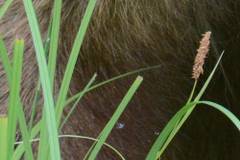
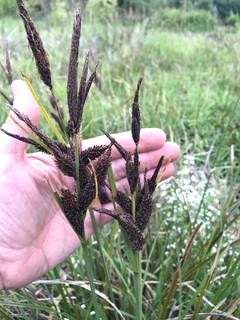
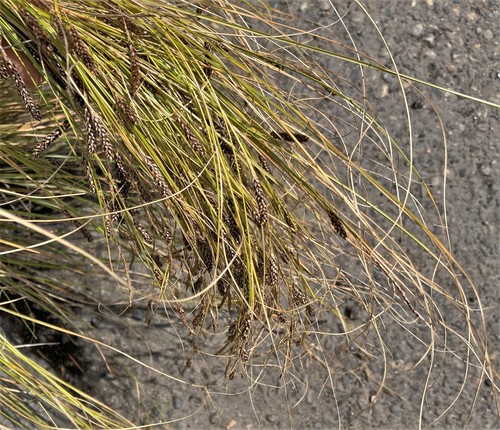
Inconspicuous brown flower spikes appear on wiry stems just above the foliage from May through June. The spikes are slender, 1–2 inches (2.5–5 cm) long. Flowers are not an ornamental feature; the year-round bronze-copper foliage is the primary contribution.
Detailed Descriptions
Flower Description
Brown, inconspicuous slender spikes 1-2 inches longFoliage Description
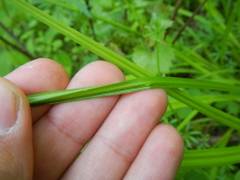
Copper-brown to reddish-bronze, very narrow 1 mm hair-thin blades with curling tipsGrowing Conditions
Sun Requirements
Requires 4-10 hours of direct sunlight daily
• Full Sun: 6+ hours of direct sunlight
• Partial Shade: 3-6 hours of direct sunlight
• Full Shade: Less than 3 hours of direct sunlight
Care & Maintenance
Care Guide
Grows in full sun to partial shade in moist well-drained soil at pH 5.5–7.0, tolerating loam and sand. Hardy to zone 6. Consistent soil moisture is required despite the wiry dry visual character of the foliage — the shallow root system is drought-sensitive. Sharp drainage is required; crown rot develops in cold wet winter soils. In hot humid climates (zones 8–9), afternoon shade prevents foliage bleaching and summer decline. Hard cutback to the ground, as practiced with deciduous ornamental grasses, does not work on this evergreen sedge: the foliage does not regenerate reliably after ground-level shearing. Dead leaves are combed out by hand or with a wide-toothed rake in early spring. Division every 3–4 years in spring restores vigor when clumps thin at the center. No serious pest problems are reported.Pruning
Shearing to the ground is not used on this evergreen sedge, as the foliage does not regenerate reliably after hard cutback. Instead, dead or damaged leaves are combed out by hand or with a wide-toothed rake in early spring, which preserves the evergreen structure while removing brown spent foliage. Overcrowded clumps are divided in spring every 3–4 years.Pruning Schedule
Prune: March
early spring
Container Growing
Suitable for container growing
Minimum container size: 2 gallons