Carex, Genus, vulpina, Species,
- Genus & species
fox sedge
Europe and northern Asia (British Isles east through Russia to western Siberia)
Overview
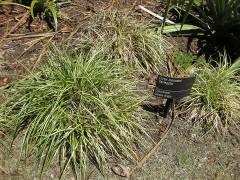
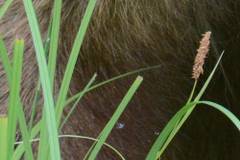
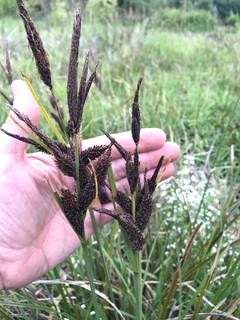
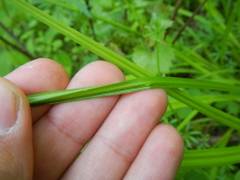
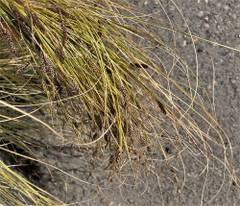
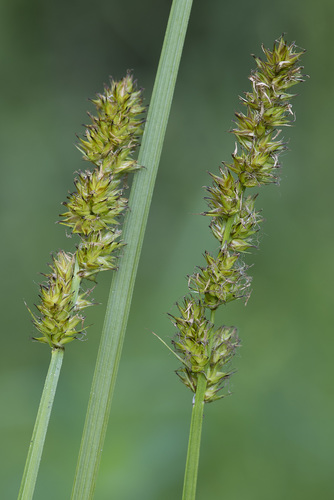
Carex vulpina is a robust, densely tufted perennial sedge in the Cyperaceae family, reaching 18-36 inches (45-90 cm) tall in dense tussocks 12-18 inches (30-45 cm) across. Stems are triangular, sharply angled, with conspicuously winged angles that cut the skin when drawn through the fingers — a primary tactile identification character. Leaves are flat, 0.2-0.4 inch (5-10 mm) wide, bright green to yellow-green, rough-margined. The inflorescence is a dense, compound spike 1.5-3 inches (4-8 cm) long, composed of numerous tightly packed, ovoid spikelets forming a continuous or slightly interrupted column. The inflorescence is fox-tail-like in shape — the basis for the common name and the epithet vulpina (fox-like). Spikelets are brownish-green, each containing both male and female flowers. Utricles are 4-5 mm long, broadly ovoid, flattened, with a winged margin and a bifid beak, spreading at maturity to give the spike a bristly texture. The species occurs in wet meadows, ditch margins, and floodplain habitats on nutrient-rich, base-rich, alluvial soils across Europe. In Britain, it is a species of conservation concern, declining due to drainage and agricultural improvement of its floodplain grassland habitat. Frequently confused with C. otrubae (false fox sedge), which is much more abundant and is often misidentified as C. vulpina.
Native Range
Carex vulpina is native across Europe, from the British Isles and Scandinavia south to the Mediterranean and east through Russia to western Siberia, where the species occurs in wet meadows, floodplain grasslands, ditch margins, and pond edges on base-rich, nutrient-rich, alluvial soils from sea level to approximately 3,300 feet (1,000 m).Suggested Uses
Used in wet meadow restoration, floodplain grassland recreation, and pond margin plantings on base-rich soils. In Britain and Europe, a conservation-priority species for wet meadow habitat restoration. In garden settings, planted at pond margins and in rain gardens where nutrient-rich, base-rich wet conditions are present. The dense tussock habit and fox-tail spikes add textural interest to naturalistic wet plantings.How to Identify
Appearance
Size & Dimensions
Height1'6" - 3'
Width/Spread1' - 1'6"
Bloom Information
Detailed Descriptions
Foliage Description
Bright green to yellow-greenGrowing Conditions
Sun Requirements
Requires 4-10 hours of direct sunlight daily
• Full Sun: 6+ hours of direct sunlight
• Partial Shade: 3-6 hours of direct sunlight
• Full Shade: Less than 3 hours of direct sunlight
Care & Maintenance
Care Guide
Plants grow in full sun to partial shade in consistently moist to wet, base-rich, fertile soil with a pH of 6.5-8.0. Plants are spaced 12-15 inches (30-38 cm) apart. The species tolerates seasonal flooding and standing water to 3 inches (8 cm). In garden settings, planting in rain garden lower zones, pond margins, and wet meadow areas matches the species' habitat. Feeding is unnecessary on fertile alluvial soils. Drying out is avoided — the species is restricted to permanently moist habitats.Pruning
Dead foliage and old spikes are cut back to 3-4 inches (8-10 cm) in late winter before new growth. No other management is required.Pruning Schedule
Prune: February–March
early spring