Carex, Genus, arenaria, Species,
- Genus & species
sand sedge
Overview
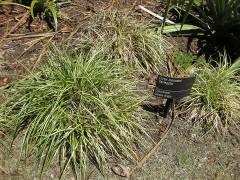
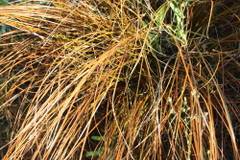
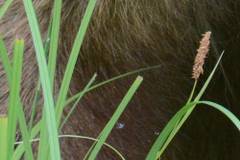
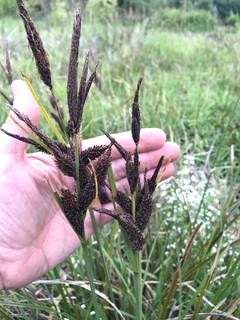
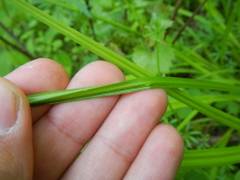
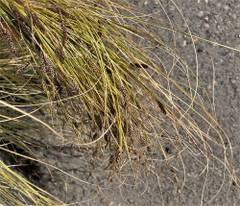
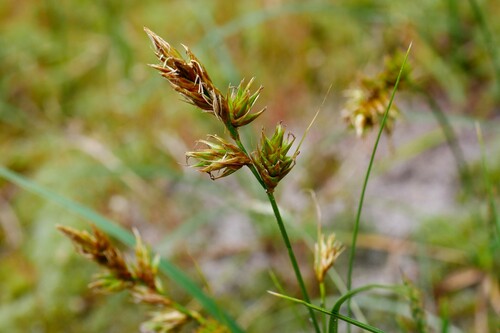
Carex arenaria is a perennial sedge in the family Cyperaceae that spreads by long, straight, far-creeping rhizomes, often sending up shoots in a nearly straight line across open sand. The three-angled flowering stems stand 4–16 inches (10–40 cm) tall and carry stiff, channelled, grey-green leaves 2–4 mm wide with rough margins. The flower head is a dense to slightly interrupted spike 0.8–3 inches (2–7 cm) long of pale brown, overlapping spikelets, with male flowers above and female flowers below on the same head. Fruits are flattened, broadly winged nutlets about 4–5 mm long. The plant roots deeply and binds loose sand, making it a primary coloniser of mobile and semi-fixed dunes, sandy shingle, and dune slacks around the coast. It tolerates burial by blowing sand and salt-laden wind but is shaded out on stable, closed turf and does not grow on heavy or waterlogged soils. The deep, wide-running rhizomes make established colonies hard to remove from cultivated ground.
Native Range
Native to the coasts of western and northern Europe, from Scandinavia and the Baltic south to Iberia, with scattered occurrences inland on sandy soils. It is widespread along Atlantic and North Sea shores.Suggested Uses
Carex arenaria is used for binding and stabilising sand dunes, embankments, and bare sandy ground in coastal restoration. In gardens it is limited to large gravel, dune, or seaside schemes where its running rhizomes have room to spread.How to Identify
Appearance
Size & Dimensions
Height4" - 1'4"
Colors
Bloom Information
Detailed Descriptions
Foliage Description
grey-greenGrowing Conditions
Sun Requirements
Requires 6-12 hours of direct sunlight daily
• Full Sun: 6+ hours of direct sunlight
• Partial Shade: 3-6 hours of direct sunlight
• Full Shade: Less than 3 hours of direct sunlight