Carex pensylvanica
Pennsylvania sedge
Overview
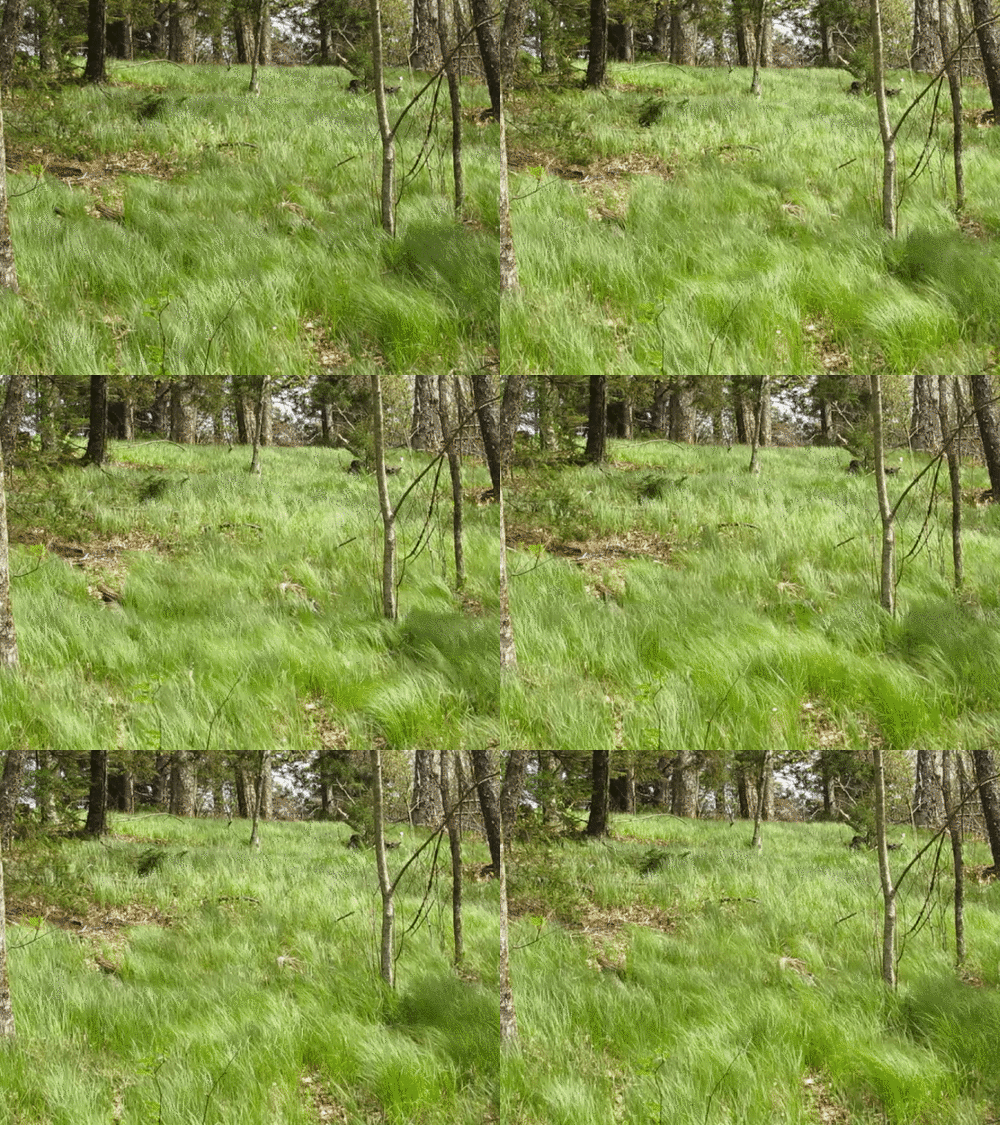
Carex pensylvanica is a semi-evergreen sedge in the Cyperaceae reaching 6-12 inches (15-30 cm) tall with arching foliage, spreading 12-18 inches (30-45 cm) by slender rhizomes to form open colonies. Leaf blades are narrow at 0.05-0.1 inch (1.5-3 mm) wide and 6-12 inches (15-30 cm) long, medium green, and arch over so that standing height is roughly half the blade length. Stems are triangular in cross-section. Flowering stems carry a single staminate spike at the tip above 1-3 pistillate spikes, each 0.2-0.5 inch (5-13 mm) long, in brown and greenish-brown; they rise in April and May and are held at or just above the foliage. Seed ripens by early summer. Rhizomes extend 2-4 inches (5-10 cm) per season, so a planting closes over 2-3 years. Foliage browns from the tips through winter and is replaced by new growth in early spring. Colonies thin under more than 6 hours of direct sun and in soils that stay wet.
Native Range
Native to eastern and central North America, from Quebec and Ontario south to Georgia and west to Manitoba, the Dakotas, and Missouri. It grows in dry oak and pine woodland, on sandy or rocky slopes, and in woodland openings, usually under a tree canopy. Colonies are most extensive on acid soils of low fertility.Suggested Uses
Planted as a groundcover under deciduous trees, in woodland gardens, and on dry shaded banks at 8-12 inch (20-30 cm) spacing, where root competition from established trees limits other groundcovers. Used as a mown lawn alternative in shade across zones 3-8, cut once or twice a season. The foliage is a larval food source for several skipper butterflies, and seed is taken by ground-feeding birds.How to Identify
Appearance
Size & Dimensions
Height6" - 1'
Width/Spread1' - 1'6"
Reaches mature size in approximately 3 years
Bloom Information
Flowering stems rise in April and May, ahead of full leaf-out on the trees above. Pollen is shed over 7-14 days and the plant is wind-pollinated. Seed ripens from late May to early July and drops near the parent plant. Flowering stems wither by midsummer and are hidden by the arching foliage.
Detailed Descriptions
Flower Description
brown to greenish-brownFoliage Description
medium green, browning at the tips in winterGrowing Conditions
Sun Requirements
Requires 2-6 hours of direct sunlight daily
• Full Sun: 6+ hours of direct sunlight
• Partial Shade: 3-6 hours of direct sunlight
• Full Shade: Less than 3 hours of direct sunlight
Care & Maintenance
Care Guide
Plants are set 8-12 inches (20-30 cm) apart in autumn or early spring and close a planting over 2-3 growing seasons. Water weekly through the first season; established colonies grow without irrigation and go summer-dormant, browning off, during droughts longer than 5-6 weeks before regrowing in autumn. Soil carries the species between pH 5.0 and 7.0 on sand, loam, or rocky ground, and colonies thin where drainage is poor. Two to six hours of direct sun or dappled light under a canopy holds the stand dense, while foliage yellows and thins under full sun in zones 7-8. Leaf litter left in place through winter feeds the colony and no fertiliser is applied. Deer browse the foliage lightly and it recovers within 3-4 weeks.Pruning
Foliage is cut or mown to 3-4 inches (7.5-10 cm) in early spring before new growth starts, which clears winter-browned blades in one pass. Cutting after growth begins in April shortens the blades for the remainder of the season. Stands used as a lawn alternative are mown once or twice a year at 3-4 inches (7.5-10 cm), in spring and again in midsummer. Colonies left uncut hold the previous season blades under the new growth.Pruning Schedule
J
F
M
A
M
J
J
A
S
O
N
D
early spring
Container Growing
✓ Suitable for container growing
Minimum container size: 2 gallons