Carex, Genus, otrubae, Species,
- Genus & species
false fox-sedge
Europe, North Africa, and western Asia
Overview
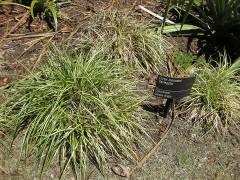
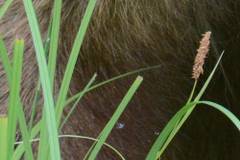
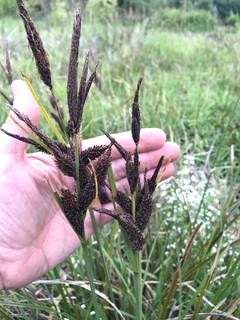
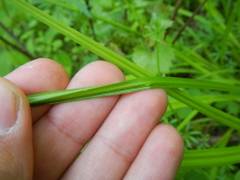
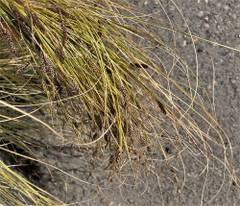
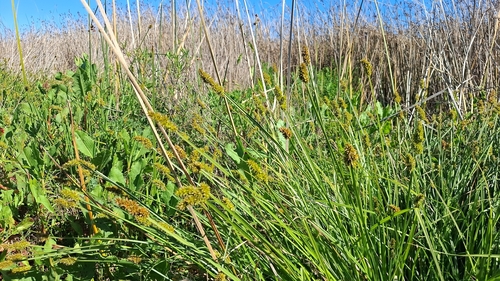
Carex otrubae is a tufted perennial sedge that forms dense tussocks 30-100 cm (12-39 in) tall. The stems are stout, sharply three-angled, and rough along the edges, rising stiffly from a clumped base rather than spreading on rhizomes. Leaves are flat, 4-10 mm (0.16-0.39 in) wide, mid-green, and roughly as long as the stems. The inflorescence is a compact, head-like cluster 3-7 cm (1.2-2.8 in) long, packed with many short brown spikes that each carry both male and female flowers. As the seed ripens the head loosens and turns straw-brown, with flattened, beaked fruit sacs about 5-6 mm (0.2-0.24 in) long. The clumping habit keeps colonies in place, so the plant stays where it is set rather than running through a bed, though large tussocks become woody at the base and are heavy to lift or divide. It grows on heavy, seasonally wet ground and tolerates brackish conditions near coasts. Foliage stands through mild winters and dies back in cold ones.
Native Range
Carex otrubae is native to Europe, North Africa, and western Asia, growing in damp grassland, ditches, marsh edges, and brackish ground near coasts. It is most frequent on heavy clay soils that stay wet through winter.Suggested Uses
Used in pond margins, rain gardens, wet meadows, and ditch plantings where its roots bind saturated soil. The stiff tussocks add vertical structure to bog and streamside schemes. Its need for wet ground makes it short-lived on dry sites.How to Identify
Appearance
Size & Dimensions
Height1' - 3'3"
Width/Spread1' - 2'6"
Bloom Information
Detailed Descriptions
Flower Description
green to brownFoliage Description
mid-greenGrowing Conditions
Sun Requirements
Requires 4-10 hours of direct sunlight daily
• Full Sun: 6+ hours of direct sunlight
• Partial Shade: 3-6 hours of direct sunlight
• Full Shade: Less than 3 hours of direct sunlight
Care & Maintenance
Care Guide
Carex otrubae grows in full sun to light shade on moisture-retentive soils, including heavy clay and ground that floods in winter. It withstands periods of standing water and tolerates mild salinity near the coast. Soil pH from about 6.0 to 8.0 suits it. The clump-forming habit means it stays in bounds without a barrier, but established tussocks become dense and woody and resist division. No feeding is required on damp fertile ground. It is propagated from seed or by splitting younger clumps in spring.Pruning
Old foliage and spent seed heads are cut to the base in late winter before new growth starts. Division of younger clumps in spring renews congested tussocks. No other trimming is needed.Pruning Schedule
Prune: February–March
winter
Container Growing
Suitable for container growing
Minimum container size: 5 gallons