Carex, Genus, riparia, Species,
- Genus & species
greater pond sedge
Overview
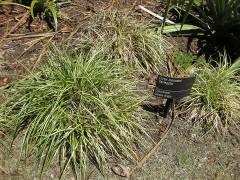
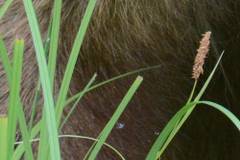
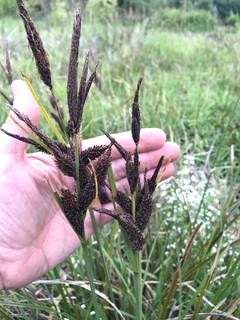
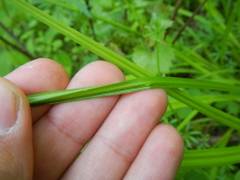
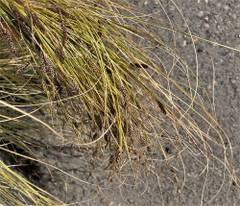
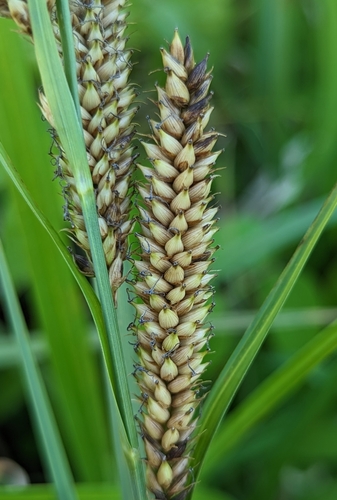
Carex riparia is a robust, rhizomatous perennial sedge in the Cyperaceae family, growing 36–60 inches (90–150 cm) tall and spreading aggressively by thick, far-creeping rhizomes to form extensive colonies along waterways. Stems are triangular, sharply angled, rough on the upper edges. Leaves are broad for a sedge — 0.4–0.6 inch (10–15 mm) wide — flat, keeled, grey-green to blue-green, with rough-cutting margins. The inflorescence consists of 3–6 cylindrical spikes: 2–3 slender male spikes at the top and 2–4 female spikes below, the lowest on a long, nodding peduncle. Female spikes are 1.5–3 inches (4–8 cm) long, densely packed with large utricles 5–7 mm long, inflated, tapering to a bifid beak. The species is among the largest European sedges and a dominant component of reed swamp and tall-herb fen communities. In the Pacific Northwest, it is not native but is occasionally used in constructed wetlands and large-scale riparian restoration. The aggressive rhizome system — extending 12–24 inches (30–60 cm) per year — makes it unsuitable for small garden settings. Tolerates standing water to 12 inches (30 cm) deep and seasonal flooding.
Native Range
Carex riparia is native across Europe, from the British Isles and Scandinavia south to the Mediterranean and east through Russia, Central Asia, and into western China. It occurs along rivers, canals, lake margins, and in fen communities on base-rich, waterlogged soils.Suggested Uses
Used in large-scale riparian restoration, constructed wetlands, flood attenuation areas, and lake margin stabilisation. The robust root and rhizome system binds wet soil and reduces bank erosion. Not suited to garden-scale plantings due to aggressive spread. In wildlife habitat management, the dense stands provide cover for waterfowl and nesting habitat for reed warblers.How to Identify
Appearance
Size & Dimensions
Height3' - 5'
Width/Spread2' - 4'
Bloom Information
Detailed Descriptions
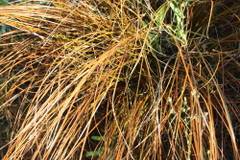
Foliage Description
Grey-green to blue-greenGrowing Conditions
Sun Requirements
Requires 4-10 hours of direct sunlight daily
• Full Sun: 6+ hours of direct sunlight
• Partial Shade: 3-6 hours of direct sunlight
• Full Shade: Less than 3 hours of direct sunlight
Care & Maintenance
Care Guide
Plant in full sun to partial shade in permanently wet to waterlogged soil with a pH of 6.0–8.0. Space 18–24 inches (45–60 cm) apart. Tolerates standing water to 12 inches (30 cm) deep. Suitable only for large-scale wetland, pond margin, and riparian plantings — the vigorous rhizomatous spread makes it inappropriate for small gardens. Contains rhizome spread with a heavy-duty root barrier if planting adjacent to managed areas. No fertilisation needed.Pruning
Mow or cut back dead growth to 4–6 inches (10–15 cm) in late winter before new growth. In managed wetland settings, annual cutting removes accumulated dead material and maintains vigour. Thin colonies by removing rhizome sections with a sharp spade.Pruning Schedule
Prune: February–March
early spring