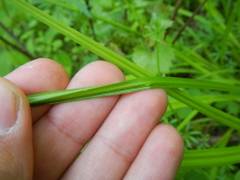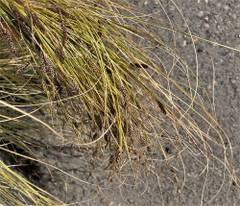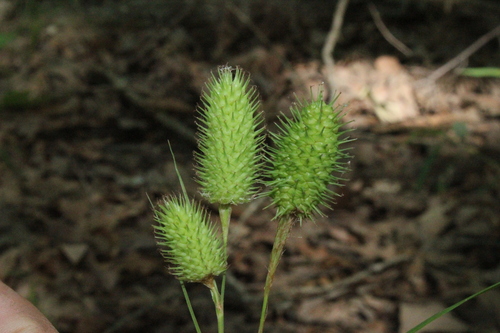
Carex, Genus, squarrosa, Species,
- Genus & species
squarrose sedge
Eastern North America — from Quebec south to Florida and west to Texas, in wet meadows and swamp edges
Overview
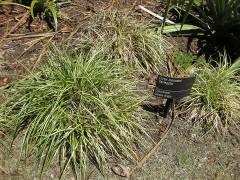
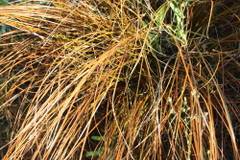
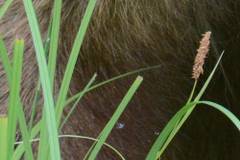
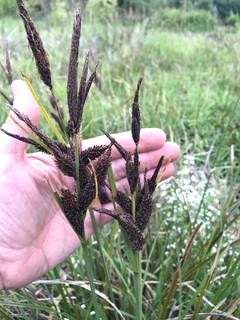
Carex squarrosa is squarrose sedge in the Cyperaceae family — a native wet-soil sedge with an unconventional seed head shape, growing 18-30 inches (45-75 cm) tall and 12-18 inches (30-45 cm) wide. The species name 'squarrosa' means 'with parts spreading or recurved at right angles', describing the perigynia that spread outward in all directions to create round bristly ball-like spikelets — resembling tiny sea urchins or spiked balls. These round bristly heads are completely different from the cylindrical or catkin-like forms of other sedges. Green in summer aging to brown in fall, the bristly balls persist for months. Medium green arching foliage. Wet to waterlogged soil in partial shade to sun. Hardy to zone 3. Clumping habit. The sea-urchin seed heads make this a recognizable native sedge by silhouette. Deer avoid sedge foliage.
Native Range
Carex squarrosa is native to eastern North America — from Quebec south to Florida and west to Texas.Suggested Uses
Used in rain gardens, wet meadows, streambanks, and as a conversation piece. The sea-urchin seed heads are the primary feature. Wet-soil native with recognizable ornamental value.How to Identify
Appearance
Size & Dimensions
Height1'6" - 2'6"
Width/Spread1' - 1'6"
Colors
Bloom Information
Spikelets in June and July. The bristly ball seed heads persist through fall.
Detailed Descriptions
Flower Description
Green aging to brown, in round bristly ball-like spikeletsFoliage Description
Medium green, narrow, archingGrowing Conditions
Sun Requirements
Requires 4-8 hours of direct sunlight daily
• Full Sun: 6+ hours of direct sunlight
• Partial Shade: 3-6 hours of direct sunlight
• Full Shade: Less than 3 hours of direct sunlight
Care & Maintenance
Care Guide
Plant in partial shade to sun. Wet to waterlogged soil. Hardy to zone 3. No maintenance needed.Pruning
All growth is cut to ground in early spring.Pruning Schedule
Prune: March
early spring