Carex, Genus, praegracilis, Species,
- Genus & species
clustered field sedge
Western North America (British Columbia and Alberta south through the western United States to Mexico)
Overview
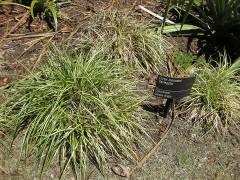
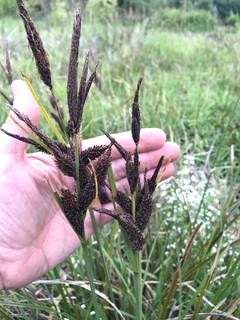
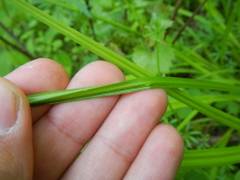
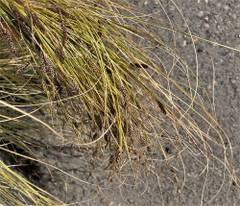
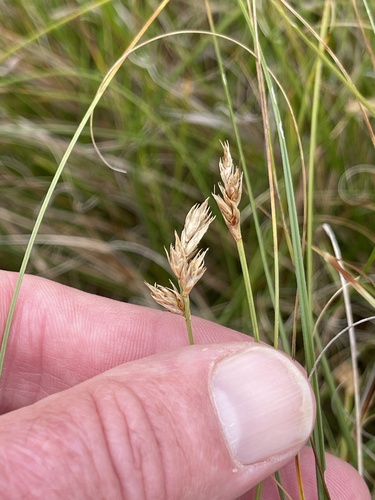
Carex praegracilis is a rhizomatous, semi-evergreen perennial sedge in the Cyperaceae family, reaching 6-18 inches (15-45 cm) tall and spreading by long, creeping rhizomes to form a dense, sod-like mat. Leaves are narrow, 1.5-3 mm wide, dark green, stiff, and upright to slightly arching. Stems are triangular, wiry, and exceed the foliage. The inflorescence is a compact, head-like cluster of 3-8 androgynous spikelets (each containing both male and female flowers) at the stem apex, 0.5-1 inch (12-25 mm) long, dark brown at maturity. The species is native to western North America from British Columbia to Mexico, and serves as the principal native sedge lawn alternative for dry, alkaline, full-sun sites in the western US — the western counterpart of C. pensylvanica. The species tolerates full sun, heat, alkaline soil, drought, salt, and moderate foot traffic. In the Pacific Northwest, the species is native west of the Cascades in open meadows and vernal pool margins. Established stands need no irrigation in summer-dry climates after 1-2 years, surviving on 10-15 inches (25-38 cm) of annual precipitation. The species spreads aggressively by rhizomes — 6-12 inches (15-30 cm) per year — and may need edging or root barrier to contain.
Native Range
Carex praegracilis is native to western North America, from British Columbia and Alberta south through the western United States to Mexico, where the species occurs in meadows, vernal pool margins, alkaline flats, stream terraces, and open grassland from near sea level to approximately 9,000 feet (2,700 m).Suggested Uses
The principal native sedge lawn alternative for western North America in full sun on dry, alkaline sites — the western counterpart to C. pensylvanica. Planted for no-mow lawns, erosion control, bioswale margins, and meadow restoration. Tolerates road salt, which suits the species to parking strips and roadside verges. Used in green infrastructure projects (rain gardens, bioswales) in the Pacific Northwest. The aggressive rhizome spread gives rapid coverage but calls for containment.How to Identify
Appearance
Size & Dimensions
Height6" - 1'6"
Width/Spread1' - 3'
Bloom Information
Detailed Descriptions
Foliage Description
Dark greenGrowing Conditions
Sun Requirements
Requires 4-10 hours of direct sunlight daily
• Full Sun: 6+ hours of direct sunlight
• Partial Shade: 3-6 hours of direct sunlight
• Full Shade: Less than 3 hours of direct sunlight
Care & Maintenance
Care Guide
Plugs are planted 6-10 inches (15-25 cm) apart in full sun to partial shade in well-drained, neutral to alkaline soil with a pH of 6.0-8.5. The species tolerates clay, sandy, and rocky soils. Watering is regular during the first growing season to support rhizome spread; once established (year 2+), supplemental irrigation is unnecessary in climates with 10+ inches (25+ cm) annual rainfall. No fertilising is needed. Mowing to 3-4 inches (8-10 cm) once or twice annually maintains a lawn-like appearance, or the species can be left unmowed. Root barrier edging contains spread into adjacent beds. Full coverage from plugs takes 1-2 years.Pruning
Mowing once in late winter to 3-4 inches (8-10 cm) removes dead foliage. An optional second mow in midsummer suits sites where taller growth is undesired. No other management is needed.Pruning Schedule
Prune: February–March
early spring