Carex, Genus, plantaginea, Species,
- Genus & species
plantain-leaved sedge
Eastern North America (from Quebec south to North Carolina and west to Wisconsin); rich deciduous-forest understory and woodland-margin habitats with humus-rich moist soil.
Overview
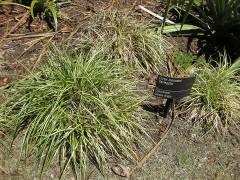
Carex plantaginea is plantain-leaved sedge (also called seersucker sedge), a native eastern North American shade-tolerant evergreen sedge in the sedge family (Cyperaceae) growing 12-18 inches (30-45 cm) tall and 18-24 inches (45-60 cm) wide as a clumping basal rosette. The species name 'plantaginea' is Latin for 'plantain-like' and references the wide leaves that resemble plantain (Plantago) foliage rather than the typical narrow grass-like sedge foliage that the broader genus carries. The leaves are substantially broader than any other commonly cultivated Carex species — up to 1 inch (2.5 cm) across — and the wide leaves carry a puckered pleated surface texture resembling seersucker fabric that gives the species the alternate common name 'seersucker sedge'. The combined wide-leaf-with-pleated-texture foliage gives the species an architectural presence closer to a small Hosta than to a typical narrow-leaved sedge, and the species fills a foliage-texture niche in shade gardens that no other commonly cultivated sedge supplies. The genus Carex is in the sedge family (Cyperaceae), which is the principal grasslike family alongside the grass family (Poaceae) and the rush family (Juncaceae); the three families together compose most of the grasslike vegetation in temperate plant communities but are distinguished at the family level by stem cross-section and reproductive structure: sedges have triangular three-sided stems (the rhyme 'sedges have edges' reflects this character), grasses have hollow round-or-flat stems with swollen joint-like nodes, and rushes have solid round stems without nodes. Carex plantaginea carries the triangular sedge stem cross-section that confirms the family placement, though the wide leaves obscure the stem character at casual viewing distance. Dark purple to near-black spikelets on slender reddish-purple stems appear above the foliage rosette in March and April across a 3-week active flowering window — the dark spikelet color combined with the contrasting reddish stems produces an ornamental floral display that runs counter to the typical sedge expectation of inconspicuous green-or-tan inflorescences. The species is native to rich deciduous-forest understory across eastern North America, with the species' physiological adaptation to deep shade, moist humus-rich soil, and cool summer temperatures reflecting the forest-floor native habitat. The species is among the more cold-hardy evergreen wide-leaved shade plants in commercial cultivation, surviving zone 3 (winter low temperatures of -40 degrees Fahrenheit) without protection — the cold-hardiness places the species at the top of evergreen shade-plant recommendations for cold-climate gardens where most evergreen broadleaf shade plants do not survive. Drought tolerance develops once the basal-rosette root system establishes (typically by the second growing season), giving the species a substantial cultivation advantage over many shade-garden plants that require ongoing supplemental irrigation. Deer avoid the foliage from the same family-shared bitter compounds that recur across most Cyperaceae genera. The species is non-toxic to humans and pets.
Native Range
Carex plantaginea is native to eastern North America with a continuous native range from southern Quebec and Ontario south through New York, Pennsylvania, and the Appalachian foothills to North Carolina and west to Michigan and Wisconsin. The species occurs in rich deciduous-forest understory, woodland-margin habitats, and shaded ravine slopes across the native range, with the species' physiological adaptation to deep shade, moist humus-rich soil, and cool summer temperatures reflecting the eastern deciduous forest understory native habitat. The species is grown in native-plant gardens, woodland gardens, shade-border plantings, and forest-restoration projects across the eastern and central United States and into eastern Canada as a principal native shade-sedge cultivation choice for gardeners who want a wide-leaved evergreen sedge with ornamental floral display.Suggested Uses
Used in shade borders, woodland gardens, forest-floor naturalized plantings, native-plant gardens, and container plantings of 5 gallons (19 liters) or larger. The species' wide-leaved seersucker-textured foliage gives a foliage-texture contribution to shade gardens that no other commonly cultivated sedge supplies — the closest visual reference is small Hosta foliage, but the species adds the cold-hardiness (zone 3) and the evergreen winter persistence that Hosta does not provide. The species pairs with companion shade-garden perennials including Polygonatum (Solomon's seal), Asarum (wild ginger), Tiarella (foamflower), Heuchera, and small Hosta cultivars for a multi-species shade-garden composition where the Carex plantaginea wide leaves contrast textually with the smaller-leaved companions and supply year-round structural ground-cover function across the dormant season.How to Identify
Appearance
Size & Dimensions
Height1' - 1'6"
Width/Spread1'6" - 2'
Colors
Bloom Information
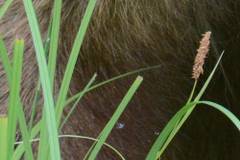
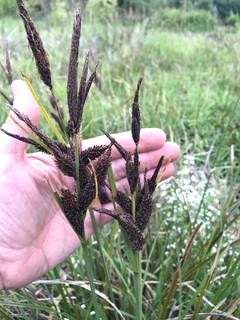
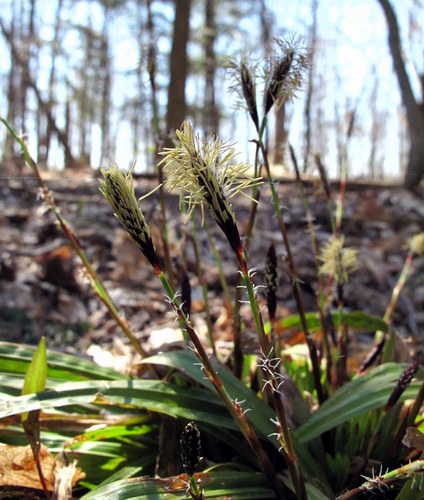
Dark purple to near-black spikelets open on slender reddish-purple stems above the foliage rosette in March and April across a 3-week active flowering window. The dark spikelet color combined with the contrasting reddish stems produces an ornamental floral display that runs counter to the typical sedge expectation of inconspicuous green-or-tan inflorescences; the species is among the more ornamental Carex species in commercial cultivation specifically because of the dark spikelet display rather than the foliage alone. Pollination is by wind in the typical sedge-family pattern, with the spikelets producing wind-dispersed seed that supports limited self-sowing in suitable forest-floor substrate.
Detailed Descriptions
Flower Description
Dark purple to near-black spikelets carried on slender reddish-purple stems above the foliage rosette in early spring; the dark spikelet color and the contrasting reddish stems together produce a floral display that reads as ornamental rather than as the typical green-or-tan sedge inflorescence that most Carex species produceFoliage Description
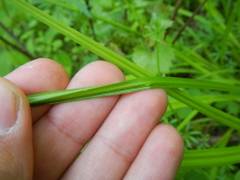
Dark green; very wide leaves up to 1 inch (2.5 cm) across with a puckered, pleated surface texture resembling seersucker fabric, arranged in a clumping basal rosette and persisting evergreen through winter; the leaf width is substantially broader than any other commonly cultivated Carex species and gives the species an architectural foliage presence closer to a small Hosta than to a typical narrow-leaved sedgeGrowing Conditions
Sun Requirements
Requires 2-4 hours of direct sunlight daily
• Full Sun: 6+ hours of direct sunlight
• Partial Shade: 3-6 hours of direct sunlight
• Full Shade: Less than 3 hours of direct sunlight
Care & Maintenance
Care Guide
Plant in partial shade to full shade with 2-4 hours of direct light or filtered all-day shade. Moist humus-rich organic soil at pH 5.5-7.5 supports the species; the species' deciduous-forest-understory native habitat reflects a strong physiological preference for organic-rich substrate and consistent moisture, and the species performs less reliably in lean dry exposed positions. Watering is during establishment and through extended summer drought, with the species being moderately drought-tolerant once the basal-rosette root system develops by the second growing season. Fertilization is generally not needed because the species is adapted to forest-floor leaf-litter recycling and over-fertilization produces leggy weak growth. Maintenance is limited to cleanup of tattered older leaves in early spring before new spring growth emerges; the evergreen habit means most of the foliage holds through winter and only the most weather-damaged leaves need removal. The clumping habit means containment management is not needed because the species spreads slowly by basal-crown enlargement rather than aggressively by underground runners. The species is among the more cold-hardy evergreen wide-leaved shade plants available for cold-climate cultivation, surviving to zone 3 reliably.Pruning
Clean up tattered older leaves in early spring (March) before new spring growth emerges. The evergreen foliage persists 12 months of the year and most of the leaves hold through winter without damage; only the most weather-damaged leaves need removal. No deadheading is needed because the dark spikelets on reddish stems are ornamental and self-clean as the season progresses.Pruning Schedule
Prune: March
early spring
Container Growing
Suitable for container growing
Minimum container size: 5 gallons