Carex, Genus, panicea, Species,
- Genus & species
grass-like sedge
Overview
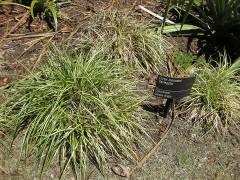
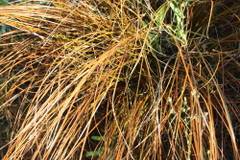
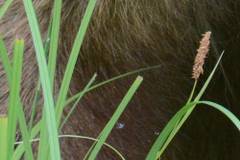
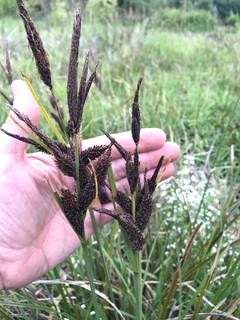
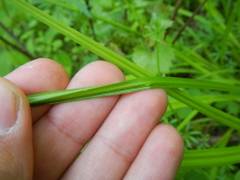
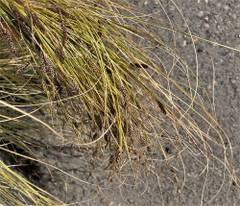
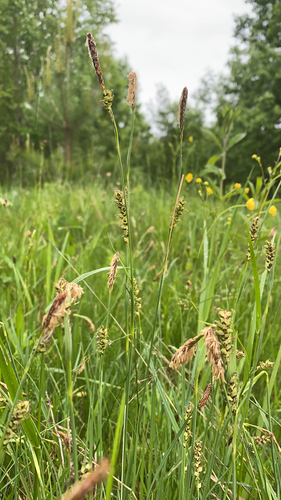
Carex panicea is a tufted, rhizomatous perennial sedge in the Cyperaceae, forming loose clumps 4–24 inches (10–60 cm) tall and spreading slowly by short rhizomes. The flat leaves are 0.08–0.2 inch (2–5 mm) wide and distinctly grey-green to blue-green, the colour that gives it the name carnation sedge. The triangular flowering stems carry a single narrow terminal male spike above one to three well-separated, lax female spikes 0.4–1 inch (10–25 mm) long. The female flowers develop into plump, beakless, grey-green utricles about 0.12–0.16 inch (3–4 mm) long, each containing one nutlet. It flowers from May to June on damp to wet ground, including marshy grassland, fens, flushes, and moorland across Europe and temperate Asia. The species favours permanently moist, low- to moderate-nutrient soils and declines on dry sites or where tall, vigorous grasses take over. Growth is slow and tussocks remain modest in size.
Native Range
Native across Europe and temperate Asia, on damp to wet grassland, fens, flushes, and moorland. It ranges from the British Isles and Scandinavia eastward.Suggested Uses
Used in wet meadow and fen restoration, rain gardens, and pond-edge plantings on moist, neutral soils. The grey-green foliage also features in naturalistic damp borders and bog gardens.How to Identify
Appearance
Size & Dimensions
Height4" - 2'
Width/Spread8" - 1'6"
Bloom Information
Flowers from May to June, with the male spike shedding pollen above the spaced female spikes. Wind carries the pollen, and the grey-green utricles ripen and fall from midsummer.
Detailed Descriptions
Flower Description
green to brownFoliage Description
grey-greenGrowing Conditions
Sun Requirements
Requires 4-8 hours of direct sunlight daily
• Full Sun: 6+ hours of direct sunlight
• Partial Shade: 3-6 hours of direct sunlight
• Full Shade: Less than 3 hours of direct sunlight
Care & Maintenance
Care Guide
Grows in full sun to partial shade on permanently moist to wet, neutral to mildly acidic soils. Water needs are high, and the plant declines if the ground dries out for long. It is propagated by seed sown in autumn or by division of clumps in spring. Low to moderate fertility suits it, and rich soils favour competing grasses. It needs no feeding on typical damp-meadow soils. It is hardy to roughly USDA zone 4.Pruning
Old foliage can be cut back to ground level in late winter before new growth begins. Clumps may be lifted and divided every few years to renew them. No other cutting is needed.Pruning Schedule
Prune: February
winter
Container Growing
Suitable for container growing
Minimum container size: 2 gallons