Carex, Genus, pallescens, Species,
- Genus & species
pale sedge
Native across Europe from the British Isles and Scandinavia east through Russia to western Siberia, and to eastern North America from Newfoundland south to Virginia and west to Minnesota; native habitats include moist meadows, open woodland rides, and grasslands on mildly acidic to neutral soils
Overview
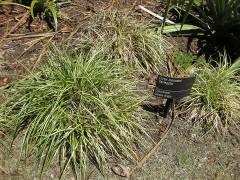
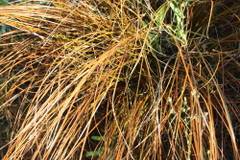
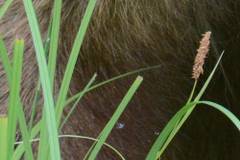
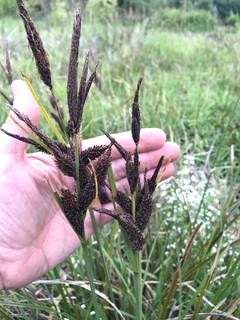
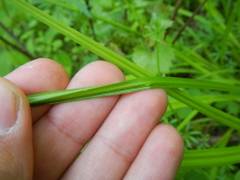
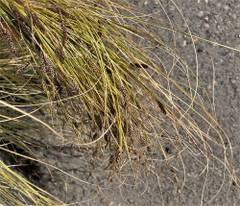
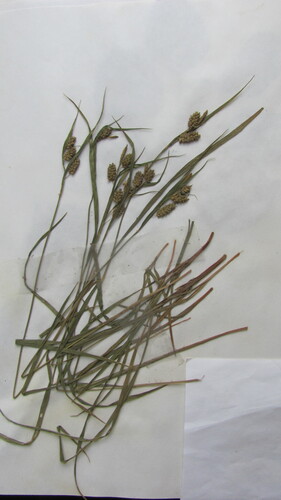
Carex pallescens is a loosely tufted deciduous perennial sedge in the family Cyperaceae reaching 12–24 inches (30–60 cm) tall and 8–12 inches (20–30 cm) wide in open clumps without creeping rhizomes. Stems are triangular in cross-section (a key Carex character) — slender and rough near the apex. Leaves are flat 2–4 mm wide bright green with softly hairy sheaths, and the pubescent leaf sheaths are a useful identification character that separates the species from related glabrous-sheathed sedges. The inflorescence consists of 2–3 short ovoid pale green female spikes 0.3–0.6 inch (8–15 mm) long, nodding on slender peduncles, plus a single terminal male spike at the stem apex. Utricles (fruit-enclosing sacs) are 2.5–3.5 mm long, smooth, green, ovoid, with a very short beak. The pale color of the female spikes gives the species both its specific epithet and its common name. Native across Europe and parts of temperate Asia, occurring in moist meadows, open woodland, and grassland on mildly acidic to neutral soils — also native to eastern North America. In the species' native range, the species is an indicator of unimproved grassland and traditional hay meadow management. The species does not tolerate drought or heavy shade. A modest small-scale sedge suited to naturalistic wet meadow plantings rather than to ornamental specimen use. Not known to be toxic to pets or humans.
Native Range
Carex pallescens is native across Europe (from the British Isles and Scandinavia south to the mountains of the Mediterranean and east through Russia to western Siberia) and to eastern North America (from Newfoundland south to Virginia and west to Minnesota). The species occurs in moist meadows, open woodland rides, and grasslands on mildly acidic to neutral soils.Suggested Uses
Used in wildflower meadow mixes on moist acidic to neutral soils, and in naturalistic plantings along woodland edges and stream margins. Suitable for rain garden upper zones where soil stays moist but is not waterlogged. Combines with meadow wildflowers such as Leucanthemum vulgare (oxeye daisy), Centaurea nigra (common knapweed), and Rhinanthus minor (yellow rattle, used in traditional hay meadow restoration to suppress vigorous grasses) in restoration plantings on European-style hay meadow sites. The modest small-scale stature suits naturalistic plantings where larger ornamental sedges such as Carex elata 'Bowles' Golden' would dominate visually. The species is unsuitable for dry sites, heavy shade, or ornamental specimen use where bold visual presence is the design goal.How to Identify
Appearance
Size & Dimensions
Height1' - 2'
Width/Spread8" - 1'
Bloom Information
Flowering occurs from May through June. The terminal male spike sheds pollen by wind over a 1–2 week period at peak release. Pale green female spikes ripen by July, persisting briefly before seed dispersal. Utricles disperse by water and by adhesion to animal fur passing through the foliage at the meadow scale. Plants are wind-pollinated; insect activity at the flowers runs minimal compared to flowering forb species.
Detailed Descriptions
Flower Description
Pale green female spikes 0.3-0.6 inch ovoid nodding on slender peduncles; terminal male spike at the stem apexFoliage Description
Bright green; flat 2-4 mm wide; with softly hairy sheaths (a useful identification character)Growing Conditions
Sun Requirements
Requires 3-8 hours of direct sunlight daily
• Full Sun: 6+ hours of direct sunlight
• Partial Shade: 3-6 hours of direct sunlight
• Full Shade: Less than 3 hours of direct sunlight
Care & Maintenance
Care Guide
Plant in partial shade to full sun in moist humus-rich mildly acidic to neutral soil at pH 5.0–7.0. Space 8–10 inches (20–25 cm) apart for a loosely tufted naturalistic grouping. Water consistently during the growing season; the species does not tolerate prolonged drought. No fertilization is needed in reasonably fertile soil. The species suits the transition zone between wet and dry habitats in garden settings — moist meadow edges, open woodland glades, and the upper margins of rain gardens where soil stays moist but is not waterlogged. The tufted habit develops fully within 2–3 growing seasons from a small starter plug.Pruning
Cut back dead foliage in late winter before new growth emerges. No other management is required. Remove flowering stems after seed dispersal if self-seeding into the surrounding garden is undesired.Pruning Schedule
Prune: February–March
winter
Container Growing
Minimum container size: 2 gallons