Carex, Genus, muskingumensis, Species,
- Genus & species
palm sedge
{Carex muskingumensis} is native to eastern North America — named after the Muskingum River in Ohio; moist woodlands and streambanks
Overview
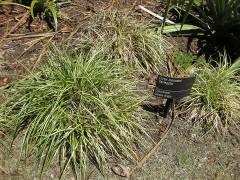
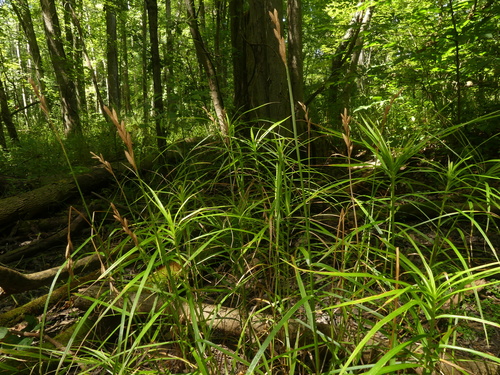
Carex muskingumensis is palm sedge — the only commonly grown sedge with leaves arranged in palm-like whorls along upright stems, growing 24-30 inches (60-75 cm) tall and 24-36 inches (60-90 cm) wide. Named after the Muskingum River in Ohio. Medium green leaves radiate from each node in a whorl pattern that resembles tiny palm fronds — a leaf architecture specific to this species among sedges (all other common sedges have leaves arising from the base). The palm-like whorls create a textural quality unlike any other grass or sedge. Spreads by short rhizomes to form a gradually expanding colony. Moist soil suits this species. Hardy to zone 3. Golden-yellow fall color. The species type — named cultivars 'Ice Fountains' (variegated) and 'Little Midge' (dwarf) offer additional options within the same architecture.
Native Range
Carex muskingumensis is native to eastern North America — named after the Muskingum River in Ohio.Suggested Uses
Used in shade borders, woodland gardens, and as the only palm-textured sedge. The whorled architecture is a conversation piece. Named cultivars for variegated and dwarf options.How to Identify
Appearance
Size & Dimensions
Height2' - 2'6"
Width/Spread2' - 3'
Colors
Bloom Information
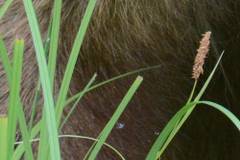
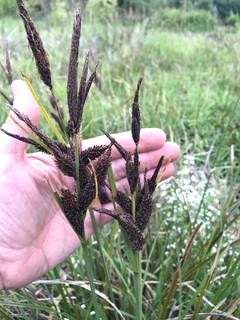
Spikelets in June and July. The palm-like whorled foliage architecture is the primary display.
Detailed Descriptions
Flower Description
Green to tan in small spikeletsFoliage Description
Medium green arranged in palm-like whorls along upright stemsGrowing Conditions
Sun Requirements
Requires 3-8 hours of direct sunlight daily
• Full Sun: 6+ hours of direct sunlight
• Partial Shade: 3-6 hours of direct sunlight
• Full Shade: Less than 3 hours of direct sunlight
Care & Maintenance
Care Guide
Plant in partial shade to sun. Moist soil. Spreads by short rhizomes. Cut to ground in early spring. Hardy to zone 3.Pruning
Cut to ground in early spring before new growth.Pruning Schedule
Prune: March
early spring
Container Growing
Suitable for container growing
Minimum container size: 5 gallons