Carex, Genus, lurida, Species,
- Genus & species
sallow sedge
Native to eastern North America from Nova Scotia and Ontario south through the eastern United States to Florida and Texas where the species occurs in wet meadows, swamps, bogs, stream banks, and roadside ditches, primarily on acidic to neutral soils; the species tolerates seasonal flooding and partial shade and is suited to wetland restoration and rain-garden positions where consistently moist to wet soils are available
Overview
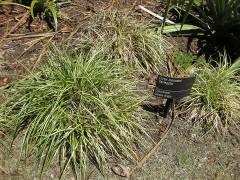
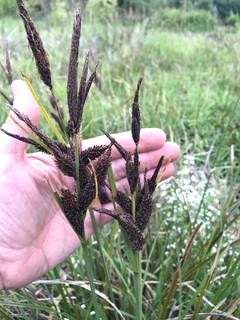
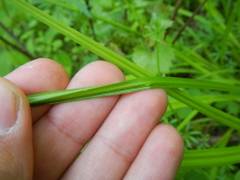
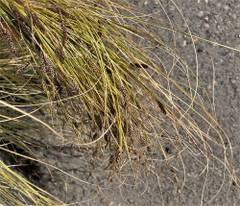
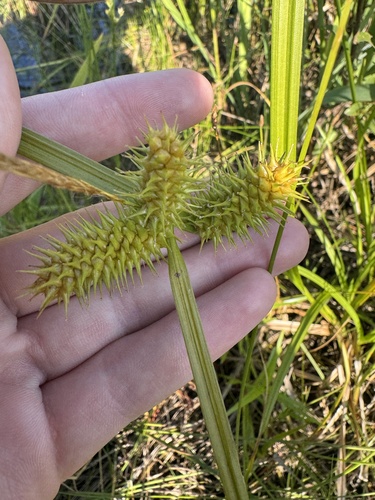
Carex lurida is a clump-forming perennial sedge in the sedge family (Cyperaceae) growing 12-36 inches (30-90 cm) tall in dense tufts 12-18 inches (30-45 cm) wide. Stems are triangular, sharply angled, rough on the upper edges. Leaves are flat, 0.2-0.4 inch (5-10 mm) wide, bright green, arching, with rough-textured margins. The inflorescence consists of 2-5 cylindrical female spikes 1-2.5 inches (2.5-6 cm) long, densely packed with large inflated utricles 0.3-0.4 inch (7-10 mm) long, each tapering to a prominent bidentate (two-toothed) beak that spreads at right angles to the spike axis, giving the spike a prominent spiny or bristly appearance. Utricles are yellow-green to straw-colored at maturity. A single slender male spike 1-2 inches (2.5-5 cm) long tops the inflorescence. The species is native to eastern North America, occurring in wet meadows, swamps, pond margins, stream banks, and ditches from sea level to approximately 4,000 ft (1,200 m). Tolerates seasonal flooding and partial shade. Not drought-tolerant — requires consistently moist to wet soil. The bristly fruiting spikes are retained through autumn and winter, providing structural interest in naturalistic plantings.
Native Range
Carex lurida is native to eastern North America, from Nova Scotia and Ontario south through the eastern United States to Florida and Texas. The species occurs in wet meadows, swamps, bogs, stream banks, and roadside ditches, primarily on acidic to neutral soils.Suggested Uses
Planted in rain gardens, bioswales, wet meadows, pond margins, and stream-bank stabilization projects, spaced 12-15 inches (30-38 cm) apart. The bristly fruiting spikes give textural interest from late summer through winter. Native to eastern North America — suited to wetland restoration and native-plant gardens. Tolerates partial shade under deciduous trees in wet woodland settings.How to Identify
Appearance
Size & Dimensions
Height1' - 3'
Width/Spread1' - 1'6"
Bloom Information
Flowering occurs from May through July. Male spikes release pollen by wind over 1-2 weeks. Female spikes develop the inflated utricles by July through August, turning from green to straw-colored by September. Spikes persist on stems through winter, gradually shattering by the following spring.
Detailed Descriptions
Flower Description
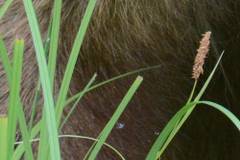
Green opening to straw-colored at maturity; cylindrical female spikes 1-2.5 inches (2.5-6 cm) long densely packed with inflated utricles 0.3-0.4 inch (7-10 mm) long, each tapering to a prominent bidentate (two-toothed) beak that spreads at right angles to the spike axis — the spreading bidentate beaks give the spike a prominent spiny or bristly appearanceFoliage Description
Bright green flat arching blades 0.2-0.4 inch (5-10 mm) wide with rough-textured margins; the foliage carries the typical Carex sedge form with three-ranked leaves emerging from the basal tuftGrowing Conditions
Sun Requirements
Requires 4-8 hours of direct sunlight daily
• Full Sun: 6+ hours of direct sunlight
• Partial Shade: 3-6 hours of direct sunlight
• Full Shade: Less than 3 hours of direct sunlight
Care & Maintenance
Care Guide
Plant in full sun to partial shade in consistently moist to wet acidic to neutral soil at pH 5.0-7.0. Space 12-15 inches (30-38 cm) apart. Tolerates standing water to 3 inches (8 cm) deep and seasonal flooding. In rain gardens, plant in the lowest zone where water collects. No fertilization is needed. The species self-seeds moderately in open wet ground; remove spent spikes before seed dispersal if spread is not desired.Pruning
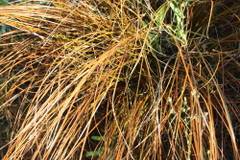
Cut back dead foliage and old spikes to 2-3 inches (5-8 cm) above the crown in late winter before new growth. No other management is required. The persistent winter seed heads can be left for structural interest through the cold months.Pruning Schedule
Prune: February–March
early spring
Container Growing
Suitable for container growing
Minimum container size: 3 gallons