Carex, Genus, lupulina, Species,
- Genus & species
hop sedge
Overview
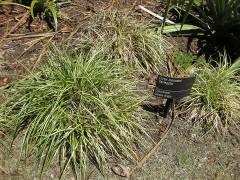
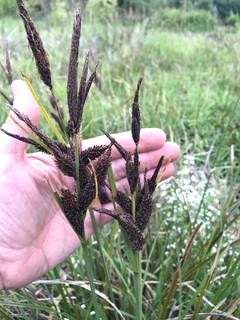
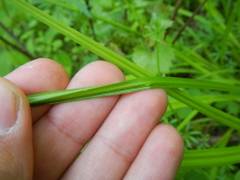
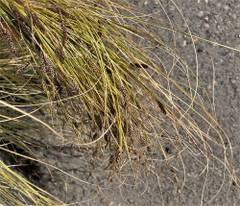
Carex lupulina is a clump-forming perennial sedge in the family Cyperaceae, growing 18-36 inches (45-90 cm) tall with arching, bright green, grass-like leaves 0.2-0.5 inch (5-12 mm) wide and triangular flowering stems. It spreads slowly by short rhizomes to form dense tufts in wet ground. The defining feature is the fruiting cluster: one to several stout, cylindrical spikes 1-2.5 inches (2.5-6 cm) long, each packed with inflated, sharply beaked sacs (perigynia) that radiate outward and resemble the cones of hops, giving the plant its common name. Slender male spikes sit above the female ones. Stems and leaves emerge in spring, fruit ripens through summer, and the foliage dies back in winter. It tolerates standing water and seasonal flooding. One limitation in the garden is its need for reliably wet soil, since it declines in dry conditions.
Native Range
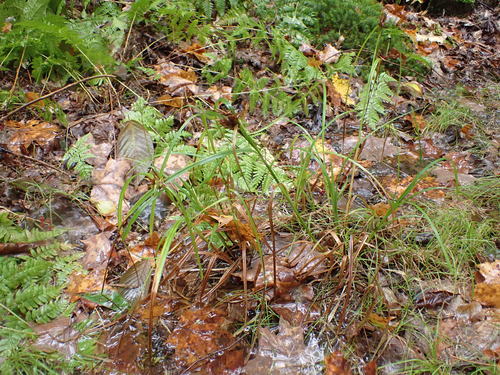
Carex lupulina is native to eastern and central North America, ranging from eastern Canada south to Florida and Texas. It grows in marshes, swamps, wet woods, ditches, and the margins of ponds and streams, often in shallow standing water.Suggested Uses
This sedge is used in rain gardens, pond and stream edges, wetland restorations, and bog plantings where wet soil is reliable. Its seeds and cover support waterfowl, wetland birds, and insects. Dense clumps help stabilize the soft soil of shorelines.How to Identify
Appearance
Size & Dimensions
Height1'6" - 3'
Width/Spread1' - 2'
Bloom Information
Flowering occurs in late spring to early summer, mainly May and June, though the wind-pollinated flowers are inconspicuous. The hop-like fruiting spikes develop through summer and are the most visible stage. Ripe perigynia drop or float away on water from midsummer into fall.
Detailed Descriptions
Flower Description
green to brownFoliage Description
bright greenGrowing Conditions
Sun Requirements
Requires 4-12 hours of direct sunlight daily
• Full Sun: 6+ hours of direct sunlight
• Partial Shade: 3-6 hours of direct sunlight
• Full Shade: Less than 3 hours of direct sunlight
Care & Maintenance
Care Guide
Carex lupulina grows in full sun to partial shade in consistently moist to wet, fertile soil and tolerates standing water several inches deep. It suits the margins of ponds, rain gardens, bog gardens, and other reliably wet sites, and tolerates seasonal flooding. Plants form dense clumps and need little care once established in damp ground. They tolerate clay and mucky organic soils and need no fertilizer. In dry soil the foliage browns and the clump weakens, so steady moisture is the main requirement. Division of clumps in spring increases plantings.Pruning
Pruning is limited to cutting back old foliage in late winter before new growth begins. Clumps can be sheared near the base to remove tattered leaves. No other trimming is needed.Container Growing
Suitable for container growing
Minimum container size: 3 gallons