Carex, Genus, leavenworthii, Species,
- Genus & species
Leavenworth's sedge
Central and eastern United States — from Pennsylvania south to Florida and west to Kansas and Texas
Overview
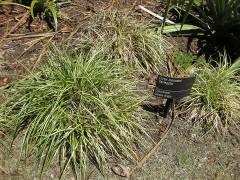
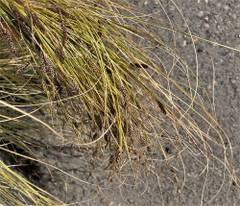
Carex leavenworthii is Leavenworth's sedge — a leading native sedge for lawn replacement, growing 6–12 inches (15–30 cm) tall and 8–14 inches (20–35 cm) wide. Named after Melines Leavenworth, the 19th-century botanist. Very narrow-textured medium green foliage forms a dense low tuft that, when mass-planted at 6–8 inch (15–20 cm) spacing, creates a lawn-like carpet. The key advantage: the planting can be mowed 2–3 times per year (compared to weekly mowing for turf grass) or left completely unmowed for a naturalistic meadow sedge effect. Very adaptable: sun to shade, any soil, drought-tolerant once established. Semi-evergreen — stays green into mild winters. The clumping habit means individual plants eventually touch and merge rather than spreading aggressively by stolons. A practical native lawn alternative for the central and eastern US. Deer avoid sedge foliage.
Native Range
Carex leavenworthii is native to the central and eastern United States — from Pennsylvania south to Florida and west to Kansas and Texas.Suggested Uses
Used as a native lawn replacement — the no-mow native lawn. Mass plant at 6–8 inch spacing. Tolerates light foot traffic. Any light condition. A practical native sedge for replacing turf grass.How to Identify
Appearance
Size & Dimensions
Height6" - 1'
Width/Spread8" - 1'2"
Colors
Bloom Information
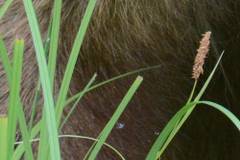
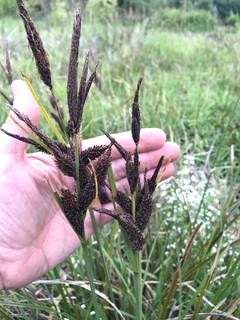
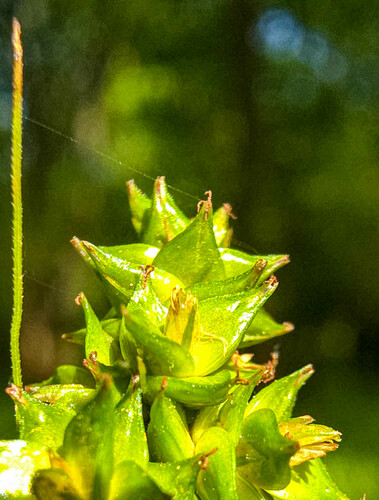
Inconspicuous spikelets in April and May. The narrow-textured lawn-like foliage is the display.
Detailed Descriptions
Flower Description
Green to brown, tiny, inconspicuous spikeletsFoliage Description
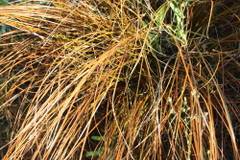
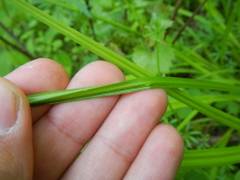
Medium green, very narrow, forming a dense low tuftGrowing Conditions
Sun Requirements
Requires 2-8 hours of direct sunlight daily
• Full Sun: 6+ hours of direct sunlight
• Partial Shade: 3-6 hours of direct sunlight
• Full Shade: Less than 3 hours of direct sunlight
Care & Maintenance
Care Guide
Plant in any light. Any soil. Drought-tolerant. Mow 2–3 times per year for a lawn look, or leave unmowed. Space 6–8 inches apart for lawn effect. Hardy to zone 4.Pruning
Optional mowing 2–3 times per year at 3–4 inches height. Or leave completely unmowed.Pruning Schedule
Prune: March
early spring
Container Growing
Suitable for container growing
Minimum container size: 1 gallons