Carex, Genus, flacca, Species,
- Genus & species
blue sedge
Europe — chalk grasslands, limestone meadows, and calcareous open habitats from the British Isles east through continental Europe to the Mediterranean, with the species' physiological adaptation to alkaline calcareous substrate reflecting the limestone-derived chalk-grassland native habitat.
Overview
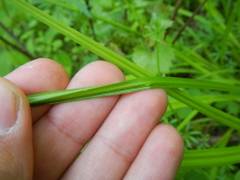
Carex flacca is blue sedge (also called glaucous sedge), a European native sedge in the sedge family (Cyperaceae) growing 8-12 inches (20-30 cm) tall and spreading to 18-24 inches (45-60 cm) wide by underground rhizomes. The species name 'flacca' is Latin for 'soft' or 'flaccid' and references both the soft drooping leaves and the chalky waxy surface of the foliage that gives the species the alternate common name 'glaucous sedge'; the waxy glaucous bloom on the leaf surface scatters incident light to produce the blue-gray foliage appearance that makes the species the bluest commonly cultivated sedge species. The species is native to European chalk grasslands and limestone meadows from the British Isles east through continental Europe to the Mediterranean, and the species' physiological adaptation to alkaline calcareous substrate reflects the limestone-derived chalk-grassland native habitat. The species tolerates alkaline soil at pH up to 8.0 reliably — most ornamental plants struggle in alkaline conditions where iron and manganese availability is limited and chlorosis develops, but Carex flacca performs well in calcareous alkaline conditions where the species' calcium-tolerant physiology reflects the chalk-grassland evolutionary background. The cultivation tolerance also extends to clay soils and dry soils once established, giving the species a broader cultivation range than most sedges (which require moist humus-rich soil) and making the species a working ground-cover choice for sites where soil chemistry or drainage rules out most other shade-tolerant ground covers. The genus Carex is in the sedge family (Cyperaceae), which is the principal grasslike family alongside the grass family (Poaceae) and the rush family (Juncaceae); the three families are distinguished at the family level by stem cross-section and reproductive structure, with sedges having triangular three-sided stems (the rhyme 'sedges have edges' captures the family-level distinction). Carex flacca carries the triangular sedge stem cross-section that confirms the family placement. Dark brown to near-black small spikelets appear in May and June across a 2-3 week active flowering window — the dark spikelet color produces a high-contrast display against the blue-gray foliage and supplies a brief but visible floral feature beyond the year-round foliage role. The species spreads moderately by underground rhizomes to form a connected mat-like ground cover; the spread rate is faster than the clumping Carex species (C. plantaginea, C. oshimensis) but slower than aggressive runner-spreading ground covers like Aegopodium podagraria or Vinca minor, and the spread is generally manageable in cultivated borders with ordinary edging maintenance. The cultivar 'Blue Zinger' is a selected form with more intense blue foliage color than the wild-type species. Hardy to zone 5 with reliable performance across zones 5-9. Drought-tolerant once established. Deer avoid the foliage from the bitter sedge-family chemistry. The species is non-toxic to humans and pets.
Native Range
Carex flacca is native to Europe with a continuous native range from the British Isles east through Scandinavia, central Europe, the Iberian Peninsula, Italy, the Balkans, and the eastern Mediterranean to the Caucasus and parts of western Asia. The species occurs in chalk grasslands, limestone meadows, calcareous open habitats, dry pastures, and alkaline-substrate open positions across the European native range, with the species' physiological adaptation to calcareous alkaline soil reflecting the limestone-derived chalk-grassland native habitat. The species has also become naturalized in eastern North America following accidental introduction in shipping ballast and ornamental nursery stock, and now occurs locally in calcareous habitats from the Atlantic provinces of Canada south through New England and the mid-Atlantic states. The species is grown in alkaline-soil ground-cover plantings, low-water xeric gardens, and rock gardens across the temperate Northern Hemisphere where the species' alkaline-soil tolerance and the year-round blue foliage suit the planting position.Suggested Uses
Used as a blue evergreen ground cover, in alkaline-soil garden positions, rock gardens, dry-shade plantings, low-water xeric gardens, mass plantings on slopes, and container plantings of 3 gallons (11 liters) or larger. The species' alkaline-soil tolerance places it among the few sedges reliable in calcareous limestone-derived garden positions where most ornamental ground covers struggle with chlorosis from limited iron and manganese availability. The blue-gray foliage color contributes a cool-toned ground cover that contrasts with warm-toned and green-foliage companion plantings. The cultivar 'Blue Zinger' is the more vivid blue selection from the species type. The species pairs with companion alkaline-tolerant perennials and ground covers including Geranium cultivars, Thymus (creeping thymes), Sedum (low-growing stonecrops), and Festuca glauca (blue fescue) for a multi-species blue-and-cool-toned planting composition that thrives in calcareous open positions.How to Identify
Appearance
Size & Dimensions
Height8" - 1'
Width/Spread1'6" - 2'
Colors
Bloom Information
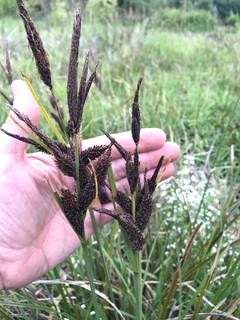
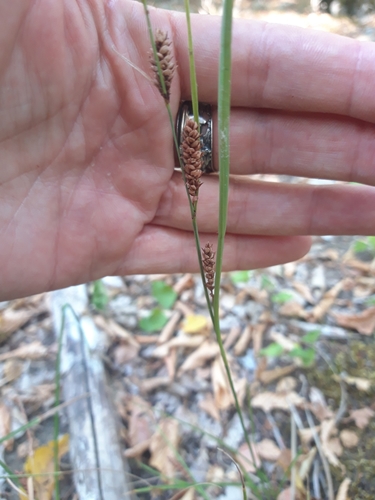
Dark brown to near-black small spikelets open in May and June across a 2-3 week active flowering window. The dark spikelet color produces a high-contrast display against the blue-gray foliage and supplies a brief but visible floral feature beyond the year-round foliage role. Pollination is by wind in the typical sedge-family pattern, with the spikelets producing wind-dispersed seed that supports limited self-sowing in suitable substrate.
Detailed Descriptions
Flower Description
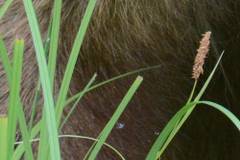
Dark brown to near-black small spikelets in late spring; the dark spikelet color produces a high-contrast display against the blue-gray foliage and supplies a brief but visible floral feature beyond the year-round foliage roleFoliage Description
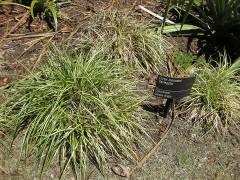
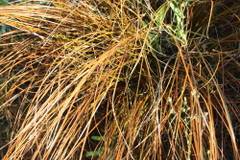
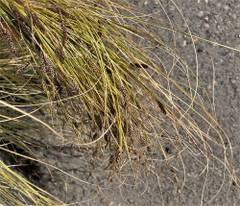
Blue-gray to glaucous-blue narrow evergreen leaves arranged along upright stems and arching out to form a low spreading mat; the blue-gray color comes from a waxy glaucous bloom on the leaf surfaces that scatters incident light to produce the blue appearance, and the same glaucous bloom is the source of the species name 'flacca' relating to the soft drooping leaves and the chalky-blue surface coatingGrowing Conditions
Sun Requirements
Requires 4-8 hours of direct sunlight daily
• Full Sun: 6+ hours of direct sunlight
• Partial Shade: 3-6 hours of direct sunlight
• Full Shade: Less than 3 hours of direct sunlight
Care & Maintenance
Care Guide
Plant in full sun to partial shade with 4-8 hours of direct light; the species tolerates a wider range of light conditions than most sedges and performs well in both sunny and partially shaded positions. Most soil types support the species at pH 6.0-8.0 — the species is among the few sedge species reliable in alkaline calcareous soil conditions, and the alkaline tolerance is the species' principal cultivation distinction from most other commonly cultivated sedges that require neutral-to-acidic substrate. The species also tolerates clay soils and dry soils once established, expanding the cultivation range beyond the moist humus-rich substrate that most sedges require. Watering is during establishment and through extended summer drought, though the species is moderately drought-tolerant once the basal-rhizome root system develops. Fertilization is generally not needed because the species is adapted to lean chalk-grassland substrate. The rhizomatous spreading habit means containment management may be needed in cultivated borders where the gardener wants strict edge control: ordinary garden-bed edging or root-barrier installation contains the spread effectively, and the moderate spread rate (slower than aggressive ground covers but faster than clumping sedges) makes the species a working ground-cover choice for moderate-area plantings. Maintenance is limited to early-spring shearing of weather-damaged foliage in March before new spring growth emerges; the evergreen habit means most of the foliage holds through winter and only the most damaged leaves need removal. Hardy to zone 5 with reliable performance across zones 5-9.Pruning
Shear the entire planting in early spring (March) before new spring growth emerges to remove weather-damaged foliage and refresh the appearance for the new growing season. Contain the rhizomatous spread with ordinary garden-bed edging or root-barrier installation if strict containment is required in cultivated borders.Pruning Schedule
Prune: March
early spring
Container Growing
Suitable for container growing
Minimum container size: 3 gallons