Carex, Genus, declinata, Species,
- Genus & species
drooping sedge
Overview
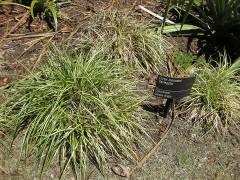
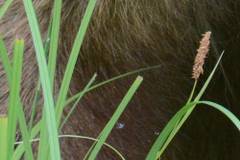
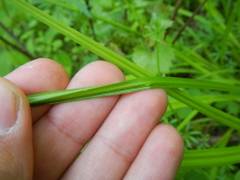
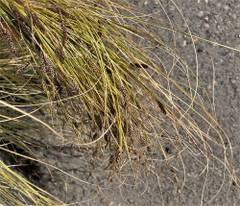
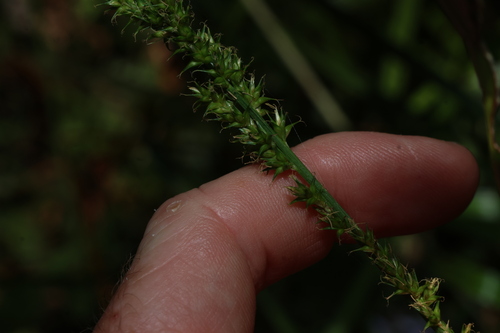
Carex declinata is a loosely tufted perennial sedge in the Cyperaceae family, growing 8–16 inches (20–40 cm) tall in small clumps 6–10 inches (15–25 cm) wide. Stems are triangular, slender, arching to drooping — the basis for the epithet declinata (declining, drooping). Leaves are flat, 2–3 mm wide, bright to mid-green, shorter than the stems. The inflorescence consists of 2–3 short, ovoid female spikes 0.3–0.5 inch (8–12 mm) long on slender, drooping peduncles, and a single terminal male spike. Utricles are 3–3.5 mm long, pubescent, with a short beak. Native to acidic heathland, moor edges, and open woodland on sandy or peaty soils across Europe. In its native range, it is an indicator of acidic, nutrient-poor grassland and heathland — habitats that have declined significantly due to agricultural improvement and nitrogen deposition. Closely related to and sometimes confused with C. pilulifera (pill sedge), from which it differs in the longer, more slender peduncles on the female spikes and the slightly more open growth habit. Does not tolerate alkaline soil or prolonged waterlogging.
Native Range
Carex declinata is native to western and central Europe, from the British Isles and Scandinavia south to the mountains of the Mediterranean and east to western Russia. It occurs on acidic heathland, moor edges, open birch and pine woodland, and sandy grassland on acidic to neutral soils.Suggested Uses
Used in heathland restoration, acid-grassland plantings, and naturalistic gardens on sandy or peaty acidic soils. Combines with heath (Calluna vulgaris), bilberry (Vaccinium myrtillus), and acid-grassland wildflowers. In the Pacific Northwest, suited to acidic, sandy, well-drained sites in sun to light shade.How to Identify
Appearance
Size & Dimensions
Height8" - 1'4"
Width/Spread6" - 10"
Bloom Information
Detailed Descriptions
Foliage Description
Bright to mid-greenGrowing Conditions
Sun Requirements
Requires 4-8 hours of direct sunlight daily
• Full Sun: 6+ hours of direct sunlight
• Partial Shade: 3-6 hours of direct sunlight
• Full Shade: Less than 3 hours of direct sunlight
Care & Maintenance
Care Guide
Plant in full sun to partial shade in acidic, sandy to peaty, well-drained soil with a pH of 4.0–6.0. Space 6–8 inches (15–20 cm) apart. Suited to heathland gardens, acid beds, and open sandy areas. Water during establishment; drought-tolerant on sandy soils once established. Do not fertilise — the species is adapted to nutrient-poor conditions and declines in fertile soil.Pruning
Cut back dead foliage in late winter. No other management required.Pruning Schedule
Prune: February–March
early spring
Container Growing
Suitable for container growing
Minimum container size: 2 gallons