Carex, Genus, eburnea, Species,
- Genus & species
ivory sedge
North America from Alaska and the Canadian boreal forest south through the Great Lakes to Tennessee and Virginia, on limestone and calcareous soils
Overview
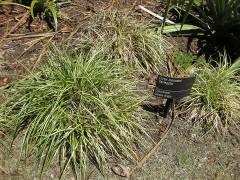
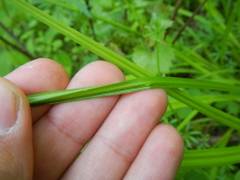
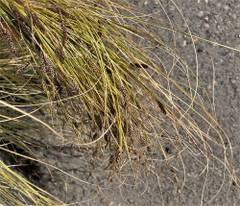
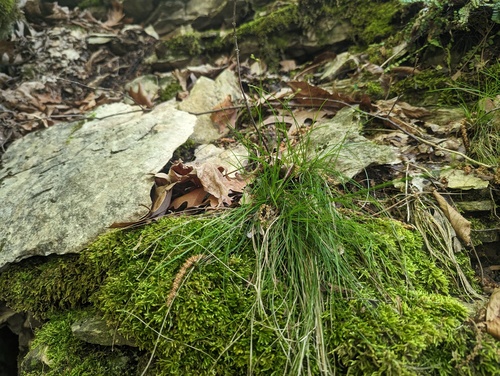
Carex eburnea is a low spreading native sedge of calcareous habitats across northern North America, growing 4–8 inches (10–20 cm) tall and spreading to 12–24 inches (30–60 cm) wide by short rhizomes. The species epithet 'eburnea' translates as 'ivory-white' and refers to the small whitish perigynia (seed casings). Foliage is composed of bright green hair-thin leaves 0.02–0.04 inch (0.5–1 mm) wide and 4–6 inches (10–15 cm) long, the narrowest of the Carex species commonly grown — about half the leaf width of C. pensylvanica and a quarter the width of C. flacca 'Blue Zinger'. Inconspicuous green-to-tan spikelets appear in late April and May; the foliage texture, not the bloom, is the year-round display. The plant is native to limestone bedrock outcrops, calcareous cliff bases, and dolomite-derived soils, and the alkaline soil requirement (pH 6.5–8.0) reflects this habitat — performance drops on acidic soils. The rhizome spread is slow, about 2–3 inches (5–8 cm) per year, building a low ground-cover mat with very narrow leaf texture that does not crowd companion plants. Semi-evergreen in zones 5 and warmer; cold tolerance reaches USDA zone 2. Drought tolerance once established, partial to full shade tolerance, and clay-soil tolerance combine to give wide site adaptability. Deer rarely browse the foliage.
Native Range
Carex eburnea is native to North America, with a range from Alaska, Yukon, and the Canadian boreal forest south through the Great Lakes states to Tennessee and Virginia and west to British Columbia, where it grows on limestone bedrock outcrops, calcareous cliff bases, and dolomite-derived soils.Suggested Uses
Used as a low ground cover under deciduous trees on limestone-derived soils, in shaded rock gardens, along shaded paths, in alpine troughs with calcareous gritty mix, and in containers of 1 gallon (3.8 liters) or larger. Combines with low woodland natives such as Phlox stolonifera, Anemone canadensis, and small ferns including Asplenium trichomanes for a shade planting with very narrow foliage texture.How to Identify
Appearance
Size & Dimensions
Height4" - 8"
Width/Spread1' - 2'
Colors
Bloom Information
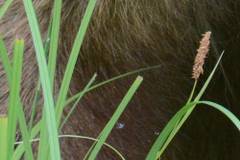
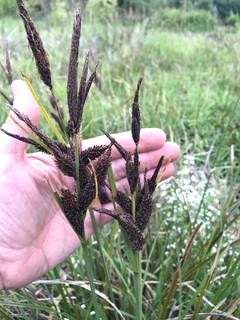
Inconspicuous green-to-tan spikelets in late April and May for approximately 2 weeks. Bloom is not the display feature; the year-round value is the very narrow bright green foliage. Carries no fragrance.
Detailed Descriptions
Flower Description
Green to tan, tiny inconspicuous spikeletsFoliage Description
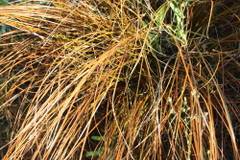
Bright green hair-thin leaves 0.02-0.04 inch (0.5-1 mm) wide and 4-6 inches (10-15 cm) longGrowing Conditions
Sun Requirements
Requires 2-5 hours of direct sunlight daily
• Full Sun: 6+ hours of direct sunlight
• Partial Shade: 3-6 hours of direct sunlight
• Full Shade: Less than 3 hours of direct sunlight
Care & Maintenance
Care Guide
Plant in partial to full shade with 2–5 hours of filtered or dappled light. Soil should be well-drained, neutral to alkaline (pH 6.5–8.0), and may be loamy, sandy, or rocky; performance drops on acidic soils. Water during the first season of establishment, then irrigate only during prolonged drought once rooted. Skip fertilizer; rich soils produce loose, floppy growth. Comb out browned leaves with gloved hands or a leaf rake in early March before new growth pushes; full shearing is unnecessary because the foliage stays in scale year-round.Pruning
Comb or rake out browned leaves in early March before new growth pushes. Full shearing is not needed; the foliage stays in scale through the year. Lift and divide every 5–7 years if the mat opens at the center.Pruning Schedule
Prune: March
early spring
Container Growing
Suitable for container growing
Minimum container size: 1 gallons