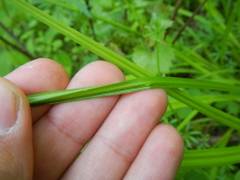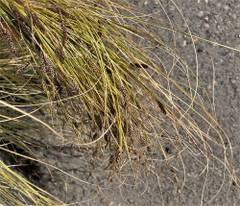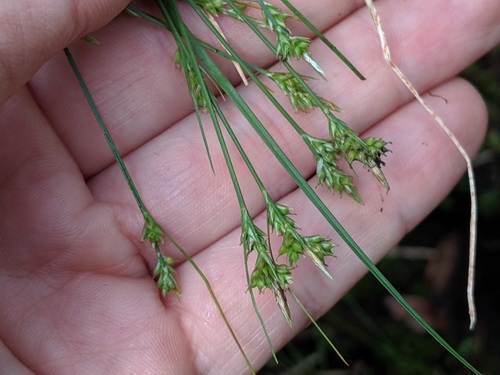
Carex, Genus, albicans, Species,
- Genus & species
white-tinged sedge
Eastern North America, from Nova Scotia south to Florida and west to Texas, in dry upland forests
Overview
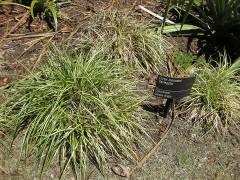
Carex albicans is a native dry-shade sedge of eastern North American upland forests, growing 6-12 inches (15-30 cm) tall and 12-18 inches (30-45 cm) wide. The species name 'albicans' means 'becoming white', referencing the whitish perigynia (seed casings). Narrow medium to dark green arching leaves form a graceful low clump with delicate texture. The critical character: this is a dry-shade sedge, where most sedges require moist to wet conditions, C. albicans thrives in the dry well-drained soils of upland oak-hickory forests. This drought tolerance is uncommon among sedges and makes the species suited to dry shade situations, the most challenging garden condition. Semi-evergreen; the foliage persists in mild winters. Clumping (not spreading by stolons), so it stays where planted. Inconspicuous flowers. A native lawn alternative for dry shade under trees where turf grass struggles. Hardy to zone 3. Deer avoid sedge foliage.
Native Range
Carex albicans is native to eastern North America, from Nova Scotia south to Florida and west to Texas, growing in dry upland forests.Suggested Uses
Used as a native lawn alternative in dry shade under deciduous trees, in woodland gardens, and in dry shade borders. A dry-shade sedge for a challenging garden niche. Containers (3 gallons / 11 liters). Mass planting for a narrow-leaved ground cover.How to Identify
Appearance
Size & Dimensions
Height6" - 1'
Width/Spread1' - 1'6"
Bloom Information
Inconspicuous spikelets in April and May. The narrow-leaved foliage is the year-round display.
Detailed Descriptions
Flower Description
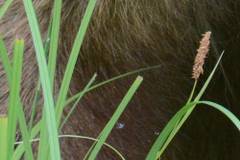
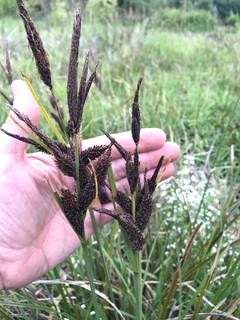
Green to whitish; in small inconspicuous spikeletsFoliage Description
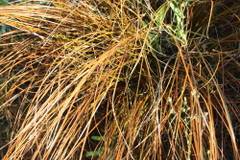
Medium green to dark green; narrow archingGrowing Conditions
Sun Requirements
Requires 2-8 hours of direct sunlight daily
• Full Sun: 6+ hours of direct sunlight
• Partial Shade: 3-6 hours of direct sunlight
• Full Shade: Less than 3 hours of direct sunlight
Care & Maintenance
Care Guide
Sited in partial shade to full shade. Well-drained dry to average soil; drought-tolerant for a sedge. No maintenance needed. Hardy to zone 3. A native lawn alternative for dry shade.Pruning
Dead leaves are combed out in early spring if desired. No other maintenance.Pruning Schedule
Prune: March
early spring
Container Growing
Suitable for container growing
Minimum container size: 3 gallons