Carex, Genus, acutiformis, Species,
- Genus & species
lesser pond sedge
Overview
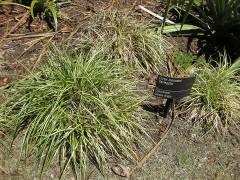
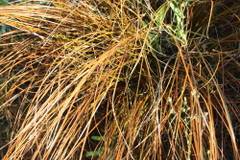
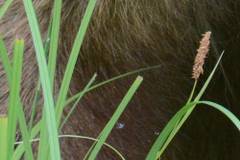
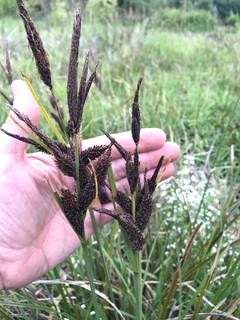
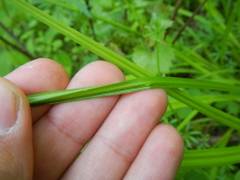
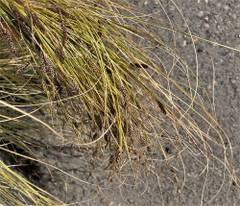
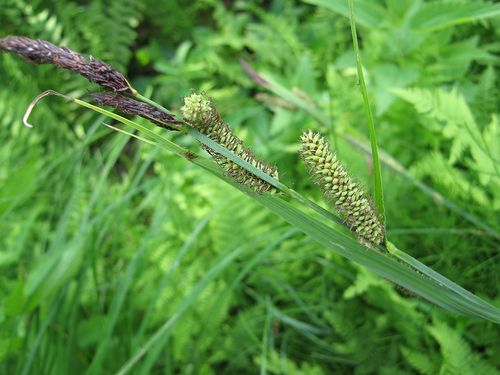
Carex acutiformis is a vigorous, rhizomatous sedge of the Cyperaceae, forming tall, spreading colonies 24–60 inches (60–150 cm) high from creeping underground stems. The leaves are flat, keeled, and blue-green, 0.2–0.4 inch (5–10 mm) wide, with rough margins on a triangular flowering stem typical of sedges. From May to July it carries 2 to 3 narrow male spikes at the top of the stem and 2 to 4 thicker female spikes below, all dark brown to nearly black, with the female spikes releasing flat, beaked seed cases. The plant grows in marshes, fen, ditches, wet meadows, and the margins of ponds and slow rivers across Europe, western Asia, and North Africa, rooting in waterlogged, often calcareous mud. Its dense rhizome network forms wide single-species stands that can crowd out smaller wetland plants. It tolerates standing water up to about 8 inches (20 cm) deep and seasonal flooding, but needs permanently moist to wet soil and full sun to light shade. It dies back to the rhizome in winter, leaving brown foliage that collapses by spring.
Native Range
Carex acutiformis is native to Europe, western Asia, and North Africa, and is widely naturalized elsewhere, including parts of North America. It grows in marshes, fens, wet meadows, ditches, and the margins of still and slow fresh water.Suggested Uses
Used at pond and stream margins, in bog and rain gardens, and for bank stabilization and wetland restoration. The spreading roots bind wet soil and shelter wetland wildlife.How to Identify
Appearance
Size & Dimensions
Height2' - 5'
Width/Spread2' - 10'
Bloom Information
Detailed Descriptions
Flower Description
dark brown to blackFoliage Description
blue-greenGrowing Conditions
Sun Requirements
Requires 4-12 hours of direct sunlight daily
• Full Sun: 6+ hours of direct sunlight
• Partial Shade: 3-6 hours of direct sunlight
• Full Shade: Less than 3 hours of direct sunlight
Care & Maintenance
Care Guide
Grows in full sun to light shade on permanently moist to waterlogged soil, including marsh, pond margins, and standing water to about 8 inches (20 cm) deep. It tolerates a wide range of soil types and a neutral to alkaline pH, and spreads strongly by rhizome where conditions are wet. Drying soils check its growth and can cause leaf browning. In planted settings it is used at the water's edge and in rain gardens, where its spread may need a barrier or annual division. It is fully hardy in zones 5 to 8 and dies down over winter.Pruning
Old foliage can be cut to the ground in late winter before new growth begins. Clumps and runners are divided in spring to propagate or limit spread. No other pruning is needed.Container Growing
Suitable for container growing