Camellia, Genus, vernalis, Species, 'Yuletide', Cultivar,
- Genus & species
- Cultivar
yuletide camellia
Hybrid of garden origin ({C. sasanqua} × {C. japonica}); parent species native to Japan, Korea, and eastern China; cultivar raised in the United States
Overview
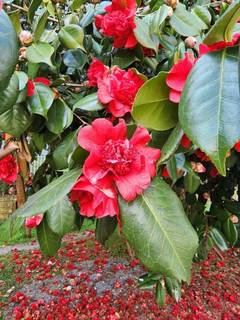
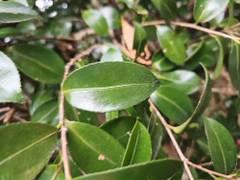
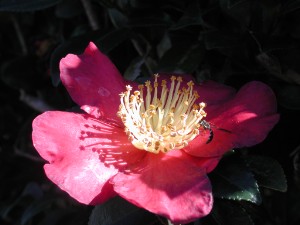
Camellia × vernalis 'Yuletide' is a compact dense upright evergreen shrub in the tea family (Theaceae) reaching 6–8 feet (1.8–2.4 m) tall with a spread of 4–6 feet (1.2–1.8 m). C. × vernalis is the hybrid group combining C. sasanqua (southern Japan) with C. japonica (Japan, Korea, eastern China), pairing the early bloom season of sasanqua with a slightly larger flower from the japonica side. 'Yuletide' was raised in the United States and produces single bright red flowers 2–2.5 inches (5–6 cm) across with a prominent central cluster of bright golden-yellow stamens; the bright red petals and contrasting gold stamen cluster give the cultivar its color signature among winter-blooming camellias. Bloom runs November through January with peak bloom in December, the source of the cultivar name. Glossy dark green ovate leaves 1.5–2.5 inches (4–6 cm) long are slightly smaller and narrower than C. japonica leaves. The habit is dense and upright, slower-growing than many sasanquas at 3–6 inches (8–15 cm) per year. Spent flowers drop cleanly as individual petals rather than the whole-flower drop of C. japonica. Hardy to zone 7. Cold hardiness of the flower buds is limited: buds are damaged below 10°F (−12°C). Scale insects and sooty mold may develop in humid summers. The compact habit holds its shape without frequent pruning.
Native Range
Camellia × vernalis is a hybrid group of garden origin, combining C. sasanqua (native to southern Japan — Kyushu, Shikoku, southern Honshu, and the Ryukyu Islands) with C. japonica (native to Japan, Korea, and eastern China). The cultivar 'Yuletide' was raised in the United States.Suggested Uses
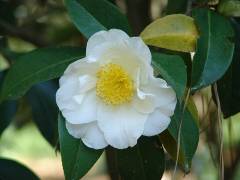
Grown as a specimen, foundation shrub, or low informal hedge at 3–4 foot (0.9–1.2 m) spacing. December bloom timing aligns with the holiday season, and the red-and-gold color combination suits seasonal displays. Container culture works in 5 gallon (19 L) or larger pots for patios and entries. The compact size fits smaller garden spaces where 'Setsugekka' or larger C. japonica cultivars would outgrow the footprint. Siting where the red flowers are visible from indoors carries the display through winter months when outdoor garden use drops. Pairing with white-flowered camellias such as 'Setsugekka' produces a red-and-white winter combination.How to Identify
Appearance
Size & Dimensions
Height6' - 8'
Width/Spread4' - 6'
Bloom Information
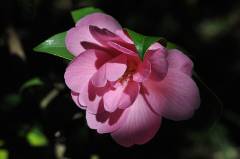
Single bright red flowers 2–2.5 inches (5–6 cm) across with a central cluster of golden-yellow stamens open from November through January. Peak bloom is December. Bloom duration is 6–8 weeks. A light fragrance may be present in mild weather. Spent petals drop cleanly without deadheading. Flower bud damage occurs below 10°F (−12°C).
Detailed Descriptions
Flower Description
Bright red, single 2-2.5 inches with central cluster of golden-yellow stamensFoliage Description
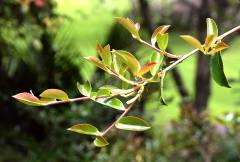
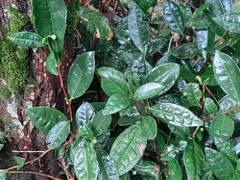
Glossy dark green, ovate 1.5-2.5 inches, slightly smaller and narrower than C. japonica leavesGrowing Conditions
Sun Requirements
Requires 3-6 hours of direct sunlight daily
• Full Sun: 6+ hours of direct sunlight
• Partial Shade: 3-6 hours of direct sunlight
• Full Shade: Less than 3 hours of direct sunlight
Care & Maintenance
Care Guide
Grows in partial shade in moist well-drained acidic soil at pH 5.0–6.5, tolerating loam substrates. Hardy to zone 7. Morning sun with afternoon shade produces the strongest flower display and prevents leaf scorch. Shelter from cold drying winter winds protects buds and foliage. Consistent soil moisture is required; drought causes bud drop. Mulch 2–3 inches (5–8 cm) deep with acidic organic material. The root ball is set with the top surface 1 inch (2.5 cm) above surrounding grade. The compact habit requires less pruning than larger sasanqua cultivars. Scale insects and sooty mold are the principal pest concerns and are treated with horticultural oil. Petal blight develops under overhead irrigation during bloom, so drip or ground-level watering is used.Pruning
Prune immediately after flowering (January–February) if shaping is wanted; the compact dense habit requires minimal pruning. Remove dead or crossing branches. Light annual shaping maintains the form. Pruning after March removes developing flower buds for the following winter and reduces next year's bloom.Pruning Schedule
Prune: January–February
winter
Container Growing
Suitable for container growing
Minimum container size: 5 gallons