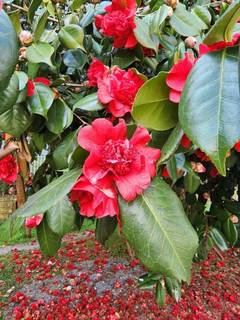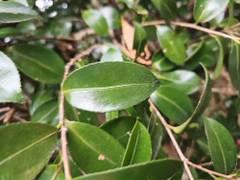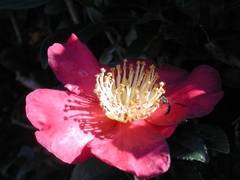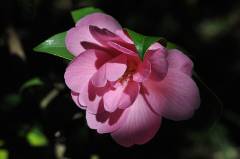
Camellia, Genus, sasanqua, Species, 'Setsugekka', Cultivar,
- Genus & species
- Cultivar
Setsugekka camellia
Southern Japan (Kyushu, Shikoku, southern Honshu) and Ryukyu Islands (coastal and lowland woodlands); cultivar selected in Japan
Overview
Camellia sasanqua 'Setsugekka' is an upright open-branched evergreen shrub or small tree in the tea family (Theaceae) reaching 8–12 feet (2.4–3.6 m) tall with a spread of 6–8 feet (1.8–2.4 m). The habit is more open and airy than C. japonica, with branching structure visible through the canopy. The cultivar name translates from Japanese as 'snow, moon, and flowers', a traditional seasonal motif. 'Setsugekka' was selected in Japan. Flowers are large for a sasanqua at 3–4 inches (8–10 cm) across, semi-double to peony-form, pure white with ruffled irregularly arranged petals surrounding a central boss of golden-yellow stamens; bloom runs October through December, earlier than C. japonica. Spent flowers shatter cleanly and drop individual petals rather than the whole flower, which avoids the mushy accumulation that C. japonica produces. Glossy dark green ovate to elliptic leaves 1.5–3 inches (4–8 cm) long are finely serrate and leathery, with bronze-tinted new growth. Growth rate is moderate at 4–8 inches (10–20 cm) per year. Hardy to zone 7. Cold hardiness of the flower buds is the primary limitation: buds are damaged below 10°F (−12°C), so late-fall freezes can destroy the current season's display. Scale insects and sooty mold may appear in humid summers.
Native Range
The species Camellia sasanqua is native to southern Japan (Kyushu, Shikoku, and southern Honshu) and the Ryukyu Islands, where it grows in coastal and lowland woodlands. The species has been cultivated in Japan for centuries for both ornamental display and tea-seed oil production. The cultivar 'Setsugekka' was selected in Japan.Suggested Uses
Grown as a specimen shrub, as an informal hedge, as a screening plant, or trained as an espalier at 4–6 foot (1.2–1.8 m) spacing. The October–December bloom window fills a seasonal gap when few other shrubs flower. North-facing and east-facing walls that provide morning sun and afternoon shade produce the strongest growth and cleanest bloom. Foundation plantings in mild climates (zones 7–9) use the shrub as a year-round evergreen anchor. Container culture requires 7 gallon (26 L) or larger pots with ericaceous compost. Siting where fallen white petals land visibly against dark ground covers or paving extends the ornamental effect.How to Identify
Appearance
Size & Dimensions
Height8' - 12'
Width/Spread6' - 8'
Bloom Information
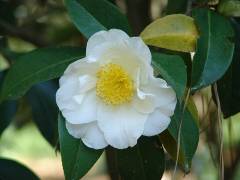
Semi-double to peony-form white flowers 3–4 inches (8–10 cm) across open from October through December. Each flower has ruffled irregularly arranged petals around a central boss of golden-yellow stamens. Bloom duration is 6–8 weeks. A light sweet fragrance is present in mild weather. Spent petals drop cleanly and do not require deadheading, though fallen petals may need raking from paving and paths. Flower bud damage occurs below 10°F (−12°C).
Detailed Descriptions
Flower Description
Pure white, semi-double to peony-form 3-4 inches with ruffled petals around golden-yellow stamen bossFoliage Description
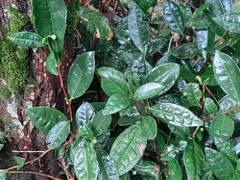
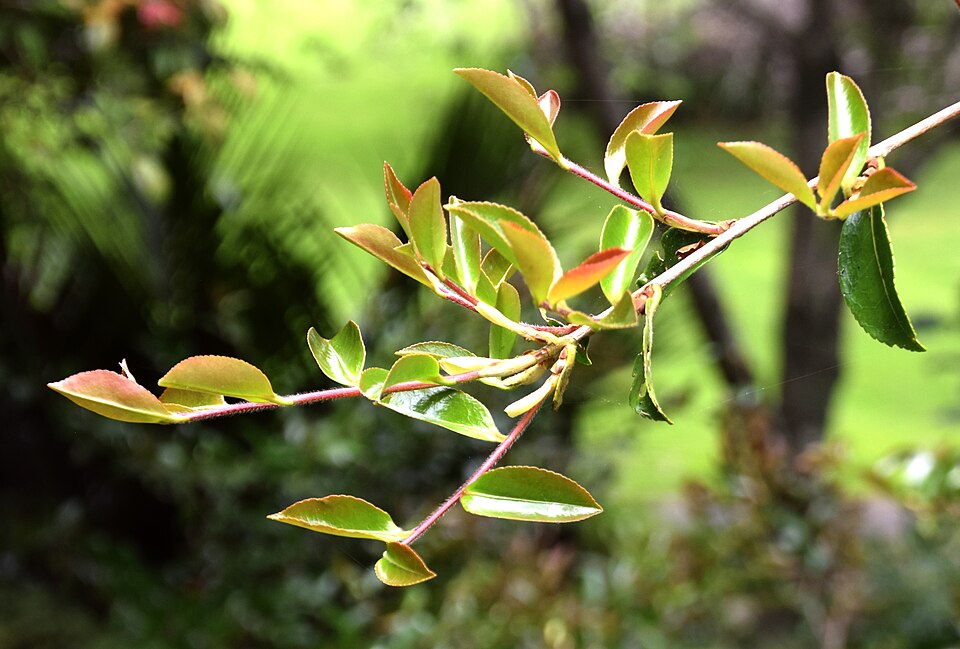
Glossy dark green, ovate to elliptic 1.5-3 inches, finely serrate and leathery; bronze-tinted new growthGrowing Conditions
Sun Requirements
Requires 3-6 hours of direct sunlight daily
• Full Sun: 6+ hours of direct sunlight
• Partial Shade: 3-6 hours of direct sunlight
• Full Shade: Less than 3 hours of direct sunlight
Care & Maintenance
Care Guide
Grows in partial shade in moist well-drained acidic soil at pH 5.0–6.5, tolerating loam substrates. Hardy to zone 7. Morning sun with afternoon shade produces the strongest growth and cleanest bloom; full sun in hot climates scorches foliage. Shelter from cold drying winter winds protects flower buds and foliage. Consistent soil moisture is required, as drought causes bud drop and leaf yellowing. Mulch 2–3 inches (5–8 cm) deep with acidic organic material such as pine bark or pine needles. The root ball is set with the top surface 1 inch (2.5 cm) above surrounding grade to prevent root suffocation. Scale insects produce sooty mold on leaves and are treated with horticultural oil. Dieback disease (Glomerella cingulata) can cause branch death. Petal blight develops under overhead irrigation during bloom, so drip or ground-level watering is used.Pruning
Prune immediately after flowering (December–January) to shape the plant and control size; the species tolerates hard pruning and regenerates from old wood when rejuvenation is needed. Thin interior branches to improve air circulation and reduce fungal pressure. Remove dead or crossing branches. Espalier training against walls and fences is a workable alternative form. Pruning after March removes developing flower buds for the following fall and reduces next year's bloom.Pruning Schedule
Prune: December–January
winter
Container Growing
Suitable for container growing
Minimum container size: 7 gallons